Full Body Workout at Home: No Equipment Needed
Want a workout that challenges your entire body without stepping foot inside a gym? This full body workout at home combines strength exercises, heart-pumping cardio, and core movements into one energizing routine.
You don’t need dumbbells, expensive equipment, or a dedicated workout space. Just a little room to move, comfortable workout clothes, and the motivation to get started.
Led by Barry’s Bootcamp instructor Astrid Swan, this workout takes you through a series of exercises designed to challenge your arms, legs, glutes, abs, and core.
And here’s what makes it interesting: instead of working one muscle group at a time, you’ll alternate between targeted strength exercises and short cardio bursts.
It’s challenging, sweaty, and surprisingly rewarding!
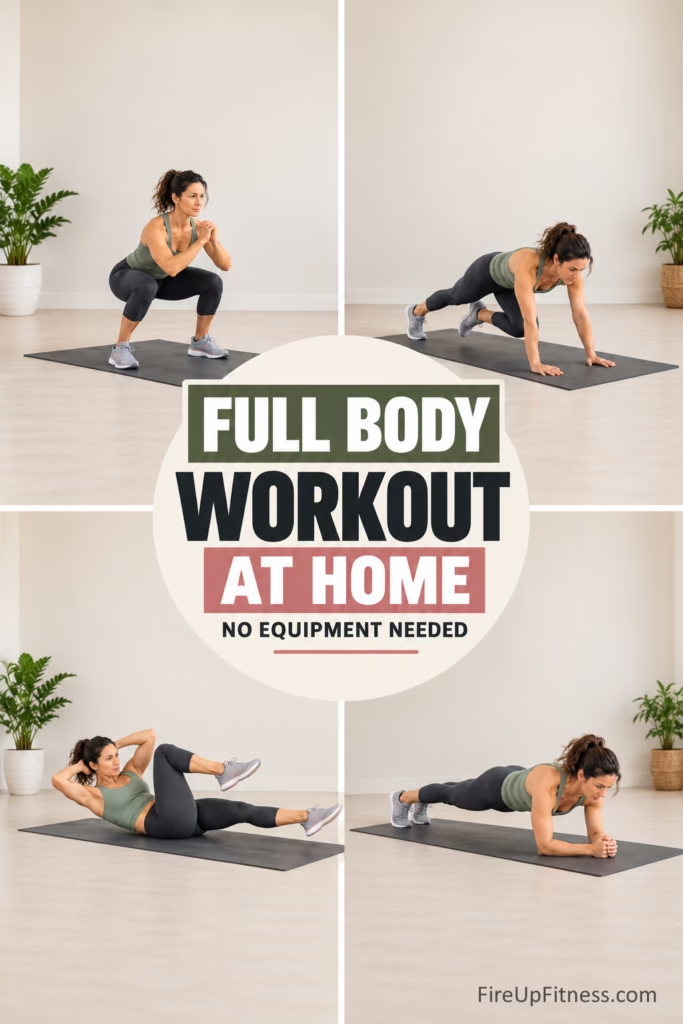
Why Try This Full Body Workout at Home?
Some days, finding time for a workout feels harder than the workout itself. Between work, family responsibilities, and everything else on your schedule, getting to the gym isn’t always realistic.
That’s why full body exercises at home can be such a practical option.
This routine helps you:
- Build full-body strength: Challenge your arms, shoulders, legs, glutes, and core.
- Improve cardiovascular fitness: Get your heart pumping with short bursts of cardio.
- Strengthen your core: Work your abdominal muscles through planks, leg movements, and controlled twists.
- Improve muscular endurance: Challenge your muscles to keep working through multiple circuits.
- Save time: Train several muscle groups in one workout.
- Exercise without equipment: Use your body weight for resistance.
The workout is intense, but that doesn’t mean you have to complete every repetition on your first attempt. Start with modifications, take breaks, and build your endurance gradually.
Your No-Equipment Full Body Workout
This workout follows a simple structure: warm up, complete a cardio circuit, focus on a specific muscle group, and return to cardio.
You’ll repeat that pattern until you’ve worked your entire body.
Here’s what to expect.
1. Warm-Up: Get Your Body Ready
Before jumping into the harder exercises, give your muscles and joints a chance to prepare.
Start with a few minutes of easy movement, such as marching in place, shoulder rolls, arm circles, and gentle bodyweight squats.
The goal isn’t to exhaust yourself. It’s to gradually increase your heart rate and loosen up your body.
Once you feel warm and comfortable, you’re ready for the first circuit.
2. Cardio Circuit: Get Your Heart Pumping
This is where the energy starts to build!
You’ll complete four bodyweight exercises that challenge your cardiovascular endurance while keeping multiple muscle groups engaged.
Your cardio exercises:
- Mountain climbers: Start in a high plank and alternate driving your knees toward your chest.
- Half burpees: Place your hands on the floor, move your feet back into a plank, then return to standing without the push-up.
- Jump squats: Lower into a squat and jump upward, landing softly with bent knees.
- Jumping jacks: Jump your feet apart while raising your arms, then return to the starting position.
Beginner tip: Replace jump squats with regular squats, step through half burpees, and perform step jacks instead of jumping jacks.
Aim for 10 repetitions of each exercise, counting each side separately for alternating movements. Adjust the repetitions or rest periods as needed.
You’ll return to this same cardio circuit throughout the workout.
3. Upper Body Circuit: Strengthen Your Arms and Shoulders
Now that your heart rate is up, it’s time to focus on upper-body strength.
This circuit uses push-up variations to challenge your chest, shoulders, arms, and core.
Exercises:
- Frog push-ups: A challenging push-up variation that requires upper-body strength and control.
- Kneeling push-up rotations: Perform a modified push-up from your knees, then rotate your upper body as directed in the video.
Repeat the circuit before moving on.
Push-ups can feel difficult at first, especially when your arms are already tired from cardio.
That’s perfectly fine. Focus on controlled movement rather than rushing through repetitions.
For an easier option, try wall push-ups or incline push-ups using a stable surface.
4. Core and Stability Circuit: Build Better Control
Strong core muscles do much more than support your abs. They help stabilize your spine, maintain posture, and make everyday movement feel more controlled.
This section includes two exercises that challenge balance and coordination.
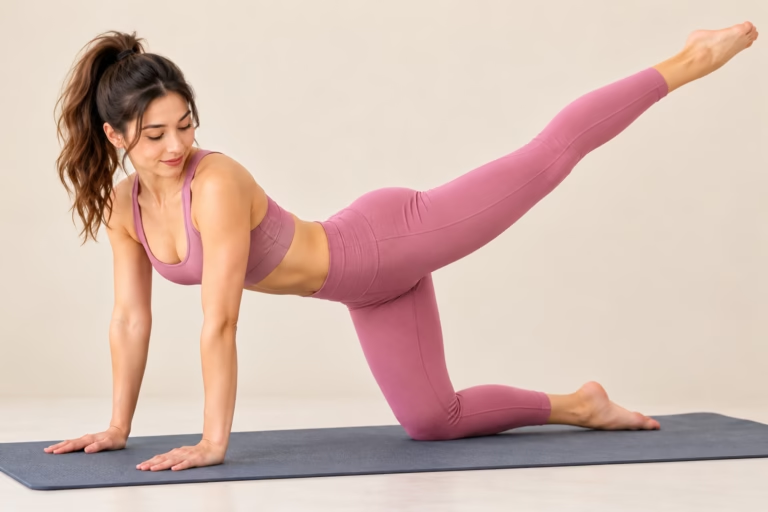
Bird dog
Start on your hands and knees. Extend your right arm forward and left leg backward while keeping your hips level.
Pause briefly, return to the starting position, and switch sides.
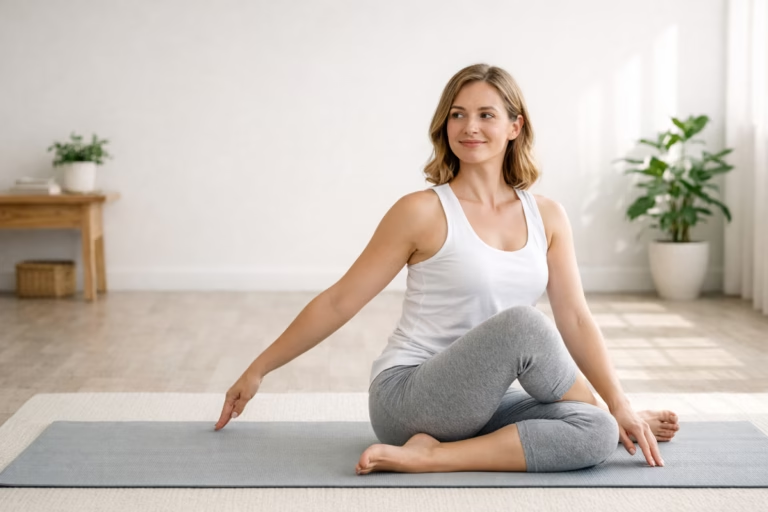
Corkscrew twist
This controlled rotational core exercise challenges your abdominal muscles, particularly the obliques. Follow the demonstration in the video for the exact variation and range of motion.
Move slowly and avoid forcing your lower back into an uncomfortable position.
Take a short water break before continuing.
5. Cardio Round Two: Keep the Momentum Going
Remember those four cardio moves from earlier?
They’re back!
Repeat:
- Mountain climbers
- Half burpees
- Jump squats
- Jumping jacks
Your muscles may feel more tired this time, so focus on maintaining good technique.
There’s no need to race through the circuit. Slower, controlled repetitions are better than pushing through with poor form.
6. Leg Circuit: Challenge Your Glutes and Thighs
Your lower body contains some of the largest and strongest muscles in your body.
This circuit targets your thighs, glutes, and hips with a combination of squats, lunges, and controlled movements.
Exercises:
Low squat to lunge: Begin in a squat position and transition into a lunge while maintaining balance.
Kick to tap down: Perform a controlled leg kick, then bring your foot down to tap the floor.
Jump squat to plié: Combine a squat jump with a wider-stance plié squat.
Plié with elbow to knee: From a wide squat stance, bring your elbow toward your knee in a controlled side-bending movement.
Repeat the appropriate movements on the opposite side.
Beginner modification: Skip the jumps and perform regular squats or supported lunges instead.
Your legs might start to feel shaky toward the end of this circuit. Take a break whenever you need one, especially if your form starts to suffer.
7. Cardio Round Three: One More Push
Return to your familiar cardio combination:
Mountain climbers, half burpees, jump squats, and jumping jacks.
By now, you know the movements, so concentrate on steady breathing and controlled technique.
Feel free to shorten the circuit or choose low-impact alternatives.
8. Arm Circuit: Strengthen Your Upper Body
Think you need weights to challenge your arms?
This circuit shows how demanding bodyweight training can be.
Exercises:
- Kneeling triceps push-ups: Keep your elbows relatively close to your sides as you lower and press up.
- Plank taps: From a plank position, alternate tapping one shoulder with the opposite hand.
- One-arm plank: A challenging stability exercise that requires strong core engagement.
- Plank rock in square: Shift your body in a controlled square-like pattern while maintaining your plank position.
These exercises challenge your triceps, shoulders, chest, and abdominal muscles.
For beginners, perform plank taps with your knees on the floor. Save the one-arm plank for when you have developed enough strength and stability.
9. Cardio Round Four: Finish the Cardio Strong
You’ve reached the final cardio round!
Repeat the same four movements one last time:
- Mountain climbers
- Half burpees
- Jump squats
- Jumping jacks
You don’t need to move faster just because it’s the final round.
Maintain a comfortable pace, modify any movements that feel too demanding, and take breaks when necessary.
After this, there’s just one more strength-focused circuit to complete.
10. Ab Circuit: Finish With Core Exercises
This final section focuses on your abdominal muscles and core stability.
These ab workouts at home require no special equipment, although a yoga mat can make floor exercises more comfortable.
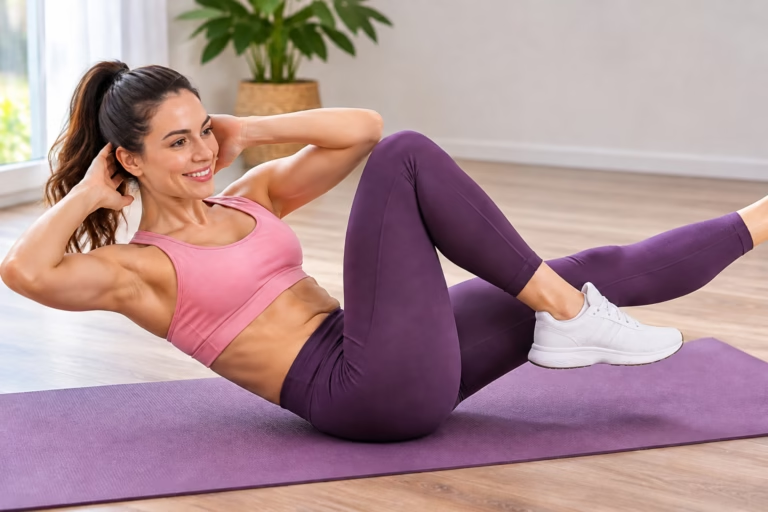
Leg lowers: Lie on your back and slowly lower your legs while keeping your lower back comfortably supported.
Double-leg bicycle: Perform the bicycle-style abdominal movement demonstrated in the video, keeping your core engaged.
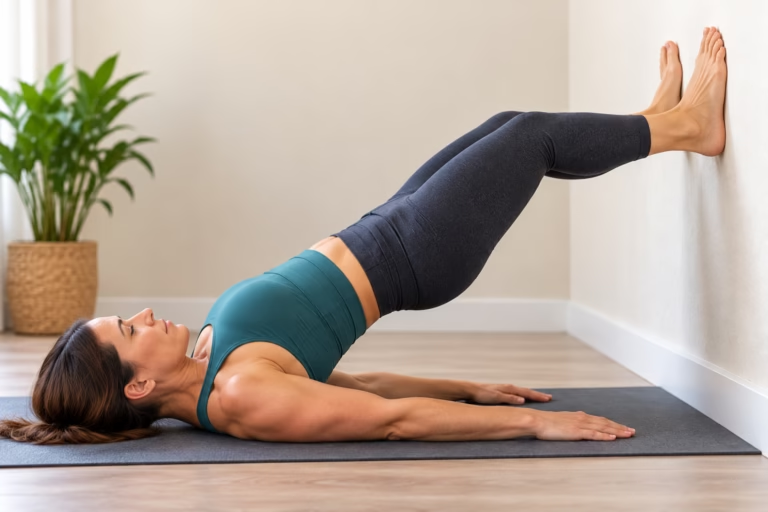
Hip lifts: Lie on your back and lift your hips slightly using controlled abdominal engagement.
Hip lifts with a twist: Add a gentle rotational movement as you lift your hips.
Scissor legs: Alternate moving your legs in a scissor-like pattern while maintaining control through your core.
These movements can be demanding, particularly after several rounds of cardio and strength training.
For an easier option, bend your knees during leg lowers and keep your movements smaller.
If your lower back starts to arch or feel uncomfortable, reduce the range of motion or rest.
11. Cool Down: Give Your Body Time to Recover
You’ve made it through the workout!
Before getting back to your day, spend a few minutes cooling down.
Walk slowly around the room until your breathing settles. Then try gentle stretches for your calves, thighs, hips, shoulders, and back.
Hold each comfortable stretch for around 15–30 seconds without bouncing.
A proper cooldown helps your body transition gradually from exercise to rest.
Quick Full Body Workout at Home Checklist
Here’s a simple overview you can save for your next workout.
| Workout section | Exercises |
|---|---|
| Warm-up | Marching, arm circles, gentle squats |
| Cardio 1 | Mountain climbers, half burpees, jump squats, jumping jacks |
| Upper body | Frog push-ups, kneeling push-up rotations |
| Core stability | Bird dog, corkscrew twist |
| Cardio 2 | Repeat cardio circuit |
| Legs | Low squat to lunge, kick to tap down, jump squat to plié, plié elbow to knee |
| Cardio 3 | Repeat cardio circuit |
| Arms | Triceps push-ups, plank taps, one-arm plank, plank rock |
| Cardio 4 | Repeat cardio circuit |
| Abs | Leg lowers, double-leg bicycle, hip lifts, hip lifts with twist, scissor legs |
| Cooldown | Gentle walking and stretching |
Can Beginners Try This Workout?
Absolutely, but there’s one thing to remember: this is an intense routine, not a traditional beginner workout.
A full body workout for beginners should feel challenging without leaving you completely exhausted or struggling to maintain proper form.
You don’t have to finish every circuit to benefit from moving your body.
Here are a few ways to make this routine more manageable:
- Start with one round of each strength circuit instead of repeating everything.
- Choose low-impact movements instead of jumps.
- Take 30–60 seconds of rest between exercises, or longer when needed.
- Begin with fewer repetitions and gradually work toward 10.
- Skip advanced plank variations until you’ve built sufficient strength.
- Follow the easier modifications demonstrated in the workout video.
You can even divide the routine into shorter sessions while you’re building endurance.
If you’re new to intense exercise or have a health concern, check with a qualified healthcare professional before starting.
What to Eat After Your Full Body Workout
After a challenging workout, your body needs fluids and nutrients to recover.
Start by drinking water, especially after a sweaty cardio session.
A refreshing mango banana smoothie can be a convenient post-workout option. Bananas and mangoes provide carbohydrates that help replenish energy stores.
For a more balanced recovery snack, blend the fruit with Greek yogurt, milk, or a fortified soy alternative to add protein.
You don’t need a complicated recovery routine. A nutritious meal, enough fluids, and adequate rest can make a meaningful difference.
Ready to Give This Full Body Workout a Try?
The best thing about working out at home is the flexibility.
You can exercise in your living room, bedroom, or any comfortable space with enough room to move.
This routine combines cardio, upper-body training, leg exercises, and core work into one challenging session. And because it requires no weights or machines, there’s very little preparation involved.
Remember, progress isn’t measured by how exhausted you feel afterward. It’s about building strength, improving endurance, and becoming more comfortable with movement over time.
Watch Astrid Swan’s workout video to follow the complete routine and see the exercise demonstrations
You will doing each move 10 times. You can take a small break to take a sip of water after completing one circuit. Try using the modification when you first start it. And do not forget to consult your physician before starting this whole body workout.
Try this mango banana smoothie after completing this workout to get some energy.