Cardio Workout At Home: 3 Easy Exercises for Beginners
Want to get your heart pumping, boost your energy, and improve your fitness without leaving the house? A simple cardio workout at home might be exactly what you need.
You don’t need expensive equipment, a gym membership, or an hour of free time to enjoy the benefits of cardio. Sometimes, a few minutes of movement can help you feel more energized, improve your endurance, and build a stronger heart.
The best part? You can start right where you are.
Whether you’re new to exercise, getting back into a routine, or simply looking for an easy way to stay active, these three cardio exercises are a great place to begin.
Why Try a Cardio Workout at Home?
Cardio, short for cardiovascular exercise, is any activity that raises your heart rate and makes you breathe a little faster. Walking, dancing, cycling, swimming, and jumping rope are all examples of cardio exercises.
When you move your body regularly, your heart becomes more efficient at pumping blood, while your lungs and circulatory system work together to deliver oxygen to your muscles.
Over time, regular cardiovascular exercise can help you:
- Improve heart health: Support a stronger, more efficient cardiovascular system.
- Build stamina: Make everyday activities like climbing stairs and carrying groceries feel easier.
- Boost daily energy: Improve endurance and help reduce feelings of fatigue.
- Support a healthy metabolism: Encourage your body to use energy efficiently.
- Improve your mood: Physical activity can help reduce stress and promote emotional well-being.
- Sleep better: Regular movement may improve sleep quality and help you feel more refreshed.
You don’t have to exercise at maximum intensity to experience these benefits. A moderate-paced workout that raises your heart rate while still allowing you to talk is an excellent starting point.
Ready to get moving? Here are three easy cardio exercises you can try at home.
1. Shadow Boxing for Full-Body Cardio
Who says boxing is only for professional fighters?
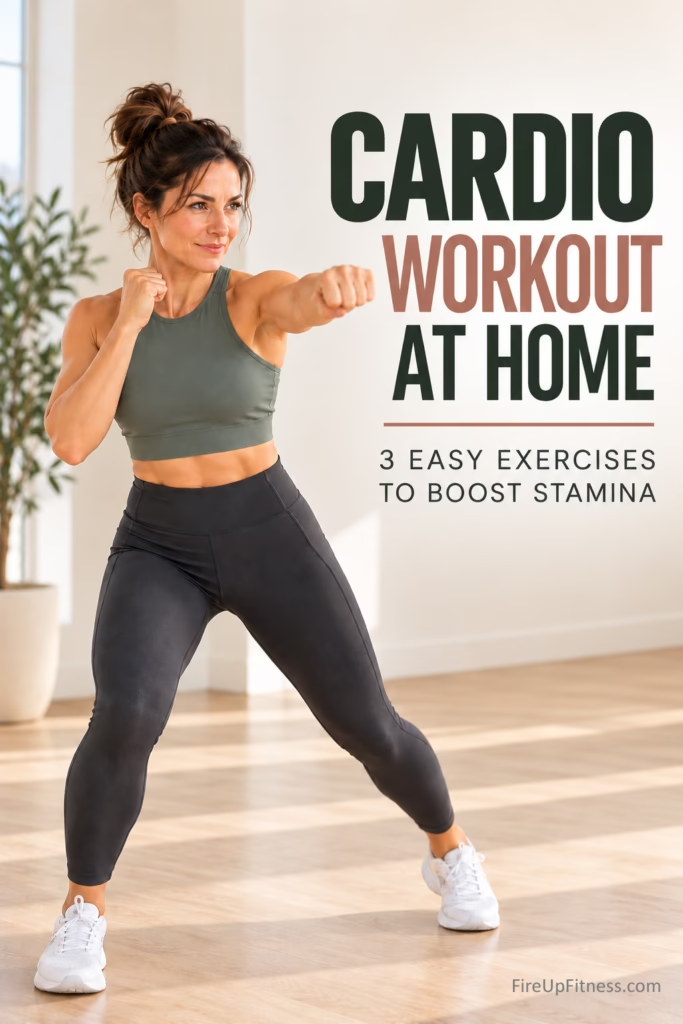
Shadow boxing is a fun and surprisingly effective way to get your heart pumping while working your arms, shoulders, legs, and core.
Unlike traditional boxing, shadow boxing doesn’t require a punching bag or gloves. You simply throw controlled punches into the air while moving your feet and maintaining your balance.
It’s also a great option when you want a cardio workout that feels less repetitive.
How to Do Shadow Boxing
- Stand with your feet shoulder-width apart and one foot slightly forward.
- Bend your knees slightly and keep your hands near your chin.
- Extend one arm forward in a controlled punching motion.
- Bring your hand back toward your face.
- Repeat with the opposite arm.
- Add gentle side steps or small forward-and-back movements.
- Continue for 30–60 seconds.
Keep your movements controlled, avoid locking your elbows, and breathe naturally throughout the exercise.
Beginner tip: Start slowly and focus on coordination before increasing your speed. You don’t need to hold dumbbells to make this workout effective.
Try this: Complete three rounds of 1 minute of shadow boxing with 30 seconds of rest between rounds.
Why Shadow Boxing Works
Shadow boxing engages multiple muscle groups at once. Your arms perform the punches, your core helps stabilize your body, and your legs keep you moving.
This combination makes it a useful full-body cardio exercise that can improve coordination, balance, and muscular endurance.
For women over 40, shadow boxing can also be a practical way to add enjoyable movement to a daily fitness routine without jumping.
2. Jumping Jacks to Get Your Heart Pumping
Jumping jacks are one of those classic exercises that never seem to go out of style.
They’re simple, require no equipment, and can quickly increase your heart rate. Plus, they engage both your upper and lower body, making them an excellent addition to a beginner cardio workout at home.
You only need enough room to move your arms and legs comfortably.
How to Do Jumping Jacks
- Stand tall with your feet together and arms at your sides.
- Jump your feet out to the sides while raising your arms overhead.
- Land softly with your knees slightly bent.
- Jump your feet back together while lowering your arms.
- Continue at a steady, comfortable pace.
Focus on smooth movements rather than speed. Keep your core gently engaged and avoid landing with stiff knees.
Beginner modification: Try step jacks instead of jumping. Step one foot out to the side while raising your arms, then return to the starting position. Alternate sides.
This low-impact variation can be more comfortable for beginners or anyone who prefers to avoid jumping.
Try this: Perform 30 seconds of jumping jacks or step jacks, rest for 20 seconds, and repeat three times.
Why Jumping Jacks Work
Jumping jacks involve several large muscle groups, including your legs, shoulders, and core.
Because your arms and legs move together, the exercise increases cardiovascular demand while also challenging coordination.
They are especially convenient for busy days when you want a quick cardio session without setting up equipment.
3. Jump Rope to Build Stamina
Remember jumping rope as a child? It turns out this simple activity can also be an effective cardiovascular workout for adults.
Jumping rope challenges your heart, legs, coordination, and balance while helping you develop rhythm and endurance.
You can perform it in a small space, and a basic jump rope is easy to store or take with you when traveling.
How to Jump Rope
- Stand upright with your feet close together.
- Hold the rope handles with your elbows near your sides.
- Rotate the rope using small movements from your wrists.
- Jump just high enough for the rope to pass underneath your feet.
- Land gently with slightly bent knees.
- Continue at a comfortable pace.
Avoid jumping too high or landing heavily. Small, controlled movements are usually more efficient.
Beginner modification: Don’t have a jump rope? Try an imaginary rope workout. Rotate your wrists as though you’re holding a rope while marching in place.
You can also alternate gentle heel raises to practice the rhythm without jumping.
Try this: Jump rope for 20–30 seconds, rest for 30 seconds, and repeat four times.
Why Jump Rope Works
Jumping rope combines repetitive lower-body movement with coordination and cardiovascular effort.
With regular practice, it can help improve endurance, footwork, and lower-leg muscular stamina.
However, jumping rope is a higher-impact exercise, so it may not be suitable for everyone. Choose the marching variation when you want a gentler alternative.
10-Minute Cardio Workout at Home
Now that you know the three exercises, why not combine them into a quick routine?
This simple 10-minute cardio workout at home is designed for beginners and can be adjusted to match your fitness level.
| Exercise | Duration |
|---|---|
| March in place to warm up | 2 minutes |
| Shadow boxing | 1 minute |
| Jumping jacks or step jacks | 1 minute |
| Jump rope or rope-free marching | 1 minute |
| Repeat the three cardio exercises | 3 minutes |
| Slow marching and cooldown | 2 minutes |
| Total | 10 minutes |
Move at a pace that allows you to maintain good form. Take short breaks whenever you need them.
You can also turn this into a completely no-jumping cardio workout by choosing shadow boxing, step jacks, and rope-free marching.
As your stamina improves, gradually increase your exercise intervals or repeat the routine for a longer session.
How Often Should You Do Cardio?
One of the biggest mistakes beginners make is trying to do too much too soon.
You don’t need to complete an intense workout every day to improve your fitness. What matters most is building a routine you can maintain.
For general health, adults are encouraged to aim for at least 150 minutes of moderate-intensity aerobic activity per week or 75 minutes of vigorous activity, along with muscle-strengthening activities at least twice a week.
But don’t let those numbers discourage you.
Start with 10 minutes of cardio three or four days a week. As your endurance improves, gradually increase your workout time.
You can also mix these exercises with walking, cycling, dancing, or swimming to keep your routine interesting.
Tips for Making Home Cardio Easier
- Start with a warm-up: March in place or perform gentle movements before increasing your intensity.
- Choose comfortable shoes: Supportive footwear can help you move more comfortably.
- Listen to your body: Slow down or take a break when needed.
- Stay hydrated: Drink water throughout the day and as needed during exercise.
- Use the talk test: During moderate cardio, you should still be able to speak in full sentences.
- Make it enjoyable: Turn on your favorite music or invite a family member to join you.
If you have a medical condition, an injury, or concerns about starting vigorous exercise, speak with a qualified healthcare professional first. Stop exercising if you experience chest pain, dizziness, or unusual shortness of breath.
Can You Do Cardio Without Jumping?
Absolutely!
Many people assume cardio workouts must involve running, jumping, or other high-impact movements. But that’s not true.
Low-impact cardio can still raise your heart rate and improve cardiovascular endurance.
For example, you can create an effective home cardio workout using:
- Shadow boxing with gentle side steps.
- Step jacks instead of jumping jacks.
- Marching in place instead of jumping rope.
- Brisk walking around your home.
- Standing knee raises with controlled arm movements.
These alternatives can be particularly helpful for beginners, women over 40, or anyone looking for a more joint-friendly exercise routine.
The goal isn’t to jump higher or move faster than everyone else. It’s to find movements that challenge you appropriately and feel sustainable.
How to Make Your Cardio Workout a Habit
The secret to getting more from your cardio routine is consistency.
Instead of waiting until you have a full hour available, look for small opportunities to move throughout your day.
You might complete a 10-minute workout after breakfast, do a few minutes of shadow boxing during an afternoon break, or finish your evening with a gentle cardio session.
Choose a time that fits naturally into your schedule and make it part of your routine.
Some days, you may feel ready for a longer workout. Other days, 10 minutes might be enough.
Both count.
Remember, fitness progress isn’t always about how fast you move or how challenging your workouts become. Sometimes, it’s noticing that you can climb the stairs without feeling as winded, enjoy a longer walk, or finish your usual workout with more energy.
Those small improvements are worth celebrating.
Final Thoughts
A good cardio workout at home doesn’t have to be complicated.
With just three simple exercises—shadow boxing, jumping jacks, and jumping rope—you can create a fun routine that supports heart health, improves stamina, and helps you feel more energized.
And when you need a gentler option, low-impact modifications make it easy to keep moving without jumping.
Start with what feels manageable, focus on proper form, and gradually build your endurance.
You don’t need a perfect workout routine to make progress. You just need to keep showing up and moving your body.
Even 10 minutes of cardio can be a positive step toward a stronger, healthier, and more active lifestyle.