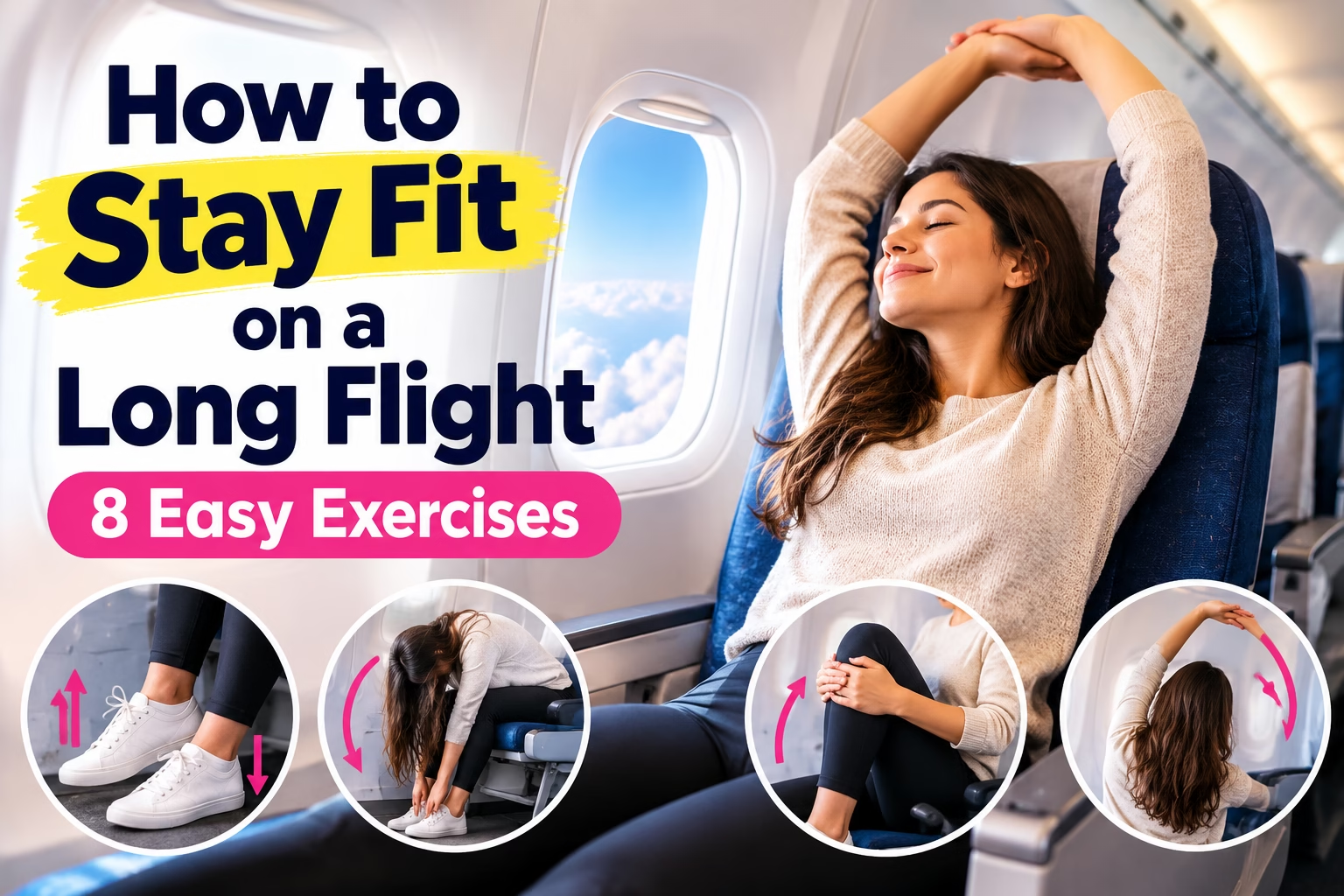
How to Stay Fit on a Long Flight: 8 Easy Exercises
Long flights can leave your body feeling stiff, tired, and uncomfortable. After sitting in the same position for several hours, your hips may feel tight, your lower back can become achy, and your feet and ankles may feel swollen.
The good news is that staying active while traveling doesn’t require an airport gym or a complicated workout. A few simple airplane exercises can help you break up long periods of sitting and keep your body moving without disturbing the passengers around you.
Most of these movements can be performed right from your seat, making them especially useful during long-haul flights. And they aren’t limited to air travel. You can also use many of them during long car trips, train journeys, or days when you’re stuck behind a desk.
Here are some simple ways to stay fit on a long flight and arrive at your destination feeling a little less stiff and sluggish.
Why Is Movement Important During a Long Flight?
When you spend several hours sitting, your muscles aren’t moving nearly as much as they normally would. Your hips remain bent, your legs stay relatively still, and your shoulders may gradually round forward.
That can contribute to:
- Tight hips and hamstrings
- Stiffness in your lower back
- Tired or heavy-feeling legs
- Swollen feet and ankles
- Neck and shoulder tension
- General fatigue
Long periods of immobility can also contribute to blood pooling in the legs. More importantly, prolonged travel is associated with an increased risk of blood clots in some people.
That doesn’t mean you need to exercise constantly throughout your flight. Simply changing positions, moving your feet and ankles, stretching gently, and getting up periodically when it is safe to do so can help break up long stretches of sitting.
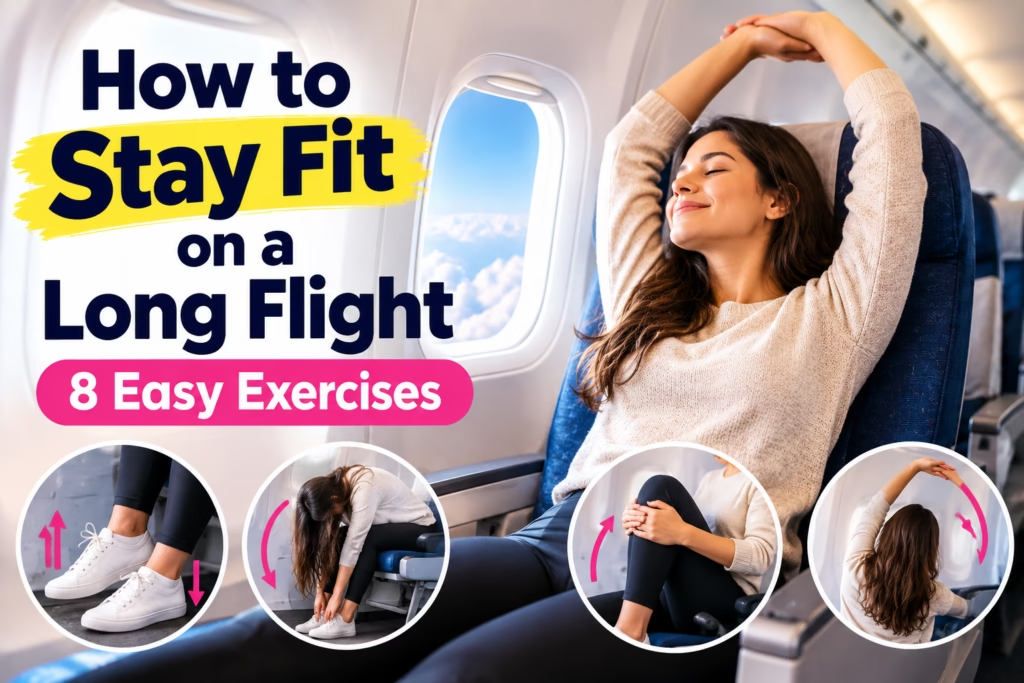
Try these easy in-flight exercises during your next trip.
1. Seated Toe and Heel Lifts
This is one of the easiest airplane exercises because it requires almost no space and can be performed without leaving your seat.
Toe and heel lifts activate the muscles of your lower legs and ankles while giving your feet something to do after sitting still for a long time.
How to do it:
Sit upright with both feet flat on the floor.
Keeping your heels planted, slowly lift your toes as high as comfortably possible.
Lower your toes back to the floor.
Next, keep your toes and the balls of your feet on the floor while lifting both heels.
Lower your heels and repeat.
Aim for approximately 15–20 repetitions of each movement.
You can repeat the exercise periodically throughout your flight, particularly after you’ve been sitting for a long stretch.
Make it even easier
Alternate one foot at a time rather than lifting both simultaneously. You can also slowly circle your ankles between sets to add more movement.
2. Gentle Seated Forward Bend
Sitting upright for hours can make your lower back feel stiff. A gentle seated forward bend provides a change of position and may help stretch the back and hips.
The key word here is gentle. An airplane isn’t the place for deep stretching.
How to do it:
Place both feet flat on the floor.
Sit toward the front of your seat if you have enough room and it is safe to do so.
Engage your abdominal muscles lightly.
Slowly hinge forward from your hips.
Allow your hands to move toward your thighs, shins, or ankles depending on your flexibility and available space.
Hold the position for approximately 10–20 seconds while breathing normally.
Slowly return to an upright position.
Repeat 2–3 times.
Never force yourself farther into the stretch. A small forward bend may be enough after several hours of sitting.
3. Seated Knee-to-Chest Stretch
The knee-to-chest stretch can provide a gentle stretch for your hips, glutes, and lower back.
Because airplane seats can be tight, perform this movement only when you have enough room to do it comfortably.
How to do it:
Sit upright with both feet on the floor.
Slowly lift one knee.
Place your hands around your thigh or just below your knee.
Gently bring the knee toward your chest as far as comfortable.
Hold for approximately 10–15 seconds.
Slowly lower your foot to the floor.
Switch sides.
Repeat 2–3 times on each leg.
Avoid pulling aggressively on your knee. The movement should feel like a comfortable stretch rather than an intense exercise.
4. Drink Water Throughout the Flight
Staying active isn’t the only thing that can make a long flight more comfortable. Hydration while flying matters too.
Airplane cabins generally have low humidity, which can contribute to dry eyes, dry skin, a dry mouth, and an overall feeling of dehydration during longer trips.
Keep water handy and drink regularly rather than waiting until you feel extremely thirsty.
You don’t necessarily need to force yourself to drink huge amounts of water at once. Regular sips throughout your journey are usually much more comfortable.
An added benefit? Getting up occasionally to use the restroom gives you another opportunity to move your legs—provided the seatbelt sign is off and it’s safe to walk around.
5. Seated Upper-Body Side Stretch
Your shoulders and upper back can become surprisingly tight during a long flight, particularly when you’re reading, using a laptop, watching movies, or trying to sleep in an awkward position.
A gentle overhead stretch can help you change position and loosen up your upper body.
How to do it:
Sit tall with your back supported.
If you have enough overhead space, raise your arms above your head.
Hold your right wrist with your left hand.
Gently pull your right arm toward the left while allowing your upper body to lean slightly in the same direction.
Hold for 10–15 seconds.
Return to the center.
Switch sides.
Repeat 2–3 times per side.
Keep your movements controlled so you don’t accidentally bump the passenger beside you.
6. Ankle Circles
Here’s another exercise that takes almost no space.
Ankle circles are particularly convenient because you can do them while watching a movie, reading, or listening to music.
How to do it:
Lift one foot slightly from the floor.
Slowly rotate your ankle clockwise for 10 circles.
Reverse direction for another 10 circles.
Place your foot down and repeat with the opposite ankle.
Try to make each circle slow and controlled rather than quickly spinning your foot.
You can perform ankle circles several times during a long flight.
7. Seated Knee Extensions
Want to get your thigh muscles working without leaving your seat? Try a few knee extensions.
How to do it:
Sit upright with both feet on the floor.
Slowly straighten one leg until comfortable.
Briefly tighten the muscles at the front of your thigh.
Hold for 2–3 seconds.
Lower your foot back to the floor.
Repeat with the opposite leg.
Continue alternating for approximately 10 repetitions per leg.
Space can be extremely limited on some flights, so don’t worry about fully straightening your leg. Work within the space available without pushing against the seat in front of you.
8. Get Up and Walk When Possible
Some of the best movement you can do during a long flight is also the simplest: stand up and walk.
When the seatbelt sign is off and the cabin crew says it is safe to move around, occasionally get out of your seat.
You don’t need to walk laps around the airplane. Simply walking to the restroom or briefly standing and moving your legs can give your body a break from sitting in one position.
If you’re on a very long flight, look for natural opportunities to move instead of remaining seated continuously for hours.
Never stand or exercise in the aisle when the seatbelt sign is illuminated, during turbulence, or when cabin crew instruct passengers to remain seated.
A Simple 3-Minute Airplane Exercise Routine
Don’t want to remember a long list of exercises? Use this quick seated routine.
Start with 20 toe lifts, followed by 20 heel lifts.
Next, perform 10 ankle circles in each direction on each foot.
Do 10 seated knee extensions per leg, followed by a gentle knee-to-chest stretch for 10–15 seconds on each side.
Finish with an upper-body stretch and a few slow, relaxed breaths.
The entire routine can take only a few minutes and requires virtually no equipment or extra space.
Repeat some or all of the movements periodically during a long flight as comfort and circumstances allow.
More Tips for Staying Comfortable on a Long Flight
Exercise is only one part of making long-distance travel easier on your body.
Try to avoid staying in exactly the same position for the entire flight. Small changes in posture count.
Keep your feet supported whenever possible rather than sitting with your legs crossed for hours. Adjust your position periodically, roll your shoulders, move your ankles, and stand when appropriate.
Wear comfortable clothing that doesn’t unnecessarily restrict your movement. Comfortable shoes can also make walking through the airport—and moving during the flight—much easier.
You can even start moving before boarding. Instead of sitting at the gate for an hour and then sitting on the airplane for several more hours, use some of your waiting time to walk around the terminal.
Think of your travel day as an opportunity to accumulate small amounts of movement rather than trying to squeeze in a traditional workout.
Can Airplane Exercises Prevent Blood Clots?
This is an important distinction.
Moving your legs and avoiding prolonged immobility are commonly recommended during long-distance travel, but airplane exercises should not be treated as a guarantee against deep vein thrombosis (DVT) or other blood clots.
Some people have a higher risk of travel-related blood clots because of medical conditions, medications, recent surgery, pregnancy, previous blood clots, age, or other factors.
Anyone concerned about their personal risk should speak with a healthcare professional before a long trip. They may recommend specific precautions based on individual circumstances.
Seek urgent medical attention for concerning symptoms such as unexplained swelling, pain, warmth, or discoloration in one leg, or emergency symptoms such as sudden shortness of breath, chest pain, coughing up blood, or fainting.
Airplane Exercises Can Be Useful at the Office Too
One of the best things about these movements is that they aren’t just for airplanes.
Think about how often you spend long stretches sitting while:
- Working at a computer
- Attending meetings
- Traveling by train
- Riding as a passenger on a road trip
- Watching television
- Studying
Toe lifts, heel raises, ankle circles, knee extensions, and gentle seated stretches can all provide small movement breaks during a sedentary day.
You won’t replace your normal workout with these exercises, but that’s not really the goal.
The goal is simply to sit less and move more often.
Final Thoughts: Keep Moving, Even When You’re Traveling
A long flight doesn’t have to mean sitting completely motionless for eight or ten hours.
Small movements can make a difference in how your body feels when you finally step off the plane.
Try seated airplane exercises such as toe and heel lifts, ankle circles, knee extensions, gentle knee-to-chest stretches, and upper-body stretches. Drink water regularly, change your sitting position periodically, and get up to walk whenever it’s safe and practical.
None of these activities requires gym equipment, workout clothes, or even much space.
And that’s the biggest takeaway: staying active doesn’t always require a full workout.
Sometimes, fitness simply means finding small opportunities to move—even at 35,000 feet.