10 Easy Ab Workouts at Home for Beginners
You don’t need a gym membership, fancy equipment, or an exhausting workout to strengthen your abs. Sometimes, all it takes is a yoga mat, a little floor space, and 10 minutes to yourself.
And let’s face it, finding those 10 minutes can be a challenge when your day is already packed with work, family, and endless responsibilities.
But here’s the good news: building a stronger core doesn’t have to be complicated.
These 10 easy ab workouts at home are designed for women who want to strengthen their abdominal muscles, improve balance, and feel more confident during everyday movement.
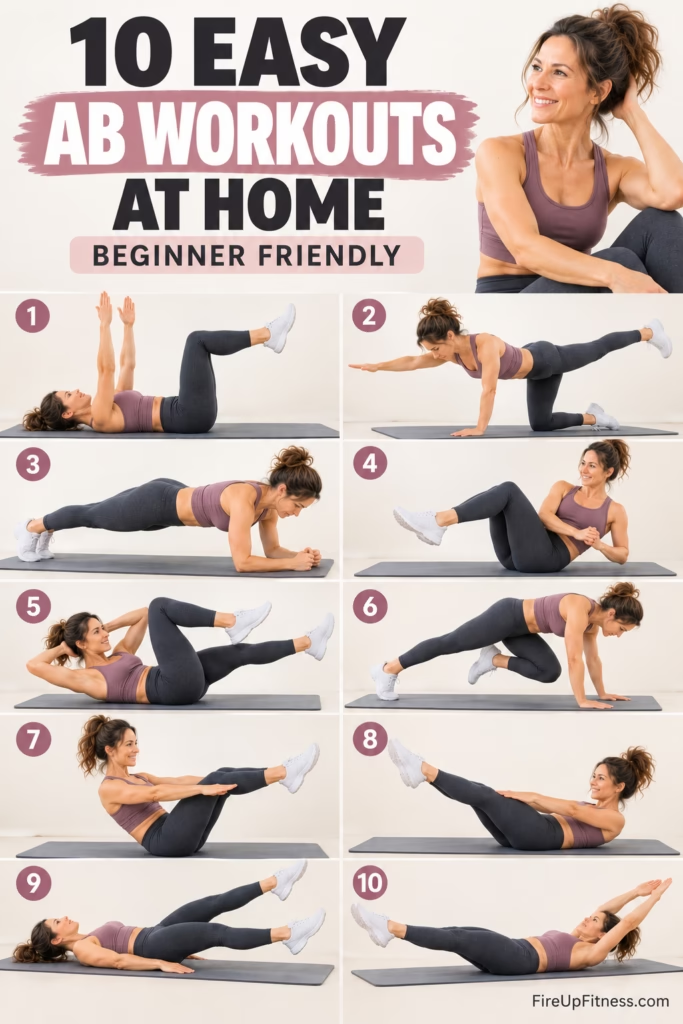
The best part? We’ve arranged the exercises from easiest to most challenging, so you can start with simple movements and gradually work your way up as your strength improves.
Whether you’re beginning your fitness journey, getting back into exercise after a break, or simply looking for a quick core workout without gym equipment, this routine gives you plenty of options.
Ready to give your abs some attention? Let’s get started!
Why Strengthening Your Abs Matters More Than You Think
Your abdominal muscles aren’t just there for appearance. They’re part of your core, a group of muscles that helps support your spine, stabilize your body, and keep you balanced throughout the day.
Think about how often you bend to pick something up, carry groceries, climb stairs, or get out of bed. Your core helps with all these everyday movements.
Regular core exercises can help you:
- Improve balance and stability.
- Support better posture.
- Strengthen muscles that support your lower back.
- Make everyday movements feel more controlled.
- Build a foundation for other exercises.
And unlike complicated gym routines, these abs exercises at home require little more than your own body weight.
1.
Dead Bug – The Perfect Starting Point for Beginners
Difficulty: Very easy
Let’s start with an exercise that has a funny name but a serious purpose.
The dead bug is one of the best places to begin because it teaches you how to engage your abdominal muscles while keeping your back supported.
It may not look like much, but those slow, controlled movements can really make your core work.
How to do it:
- Lie on your back with your knees bent and feet on the floor.
- Raise your arms toward the ceiling.
- Lift your legs one at a time until your knees are bent at approximately 90 degrees.
- Slowly lower your right arm overhead while extending your left leg toward the floor.
- Return to the starting position and switch sides.
Start with: 6–8 repetitions per side.
Make it easier: Keep both knees bent and gently tap one heel to the floor at a time.
Remember: Keep your lower back comfortably supported against the mat. Only extend your arm and leg as far as you can without arching your back.
This is a wonderful starter ab workout move because it builds control before you progress to more demanding exercises.
2.
Bird-Dog Crunch – Strengthen Your Core and Improve Balance
Difficulty: Easy
The bird-dog crunch is another gentle exercise that deserves a spot in your beginner routine.
It strengthens your abdominal muscles while engaging your glutes and back. Plus, it helps improve coordination, something we can all benefit from as we get older.
How to do it:
- Start on your hands and knees.
- Extend your right arm forward and your left leg backward.
- Keep your back neutral and hips facing the floor.
- Slowly bring your right elbow and left knee toward each other beneath your body.
- Extend them again and return to the starting position.
- Repeat on the opposite side.
Start with: 6–8 repetitions per side.
Make it easier: Skip the crunch and simply extend your opposite arm and leg, holding briefly before switching.
Remember: Avoid twisting your hips or rushing the movement. Slow and steady works best.
This exercise is especially useful when you’re looking for a bodyweight workout beginner routine that strengthens more than just your abs.
3.
Forearm Plank – Build Your Core Foundation
Difficulty: Easy to moderate
The plank is one of those exercises that looks incredibly simple until you try holding it.
Ten seconds might feel like nothing at first, but you’ll quickly discover how much work your abdominal muscles are doing.
The plank strengthens your core while also engaging your shoulders and glutes.
How to do it:
- Lie face down on your mat.
- Place your forearms on the floor with your elbows directly beneath your shoulders.
- Lift your hips and legs off the floor, supporting yourself on your forearms and toes.
- Keep your body in a straight line from head to heels.
- Hold the position while breathing normally.
Start with: 10–20 seconds.
Make it easier: Keep your knees on the floor or perform the plank against a sturdy countertop.
Remember: Don’t let your lower back sag or push your hips too high.
A short plank with good form is far more valuable than a long one that leaves your back uncomfortable.
4.
Russian Twists – Give Your Side Abs Some Attention
Difficulty: Moderate
Now that your core is warming up, let’s add a little rotation.
Russian twists focus on your obliques, the muscles along the sides of your abdomen that help you turn and stabilize your torso.
You don’t need weights to make this exercise effective.
How to do it:
- Sit on your mat with your knees bent and feet flat on the floor.
- Lean back slightly while keeping your chest lifted.
- Bring your hands together in front of your chest.
- Slowly rotate your upper body to the right.
- Return to the center, then rotate left.
Start with: 8–12 total twists.
Make it easier: Sit more upright and keep both feet firmly planted on the floor.
Remember: Rotate gently through your upper body rather than swinging your arms.
This is a simple addition to an abs workout for women at home, especially when you want to strengthen your core from different angles.
5. Bicycle Crunches – A Classic Ab Exercise That Still Works
Difficulty: Moderate
Bicycle crunches are a familiar exercise, and there’s a good reason they’ve remained popular.
They engage your abdominal muscles while adding a rotational movement that challenges your obliques.
But here’s something many people overlook: doing bicycle crunches faster doesn’t automatically make them better.
Control is what matters.
How to do it:
- Lie on your back with your hands lightly supporting your head.
- Lift your shoulders slightly off the mat.
- Bring your right knee toward your chest.
- Rotate your upper body so your left shoulder moves toward your right knee.
- Switch sides, moving your legs in a slow cycling motion.
Start with: 8–10 repetitions per side.
Make it easier: Keep your head on the mat and alternate lifting your knees without twisting.
Remember: Avoid pulling on your neck or forcing your elbow to touch your knee.
A few slow repetitions can be surprisingly challenging.
6. Mountain Climbers – Add Movement to Your Core Workout
Difficulty: Moderate
Ready to bring a little more energy into your routine?
Mountain climbers are a great choice because they engage your abdominal muscles while working your arms, shoulders, and legs.
And no, you don’t have to perform them at lightning speed.
Slow mountain climbers can be challenging enough, especially for beginners.
How to do it:
- Begin in a high plank with your hands beneath your shoulders.
- Keep your abdominal muscles engaged.
- Bring your right knee toward your chest.
- Return your foot to the starting position.
- Repeat with your left knee.
Start with: 20–30 seconds.
Make it easier: Place your hands on a sturdy countertop and step your knees forward one at a time.
Remember: Keep your hips steady and avoid bouncing.
This is a great option for anyone who enjoys a slightly more energetic workout without gym equipment.
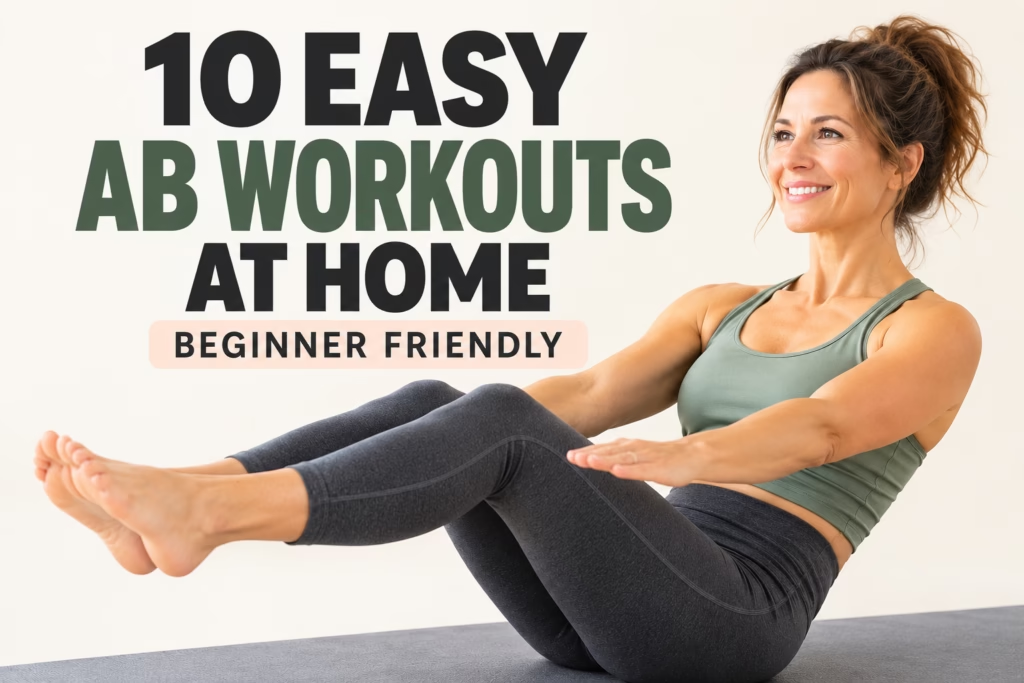
7. Boat Pose – Test Your Balance and Core Strength
Difficulty: Moderate to challenging
Boat pose may look peaceful in yoga pictures, but holding it requires a surprising amount of abdominal strength.
It challenges your balance while engaging your core and hip flexors.
The secret is finding a position you can maintain without rounding your back.
How to do it:
- Sit on your mat with your knees bent and feet flat.
- Lean back slightly while keeping your chest lifted.
- Raise your feet until your shins are approximately parallel to the floor.
- Extend your arms forward beside your legs.
- Hold the position while breathing steadily.
Start with: 10–15 seconds.
Make it easier: Hold the backs of your thighs or keep one foot on the floor.
Remember: There’s no need to straighten your legs. The bent-knee version is already a great core challenge.
8. Pilates Hundred – Build Abdominal Endurance
Difficulty: Challenging
The Pilates Hundred might sound intimidating, especially when you’re just starting.
But don’t worry. You don’t have to complete 100 pulses on your first attempt.
This Pilates exercise challenges your abdominal endurance while encouraging steady, controlled breathing.
How to do it:
- Lie on your back with your knees bent.
- Lift your legs into a tabletop position.
- Extend your arms beside your body.
- Raise your head and shoulders slightly off the mat if comfortable.
- Pulse your arms gently up and down while breathing steadily.
Start with: 20–30 arm pulses.
Make it easier: Keep your feet on the floor and rest your head and shoulders on the mat.
Remember: Don’t strain your neck or hold your breath.
As your endurance improves, gradually work toward longer sets.
9. Flutter Kicks – Challenge Your Core Control
Difficulty: Challenging
Flutter kicks might remind you of swimming, but you don’t need a pool for this exercise.
This movement challenges your abdominal muscles and hip flexors while requiring your torso to remain stable.
It becomes especially demanding when you try to maintain control throughout the movement.
How to do it:
- Lie on your back with your legs extended.
- Place your arms comfortably beside your body.
- Lift your legs off the floor while keeping your lower back supported.
- Raise one leg slightly while lowering the other.
- Continue alternating in small, controlled movements.
Start with: 10–20 seconds.
Make it easier: Bend your knees slightly or keep your legs higher above the floor.
Remember: If your lower back starts arching, raise your legs higher or take a break.
There’s no need to lower your legs close to the floor until you can maintain good control.
10. Hollow Body Hold – The Ultimate Core Challenge
Difficulty: Most challenging
We’ve saved one of the toughest exercises for last.
The hollow body hold is a powerful core-strengthening movement that requires abdominal endurance and full-body control.
It looks simple, but maintaining the position can be difficult even for people who exercise regularly.
How to do it:
- Lie flat on your back with your arms and legs extended.
- Gently press your lower back toward the mat.
- Lift your head and shoulders slightly.
- Raise your arms and legs off the floor while keeping your core engaged.
- Hold the position without allowing your lower back to arch.
Start with: 10–15 seconds.
Make it easier: Keep your knees bent, extend your arms toward your knees, and rest your head on the mat.
Remember: Good form matters much more than how long you hold the position.
This is an exercise to work toward gradually, not something you need to master on your first day.
Your 10-Minute Beginner Ab Workout at Home
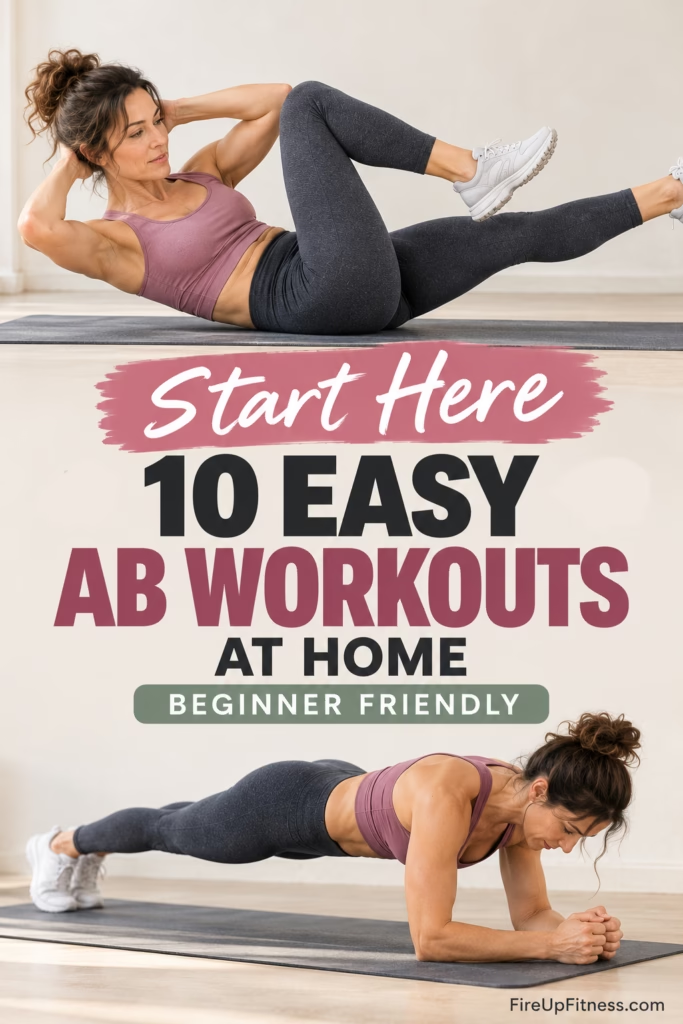
Feeling a little overwhelmed by all 10 exercises?
You don’t need to do everything at once.
In fact, starting with fewer movements is often the smartest way to build a habit that lasts.
Here’s a simple easy ab workout for beginners at home using five of the more accessible exercises from our list.
| Exercise | Beginner target |
|---|---|
| Dead bug | 8 total reps |
| Bird-dog crunch | 6 per side |
| Forearm plank | 15 seconds |
| Russian twists | 10 total twists |
| Bicycle crunches | 8 per side |
Complete the exercises slowly, resting 20–30 seconds between movements. Repeat the circuit if comfortable, aiming for approximately 10 minutes including rest.
As you get stronger, you can gradually introduce mountain climbers, boat pose, Pilates Hundred, flutter kicks, and eventually the hollow body hold.
The goal isn’t to rush through the entire list. It’s to build a strong foundation and progress when your body feels ready.
How Often Should You Do Ab Workouts at Home?
You don’t need to train your abs every single day to make progress.
For beginners, two or three core-focused sessions per week can be a reasonable starting point, with recovery time between more demanding workouts.
A few things can help you stay consistent:
- Start small. Even five minutes of focused exercise is worthwhile.
- Focus on form. Controlled repetitions help you get more from each movement.
- Increase difficulty gradually. Add a few seconds or repetitions when exercises become easier.
- Listen to your body. Muscle effort is normal, but sharp pain or joint discomfort is a reason to stop and adjust.
- Mix things up. Combine your core sessions with walking, stretching, and full-body strength exercises.
While some people search for a flat belly workout, these exercises are best understood as a way to build abdominal strength, stability, and muscular endurance. They cannot guarantee a particular stomach shape.
A Stronger Core Starts With Consistency, Not Perfection
There’s something satisfying about realizing that an exercise you once struggled with has become easier.
Maybe you can hold your plank a little longer. Perhaps your balance feels steadier during bird-dog crunches. Or maybe you can finally complete a round of bicycle crunches without stopping.
Those small improvements matter.
The beauty of these ab workouts at home is that you can move at your own pace. You don’t need to compete with anyone, follow an exhausting schedule, or master every exercise immediately.
Start with the first three movements. Practice them until they feel comfortable. Then gradually explore the more challenging exercises.
Save this beginner ab workout for your next at-home fitness session and share it with someone who wants to build a stronger core without going to the gym.
Your next workout doesn’t have to be perfect. It just has to begin.