
Understanding Hiatal Hernias and Gentle Exercises for Relief
A hiatal hernia occurs when part of the stomach pushes up through the diaphragm into the chest cavity. This condition can lead to uncomfortable symptoms like heartburn, acid reflux, bloating, and even difficulty swallowing. If you’ve experienced these issues, you know how disruptive they can be to everyday life.
The good news is that while there’s no exercise that can cure a hiatal hernia, incorporating gentle, mindful movement into your routine may help relieve discomfort and improve your overall well-being. These simple exercises support the diaphragm, reduce abdominal pressure, and encourage relaxation.
But before you begin, remember: always check with your healthcare professional before starting any new workout, especially if you have a hernia or ongoing digestive concerns.
What Causes a Hiatal Hernia?
Hiatal hernias often develop from a mix of lifestyle, age, and genetic factors. Some common causes include:
- Age-related weakening of the diaphragm: As we get older, the diaphragm naturally weakens, making hernias more likely.
- Increased abdominal pressure: Chronic coughing, heavy lifting, frequent vomiting, obesity, or even straining from constipation can add pressure on the diaphragm.
- Genetic predisposition: Some people are more likely to develop hiatal hernias due to inherited muscle weaknesses or connective tissue conditions.
- Injury or trauma: A physical injury to the diaphragm can sometimes create an opening that allows the stomach to push through.
4 Gentle Exercises to Help Manage Hiatal Hernia Symptoms
The following activities are low-impact, hernia-friendly, and designed to reduce pressure in the abdominal area while strengthening supportive muscles.

1. Diaphragmatic (Deep Belly) Breathing
How to Perform:
- Sit or lie in a comfortable position.
- Place one hand on your chest and the other on your abdomen.
- Inhale deeply through your nose, letting your abdomen rise while your chest remains still.
- Exhale slowly through your mouth.
- Repeat for 5–10 minutes.
Why It Helps:
This breathing exercise strengthens the diaphragm, reduces abdominal pressure, and encourages relaxation. It can help relieve symptoms of reflux and improve overall breathing efficiency.

2. Gentle Yoga Poses
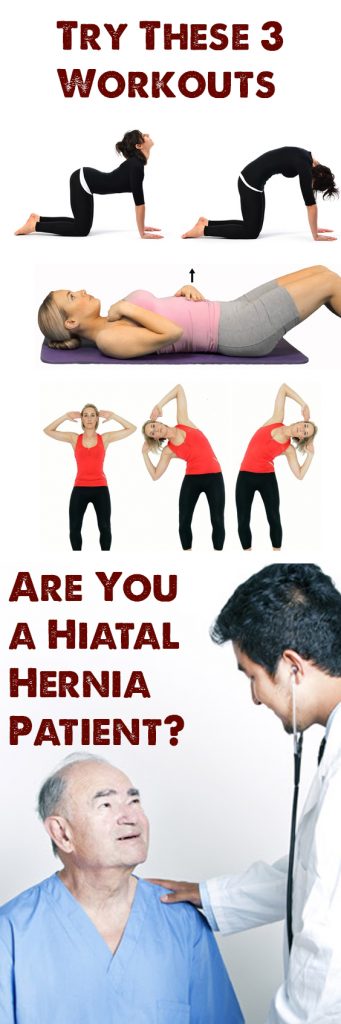
Recommended Poses: Cat-Cow, Child’s Pose, Reclining Bound Angle Pose.
How to Perform:
- Cat-Cow: On hands and knees, inhale as you arch your back and lift your head; exhale as you round your spine and tuck your chin.
- Child’s Pose: Kneel and sit back on your heels. Stretch your arms forward and rest your forehead on the mat for a calming stretch.
- Reclining Bound Angle Pose: Lie on your back, bring the soles of your feet together, and let your knees fall outward. Breathe deeply.
Why It Helps:
These gentle poses stretch and relax the core without straining the abdomen. They also encourage deep breathing, which supports diaphragmatic strength and reduces pressure at the hernia site.
3. Pelvic Tilts
How to Perform:
- Lie on your back with knees bent and feet flat on the floor.
- Flatten your lower back against the floor by tightening your abdominal muscles.
- Hold for a moment, then release.
- Repeat 10–15 times.
Why It Helps:
Pelvic tilts strengthen the abdominal and core muscles while promoting proper posture. Better posture helps reduce abdominal pressure and can ease hernia-related discomfort.
4. Gentle Walking
How to Perform:
- Choose a comfortable pace—slow to moderate—either indoors or outdoors.
- Walk with good posture, keeping your shoulders relaxed and chest open.
- Start with 10–15 minutes after meals or as tolerated.
Why It Helps:
Walking is one of the simplest yet most effective activities for those with hiatal hernias. It aids digestion, helps prevent acid reflux after eating, and supports overall circulation without placing excess pressure on the diaphragm.
Tips for Preventing a Hiatal Hernia
While not all hiatal hernias can be prevented, mindful lifestyle choices can help lower your risk and ease symptoms:
- Maintain a Healthy Weight: Extra abdominal weight increases pressure on the diaphragm.
- Eat Smaller Meals: Avoid overeating and stick to smaller, frequent meals to reduce stomach pressure.
- Practice Safe Lifting: Use your legs, not your back, and avoid heavy lifting when possible.
- Quit Smoking: Smoking increases coughing and irritates the digestive system.
- Manage Chronic Cough or Constipation: These conditions raise abdominal pressure—seek medical guidance to treat them.
- Strengthen Core Muscles: Focus on safe, low-impact core work like diaphragmatic breathing and pelvic tilts.
Important Reminder: Consult a Healthcare Professional
These exercises may help reduce discomfort, but they’re not a cure for hiatal hernias. Some movements can worsen symptoms if done incorrectly or without proper guidance. Always consult your doctor before beginning any new workout routine, and stop immediately if an exercise causes pain or increased reflux.
Final Thoughts
Living with hiatal hernias can feel challenging, but the right lifestyle habits make a big difference. Incorporating gentle walking, yoga poses, pelvic tilts, and deep breathing into your daily routine may ease pressure on the diaphragm, improve digestion, and help you feel more comfortable.
Remember, healing isn’t about perfection—it’s about small, consistent steps toward better health. Listen to your body, move with care, and partner with your healthcare provider to create a safe plan that supports your long-term wellness.