4 Simple Exercises to Build Stamina and Endurance
Ever notice how some people can walk for miles, stay active all day, or finish a workout without looking completely exhausted? Meanwhile, you might find yourself catching your breath after climbing a few flights of stairs.
It’s easy to assume they’re naturally fitter or simply have more energy. But there’s something else happening: their bodies have become accustomed to sustained physical activity.
And that’s something you can work toward, too.
Building stamina doesn’t mean pushing yourself through exhausting workouts. It means gradually improving your body’s ability to keep moving without tiring so quickly.
The right exercises can help you walk farther, feel stronger during everyday activities, and enjoy movement without constantly watching the clock.
Whether you’re starting from scratch or getting back into fitness after 40, these four simple exercises can help you build stamina and endurance without turning your life into one long workout.
Why Do You Get Tired So Quickly During Exercise?
Have you ever started a walk feeling perfectly fine, only to feel unusually tired ten minutes later?
Sometimes, the explanation is straightforward. Your body simply hasn’t adapted to that level of activity yet.
When you exercise, your muscles need oxygen and energy to keep working. Your heart pumps faster, your breathing increases, and your muscles work harder to support movement.
When you’re not accustomed to regular activity, even moderate exercise can feel demanding.
But something interesting happens when you become more active.
Your heart and muscles gradually adapt. Your body becomes more efficient at handling physical effort, and activities that once seemed challenging may start feeling easier.
This is what improving stamina looks like in everyday life.
You might notice that you can carry groceries without needing a break, enjoy a longer walk, or finish a workout feeling pleasantly challenged rather than completely drained.
Of course, low stamina isn’t always about fitness. Poor sleep, inadequate nutrition, stress, anemia, and certain medical conditions can also contribute to fatigue. Persistent or unexplained exhaustion deserves medical attention.
For many otherwise healthy beginners, however, regular physical activity is a practical place to start.
1. Walking: The Most Underrated Way to Build Stamina

Walking might seem too simple to make much difference, especially when social media is filled with intense workouts promising dramatic results.
But don’t underestimate it.
A brisk walk challenges your cardiovascular system without requiring complicated movements or expensive equipment. Your heart beats faster, your breathing deepens, and your leg muscles work continuously to keep you moving.
Over time, these repeated efforts help improve aerobic endurance.
What makes walking especially useful is how easily it fits into everyday life.
You can walk around your neighborhood, take a longer route through the grocery store, explore a nearby park, or spend twenty minutes on a treadmill.
You don’t have to change your entire schedule to benefit.
The small change that makes walking more effective
Instead of walking at exactly the same comfortable pace every time, introduce occasional bursts of faster walking.
For example, during a 20-minute walk, spend a few minutes moving briskly before returning to your usual pace.
That slight increase in effort gives your cardiovascular system a new challenge without requiring you to run.
As the weeks pass, you may find yourself naturally walking faster or covering more distance before needing a break.
And that’s the beauty of walking: the improvements often show up outside your workouts.
A staircase that once left you breathless might no longer feel so intimidating.
Best for: Beginners, women over 40, and anyone who wants an accessible, low-impact way to improve endurance.
2. Strength Training: Make Everyday Movement Feel Easier
When most people think about stamina, they picture running, cycling, or other cardiovascular activities.
But muscular strength plays an important role, too.
Think about how tiring it can feel to carry heavy shopping bags, climb several flights of stairs, or spend an afternoon doing housework.
These activities don’t necessarily require exceptional cardiovascular fitness. They also depend on how well your muscles handle repeated effort.
When your muscles become stronger, many everyday tasks require less effort relative to your maximum strength.
That’s one reason strength training deserves a place in any stamina-building routine.
And no, you don’t need to lift heavy weights to benefit.
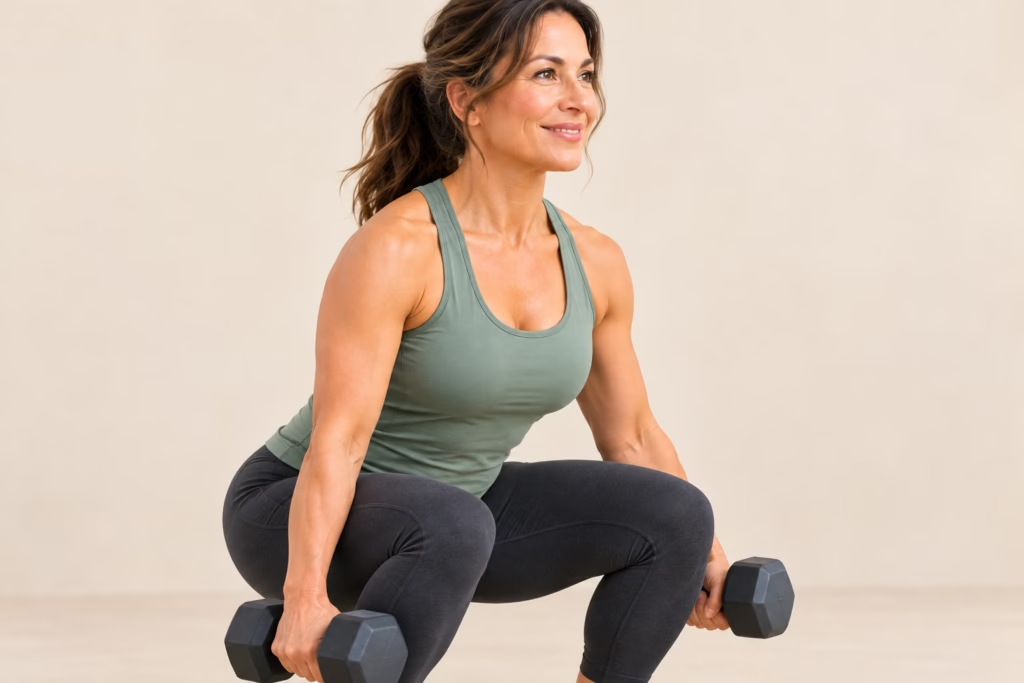
Simple movements such as squats, wall push-ups, glute bridges, and standing calf raises can help develop strength and muscular endurance.
Why lighter workouts can still make a difference
Imagine doing ten slow, controlled squats today.
At first, your legs might start feeling tired near the end. But after several weeks of regular practice, those same ten squats may feel noticeably easier.
You might eventually complete fifteen repetitions comfortably or add a second round.
Your muscles have adapted to the challenge.
For women over 40, this matters beyond exercise performance. Maintaining muscle strength supports mobility, balance, independence, and everyday physical function as you age.
Two strength-training sessions each week can be a useful starting point, especially when combined with regular walking or another aerobic activity.
Best for: Anyone who wants to improve muscular endurance, maintain strength, and make daily activities less physically demanding.
3. Cycling: Build Endurance Without High-Impact Workouts
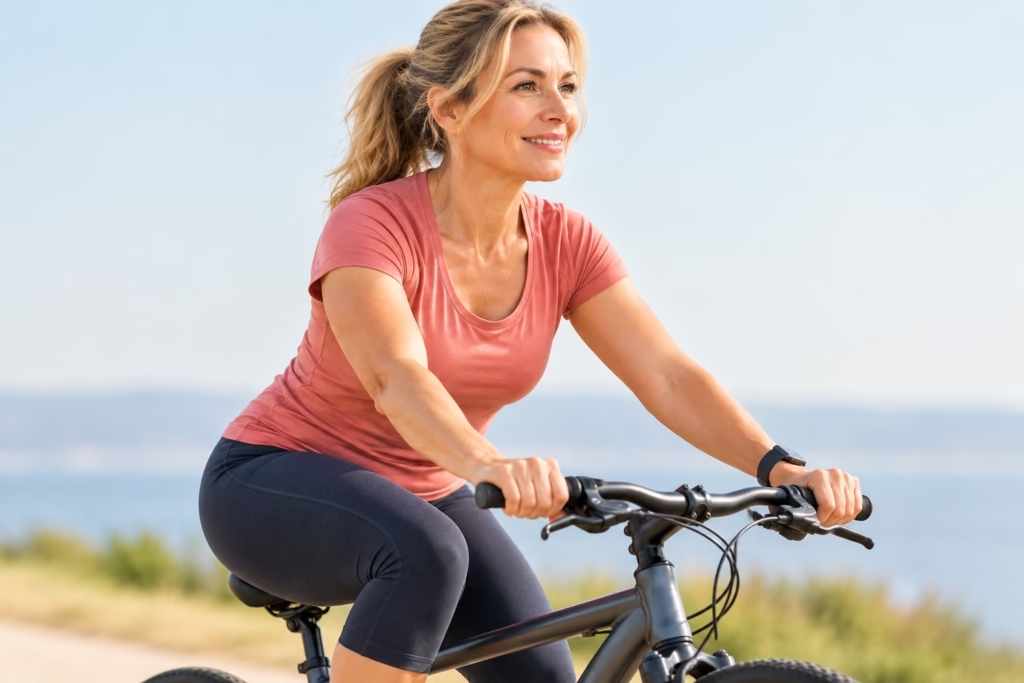
There’s something satisfying about cycling.
You settle into a rhythm, your legs keep moving, and before you know it, you’ve been active for twenty or thirty minutes.
That steady, continuous movement is exactly what makes cycling useful for building endurance.
As you pedal, your heart and lungs work to supply oxygen to your muscles. Meanwhile, your thighs, glutes, and calves repeatedly contract to keep the bicycle moving.
The result is a workout that challenges both your cardiovascular system and your lower body.
Another advantage is that cycling is low-impact.
Because your body weight is supported by the bicycle, there’s less repetitive impact than with activities such as running.
That doesn’t mean cycling is suitable for every joint condition, but many people find it a comfortable alternative.
You don’t have to cycle fast to improve stamina
A common misconception is that you need to pedal as hard as possible to get a good workout.
In reality, maintaining a moderate effort for a sustained period can be an effective way to develop aerobic endurance.
A comfortable 15-minute ride might be your starting point. Eventually, you could work toward 25 or 30 minutes without feeling the need to stop.
You can also vary your pace occasionally to keep the workout interesting.
Outdoor cycling offers fresh air and changing scenery, while a stationary bike makes it easier to exercise at home, especially during colder months.
Best for: People who enjoy low-impact cardio, want stronger legs, or prefer an alternative to walking and running.
4. Swimming: A Full-Body Way to Improve Stamina
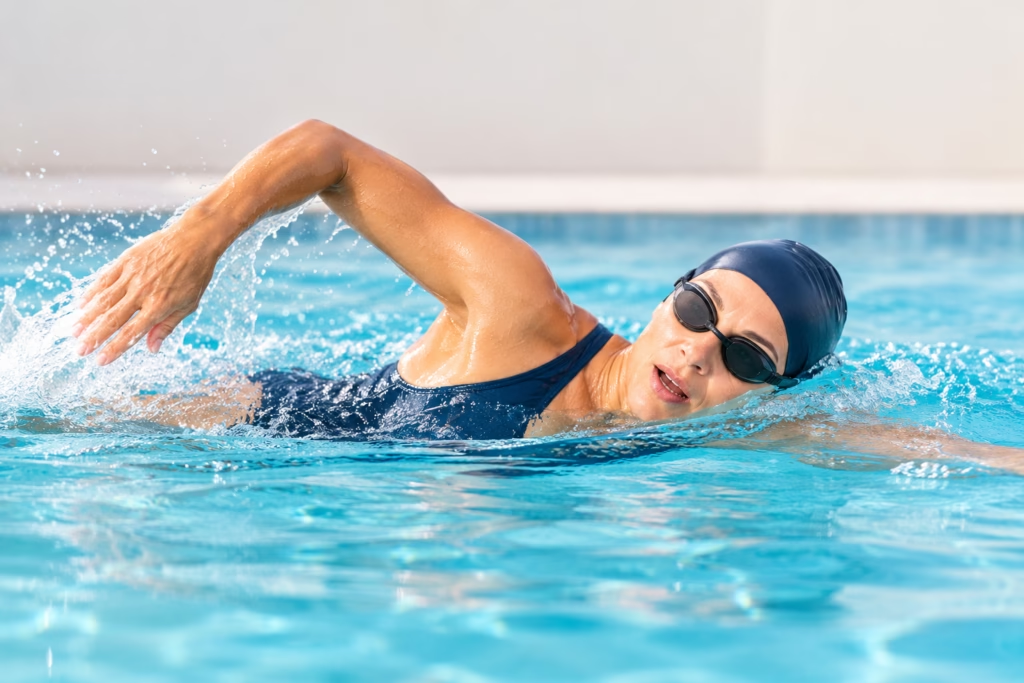
Swimming has a unique advantage over many other exercises: the water both supports your body and provides resistance.
Every time you move your arms or kick your legs, you’re working against the surrounding water.
That resistance challenges multiple muscle groups, while the buoyancy reduces the amount of weight your joints must support.
Swimming can improve cardiovascular endurance while engaging your shoulders, back, arms, core, and legs.
It also encourages you to coordinate your breathing with movement.
For people who find land-based workouts uncomfortable, exercising in water can be a refreshing change.
What makes swimming especially useful for beginners?
You can control how demanding the activity becomes.
A few relaxed laps, followed by a short break, may be enough when you’re getting started.
As your fitness improves, you can spend more time swimming and less time resting.
And swimming laps isn’t your only option.
Water walking and water aerobics can also provide meaningful physical activity, particularly for people who prefer gentle, low-impact movement.
You don’t have to be an experienced swimmer to enjoy the benefits of exercising in water, although non-swimmers should choose supervised activities appropriate to their ability.
Best for: People who enjoy water-based exercise, want a full-body workout, or prefer activities with less weight-bearing impact.
Which Exercise Builds Stamina the Fastest?
There’s no single exercise that works best for everyone.
The activity that helps you improve most is often the one you can perform consistently, at an appropriate intensity, and gradually make more challenging.
Here’s how the four exercises compare.
| Exercise | Main benefit | Good choice for |
|---|---|---|
| Walking | Cardiovascular endurance | Beginners and daily activity |
| Strength training | Muscular strength and endurance | Everyday strength and mobility |
| Cycling | Sustained aerobic fitness | Low-impact cardio |
| Swimming | Full-body cardiovascular conditioning | Water-based, low-impact exercise |
You also don’t have to choose just one.
Walking and strength training, for example, complement each other particularly well. One develops aerobic endurance, while the other helps your muscles handle physical demands more comfortably.
But if your schedule only allows a few short workouts each week, that’s still a worthwhile starting point.
How to Make Stamina-Building Exercises Part of Your Week
One of the reasons people struggle to improve endurance isn’t a lack of exercise options. It’s trying to do too much before they’ve established a routine.
You might feel motivated to exercise every day, only to become so sore or tired that you abandon the plan after a week.
A gentler approach is often more sustainable.
For example, you could take a brisk walk on Monday, do a short strength workout on Tuesday, enjoy a bike ride later in the week, and go swimming on the weekend.
You don’t need a complicated schedule.
Here’s what a balanced beginner week could look like:
| Day | Activity |
|---|---|
| Monday | 20-minute brisk walk |
| Tuesday | 15-minute strength workout |
| Wednesday | Rest or easy movement |
| Thursday | 20-minute cycling session |
| Friday | 20-minute walk |
| Saturday | Swimming or another strength session |
| Sunday | Rest |
The goal isn’t to fill every available minute with exercise.
It’s to make movement a regular part of your life.
As your endurance improves, you can gradually work toward 150 minutes of moderate-intensity aerobic activity per week, along with strength training on at least two days.
The Little Things That Make a Big Difference
Exercise helps build stamina, but your everyday habits influence how well you perform and recover.
Consider sleep, for example.
After a poor night’s sleep, even a familiar walk can feel unusually difficult. Your body may struggle to maintain the same level of effort, and your motivation can suffer.
Nutrition matters, too. Your muscles need enough energy to work, and a balanced diet helps support exercise and recovery.
Hydration is another piece of the puzzle. Even mild dehydration can make physical activity feel harder, especially in warm conditions.
But perhaps the most overlooked factor is patience.
You don’t build endurance by constantly testing your limits. You build it by giving your body a manageable challenge, recovering, and repeating that process over time.
Some days you’ll feel energetic. Other days, a shorter walk may be enough.
Both can have a place in a sustainable fitness routine.
How Do You Know Your Stamina Is Improving?
You won’t necessarily notice a dramatic change from one workout to the next.
Instead, progress often appears in small, ordinary moments.
Perhaps you finish your usual walk and realize you aren’t breathing as heavily. Maybe you can carry groceries upstairs without stopping, or your legs no longer feel as tired after a cycling session.
You might even find that exercise itself becomes more enjoyable because you’re no longer focused on how soon it will end.
These improvements are worth paying attention to.
Some people notice changes within a few weeks of consistent activity, while others need longer. Your starting fitness level, overall health, exercise intensity, and recovery all influence your progress.
Rather than measuring success by how much you sweat or how exhausted you feel, notice how comfortably you can perform activities that once challenged you.
That’s a more meaningful measure of endurance.
Can You Still Build Stamina After 40?
Absolutely.
It’s common to notice changes in energy, muscle strength, and recovery as you get older. Hormonal changes, busy schedules, inconsistent sleep, and reduced physical activity can all play a role.
But turning 40 doesn’t mean your ability to improve fitness disappears.
Your muscles and cardiovascular system can still adapt to regular exercise.
In fact, combining aerobic activity with strength training becomes especially valuable as you age because it supports heart health, muscle function, and mobility.
You don’t need to train like an athlete or compare yourself with someone who has been exercising for years.
You simply need a starting point that matches your current abilities.
A twenty-minute walk today might become a thirty-minute walk next month. A strength exercise that initially feels challenging may eventually become part of your comfortable routine.
Those changes add up.
Final Thoughts: Stronger Stamina Starts With Simple Movement
You don’t need a demanding fitness program to build better endurance.
Walking, strength training, cycling, and swimming are simple, effective ways to challenge your body and improve your ability to stay active.
What matters most isn’t choosing the hardest workout. It’s finding movement you enjoy enough to return to regularly.
Maybe that means walking before breakfast, cycling while listening to your favorite podcast, or doing a few strength exercises in your living room.
Start with what feels manageable. Give your body time to adapt, and let your progress develop naturally.
Because the real reward of building stamina isn’t just being able to exercise longer.
It’s being able to enjoy more of your day without feeling like you’ve already run out of energy.