Step Ups for Glutes: Best At-Home Leg Day Workout
Some exercises look simple on the surface but quietly deliver incredible results. Step ups for glutes fall into that category. They don’t require fancy equipment, complicated setups, or a gym membership. Just a sturdy surface, your body weight, and a little intention.
If you’ve ever wanted an at home workout that truly shapes your lower body, step ups might be one of the most underrated lower body exercises you can do. They strengthen your legs, lift your glutes, and build the kind of functional power that shows up in everyday life — climbing stairs, carrying groceries, or simply moving with more confidence.
And the best part? Anyone can start.
As trainer Bret Contreras famously said:
“Strong glutes change how your whole body moves.”
When your glutes are strong, everything feels more stable, more powerful, and more supported.
Why Step Ups for Glutes Work So Well
There’s something beautifully practical about step ups. They mimic a natural movement your body already knows: stepping upward. But when you slow that motion down and control it, your glutes are forced to do real work.
Unlike many leg day workouts that spread effort across multiple muscles, step ups place focused tension on the glutes while still engaging your thighs and hips.
Here’s what makes them special:
- Each leg works independently, improving balance and symmetry
- Deep glute muscles activate for shaping and strength
- They’re gentle on the joints compared to high-impact exercises
- They build coordination along with muscle
- They’re perfect for an efficient at home workout
When you press through your heel and lift your body with control, you teach your glutes to fire properly. For many women, this mind-muscle connection is the missing piece in their training.
How to Do Step Ups for Glutes With Perfect Form
Good form transforms this exercise from “okay” to incredibly effective.
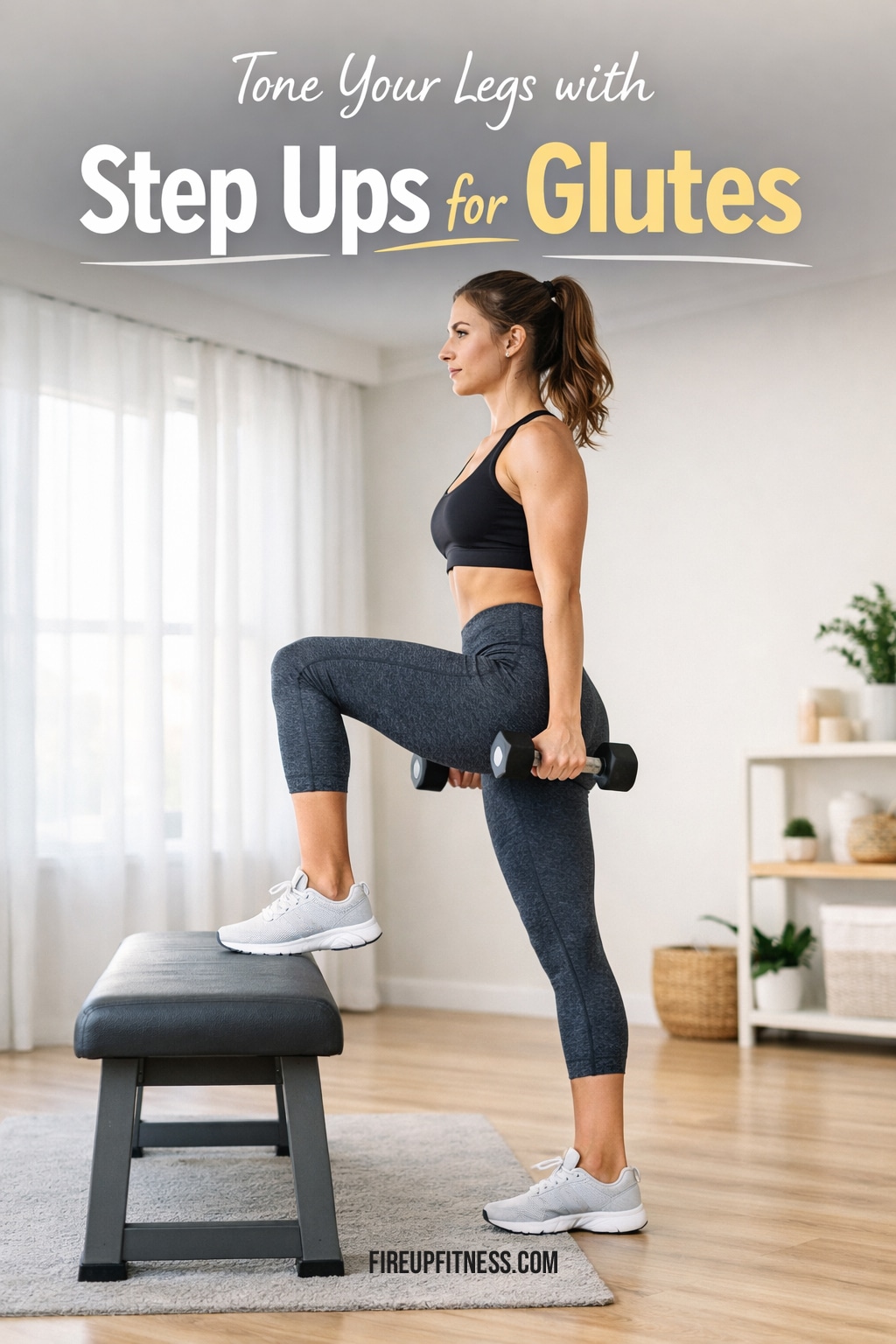
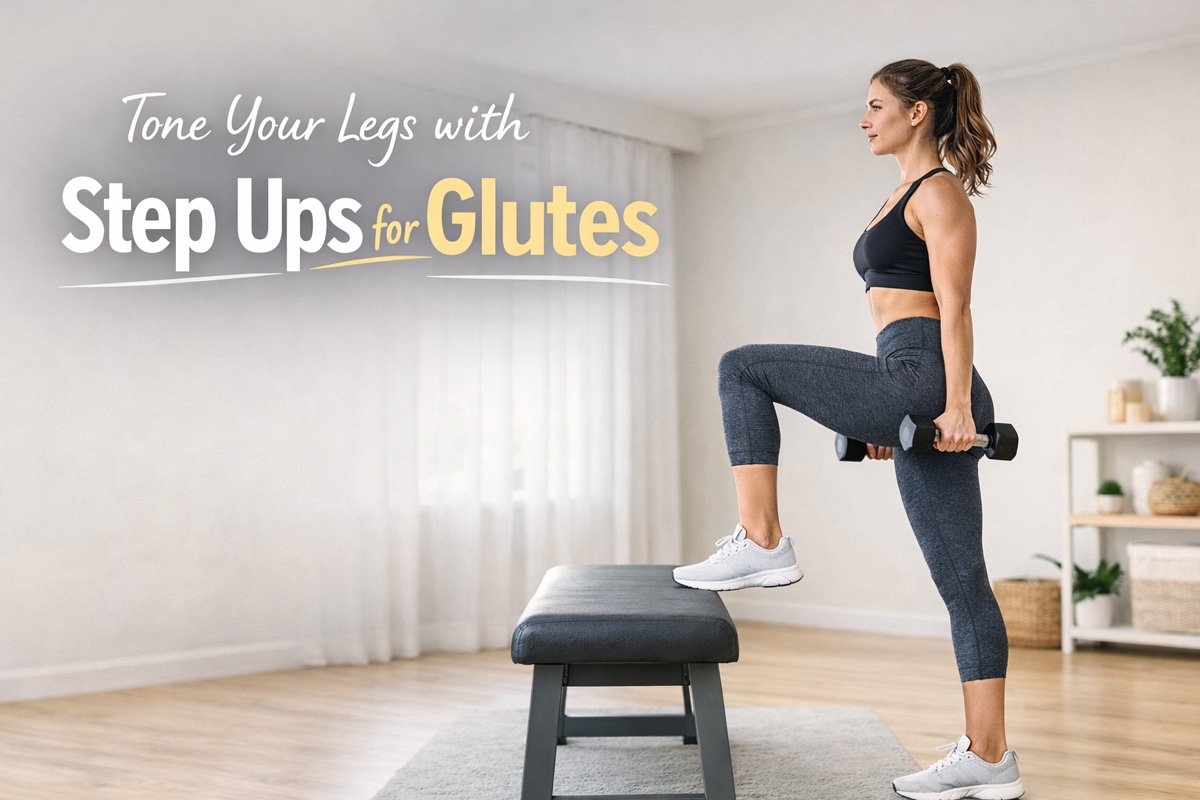
Stand facing a stable surface like a bench, step, or sturdy chair. The height should allow your knee to bend comfortably without straining.
Place your full foot on the platform. Push through your heel and rise up, bringing your trailing foot to the top. Pause briefly, then lower slowly with control.
Think of the movement as lifting yourself, not climbing quickly.
Helpful cues to remember:
- Keep your chest upright and shoulders relaxed
- Engage your core for balance
- Drive through the heel of the working leg
- Lower yourself slowly instead of dropping
- Keep your knee tracking over your toes
Slowing down the lowering phase builds more strength and deepens glute activation.
Common Mistakes That Steal Your Results
Even simple movements can lose effectiveness if rushed. Many people unknowingly reduce glute engagement by making small errors.
Using momentum instead of muscle is one of the biggest issues. Jumping or bouncing onto the platform shifts work away from your glutes.
Another common habit is pushing off the bottom foot. Your working leg should carry most of the effort.
Leaning too far forward can strain your lower back and knees. Staying tall protects your joints and keeps tension where it belongs.
Finally, choosing a platform that’s too high can compromise balance and form. A moderate height is often more effective than an extreme one.
Small adjustments create big improvements.
Step Up Variations to Elevate Your Leg Day Workout
Once the basic movement feels natural, variations can add challenge and variety.
Weighted step ups introduce dumbbells or kettlebells to increase resistance and build strength.
Knee drive step ups add a balance element by lifting the opposite knee at the top.
Lateral step ups shift the angle to target the outer glutes and hips.
Slow tempo step ups focus on time under tension by extending the lowering phase.
These variations keep your leg day workout fresh while continuing to build strength.
How to Use Step Ups in Your At Home Workout
One of the greatest strengths of step ups is flexibility. They can anchor an entire session or complement other lower body exercises.
For strength building:
- 3–4 sets of 10–12 controlled reps per leg
- Rest 60–90 seconds
For a lower body circuit:
- Step ups: 12 reps per leg
- Squats: 15 reps
- Glute bridges: 15 reps
- Repeat for 3 rounds
For endurance:
- 30 seconds of steady step ups
- 30 seconds rest
- Repeat 5 times
Each approach trains your body in a slightly different way.
Benefits That Go Beyond Appearance
While toned glutes are a welcome bonus, step ups offer deeper rewards.
They improve functional strength — the kind that makes daily activities easier and safer. Strong glutes support posture, stabilize the hips, and protect the knees.
They also enhance balance and coordination, which become increasingly important over time. Maintaining strong lower body muscles supports long-term mobility and independence.
For many women, this exercise becomes less about aesthetics and more about feeling capable and grounded in their bodies.
Who Should Be Doing Step Ups?
The beauty of step ups is how adaptable they are.
Beginners can start with a low surface and bodyweight. Advanced exercisers can increase height or add weights. The movement grows with you.
They’re especially valuable for:
- Women building a sustainable at home workout routine
- Anyone strengthening knees and hips safely
- People reconnecting with glute activation
- Those designing a balanced leg day workout
- Anyone seeking effective lower body exercises without machines
Few exercises offer this much return with so little equipment.
Tips to See Results Faster
Consistency always wins. A few thoughtful habits can amplify your progress.
Move slowly and deliberately. Rushed reps reduce effectiveness.
Progress gradually. Increase resistance only when your form feels solid.
Train your lower body two to three times per week and allow recovery.
Pay attention to sensation. If you don’t feel your glutes working, pause and reset your stance.
Fitness is built in small, repeated actions.
Final Thoughts
Step ups for glutes may seem modest compared to flashy gym equipment, but they deliver quiet, reliable strength. They sculpt your legs, activate your glutes, and build functional power that carries into everyday life.
Sometimes the most effective at home workout tools are the simplest ones. A step, your body, and focused movement can reshape how you feel in your own skin.
Strong glutes don’t just change how you look. They change how you move, stand, and carry yourself. When you return to the basics with patience and intention, your leg day workout becomes less about chasing results and more about building lasting strength.
And that strength shows up everywhere.