4 Reasons Your Fitness Goals Never Stick
Every January, the same thing happens.
Gyms get crowded. New workout clothes appear everywhere. People promise themselves they’ll exercise five days a week, eat healthier, and finally get into the best shape of their lives.
For the first couple of weeks, everything feels exciting.
Then February comes around.
The alarm gets snoozed. The gym bag stays in the closet. That workout plan you were so determined to follow suddenly feels like another chore on an already overwhelming to-do list.
And somewhere along the way, you start thinking, Maybe I’m just not disciplined enough.
But what if discipline isn’t the real problem?
What if the reason your fitness resolutions never stick is that you’re making exercise harder than it needs to be?
Most people don’t give up on fitness because they don’t care about their health. They give up because their goals don’t fit the life they’re actually living.
The good news? You don’t need to become a completely different person to make exercise a regular part of your life.
Sometimes, changing just a few small things can make all the difference.
Here are four common reasons fitness goals fall apart—and what you can do differently this year.
1. You’re Trying to Change Your Entire Life Overnight

You know that burst of motivation you get when you decide it’s finally time to get fit?
Suddenly, you’re planning morning workouts, evening walks, healthier meals, and a completely new daily routine.
You might even buy new workout clothes because, well, this time you’re serious.
There’s nothing wrong with feeling excited about a fresh start.
The trouble begins when you expect yourself to maintain ten new habits before you’ve even mastered one.
Imagine going from barely exercising to promising yourself five intense workouts every week.
By Wednesday, your muscles are sore. By Friday, you’re exhausted. And by the following Monday, you’re wondering how anyone manages to exercise regularly.
Here’s a better idea.
Make your first fitness goal almost ridiculously easy.
Instead of promising to exercise every day, commit to walking for 15 minutes three times a week.
Instead of attempting an hour-long workout, start with 10 minutes of simple strength exercises.
And instead of expecting your entire lifestyle to change in January, focus on becoming a little more active than you were in December.
Small goals may not sound particularly exciting, but they offer something much more valuable than excitement: a realistic chance to succeed.
There’s also something encouraging about keeping a promise to yourself.
Every time you finish that short walk or complete your planned workout, you’re building evidence that you can follow through.
Over time, those small successes can make bigger goals feel much less intimidating.
Try this today: Choose one fitness goal you feel confident you can complete for the next two weeks. Write it down, make it specific, and forget about adding anything else until it starts feeling manageable.
2. You’re So Focused on the Finish Line That You Forget About Today

Let’s say your goal is to lose body fat, build stronger arms, or comfortably walk five kilometers.
Those are perfectly reasonable things to work toward.
But there’s a problem with focusing only on the final result.
When you look in the mirror after two weeks and don’t notice much difference, it’s easy to feel disappointed.
You might think, I’ve been working so hard. Why isn’t anything changing?
And that’s often when motivation begins to disappear.
The truth is that meaningful fitness progress usually happens gradually.
Your muscles don’t become stronger overnight. Your endurance takes time to improve. And changes in body composition can be influenced by sleep, nutrition, hormones, genetics, and many other factors.
So instead of measuring your success only by the result you want months from now, start paying attention to what you can accomplish this week.
Think of it this way.
You can’t control exactly how quickly your body changes, but you have much more control over whether you take your planned walk today.
You can choose to practice your squats, complete a short workout, or go to bed a little earlier so you feel more rested.
These actions may seem ordinary, but they’re the foundation of long-term progress.
Here’s a simple example:
Your big goal: Build strength and improve your fitness over the next three months.
Your weekly goal: Complete two beginner strength workouts and three walks.
Your goal today: Spend 15 minutes moving your body.
See the difference?
Instead of worrying about where you’ll be three months from now, you have something useful to focus on right now.
And don’t overlook the improvements that don’t show up on a scale.
Maybe you can carry groceries more comfortably. Maybe climbing stairs feels easier. Perhaps you’ve noticed that you no longer need as many breaks during your walks.
Those changes deserve recognition.
Try this today: Keep a simple record of your workouts for two weeks. Write down what you did and one thing that felt easier, stronger, or more enjoyable. You’ll have a much clearer picture of your progress than a bathroom scale can provide.
3. You’re Treating Exercise Like a Punishment Instead of Something Good for You

Be honest.
Have you ever forced yourself through a workout because you ate too much the night before?
Or promised to exercise twice as hard after missing a few days?
Maybe you’ve even told yourself that you don’t deserve a rest day because you haven’t made enough progress.
It’s easy to fall into this mindset, especially when so much fitness advice focuses on burning calories, fixing problem areas, and pushing harder.
But when every workout feels like punishment, why would you look forward to doing it again?
Exercise doesn’t have to leave you completely exhausted to be worthwhile.
A brisk walk can improve your cardiovascular fitness. Strength training can help maintain muscle and support everyday movement. Gentle yoga can improve flexibility and help you unwind.
And sometimes, the best workout is simply the one you enjoy enough to repeat.
Think about the activities that make you feel good.
Do you enjoy walking outside with music? Dancing around your living room? Swimming? Cycling? Following a short workout video at home?
There’s no rule that says your fitness routine has to look like someone else’s.
For women over 40, especially, exercise can be about so much more than changing appearance.
It’s about staying strong enough to do the things you love, maintaining mobility, supporting bone health, and feeling capable in your everyday life.
That shift in perspective can make exercise feel less like another obligation and more like something you’re choosing for yourself.
And here’s another idea worth trying: reward your consistency.
When you’ve completed your planned workouts for the week, celebrate.
Enjoy a relaxing afternoon, buy a book you’ve been wanting, or set aside time for a favorite hobby.
You don’t need to earn food, rest, or basic self-care through exercise. Rewards are simply a fun way to acknowledge your effort.
Try this today: Make a list of three physical activities you genuinely enjoy. Choose one to include in your routine this week, even if it looks nothing like a traditional gym workout.
4. You’re Waiting for the Perfect Time to Work Out
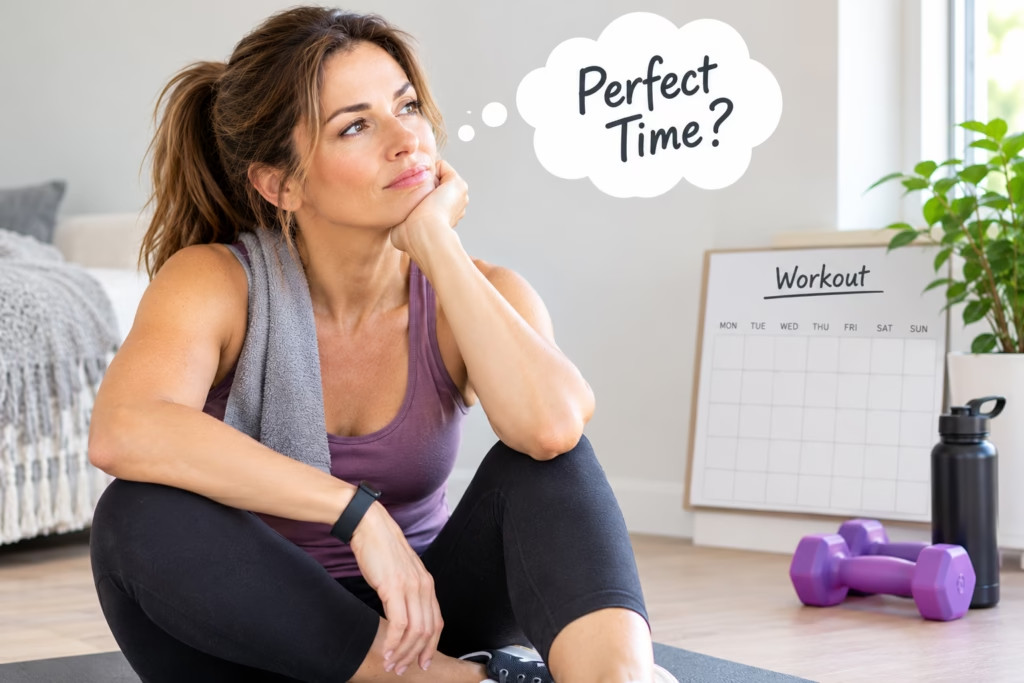
“I’ll exercise when things calm down.”
“I’ll start Monday.”
“I’ll go for a walk once I finish everything around the house.”
Sound familiar?
The problem with waiting for the perfect time is that life rarely gives us one.
There’s always another errand to run, another email to answer, another family responsibility, or another reason to put yourself last.
And before you know it, another week has passed.
This is where a little planning can help.
Instead of hoping you’ll find time to exercise, decide when you’re most likely to have it.
Maybe that’s 20 minutes before breakfast. Maybe it’s after dropping the kids off at school. Or perhaps the only quiet moment you get is after dinner.
None of these options is automatically better than the others.
The best workout time isn’t necessarily 6 a.m. It’s the time that works for your life.
But here’s the part many people forget: even a well-planned routine needs room for unexpected changes.
Suppose you’ve scheduled a 30-minute walk, but it’s pouring rain outside.
You could walk indoors, follow a short low-impact cardio video, or do a few laps around your home.
Maybe you’ve planned a gym workout, but you end up working late.
Instead of giving up on exercise for the day, you might do 10 minutes of gentle movement at home.
And if you’re genuinely exhausted, unwell, or need recovery, taking a rest day is a reasonable choice too.
The point isn’t to force yourself to exercise no matter what.
It’s to stop thinking that your routine only counts when everything goes perfectly.
One missed workout doesn’t erase the sessions you’ve already completed.
One busy week doesn’t mean you’re back at square one.
You can simply pick up where you left off.
Try this today: Look at your schedule for the next seven days. Choose two or three realistic workout times, then decide on one shorter alternative for the days when your plans change.
The Fitness Habit That Matters More Than Motivation
Here’s something that doesn’t get talked about enough.
People who exercise consistently aren’t necessarily motivated every single day.
They get tired. They have busy schedules. They occasionally miss workouts. Sometimes, they’d rather do almost anything other than exercise.
The difference is that they don’t expect every day to be perfect.
They’ve learned to make movement part of their normal lives.
Think about brushing your teeth.
You probably don’t wake up every morning feeling excited about it. You simply do it because it’s part of your routine.
Exercise can gradually become more automatic in a similar way.
You don’t have to spend every morning convincing yourself to work out. Instead, you can make the decision easier by connecting exercise to something you already do.
For example, take a short walk after lunch. Stretch for a few minutes after your morning coffee. Or do a beginner strength workout before your evening shower.
These small routines help create a familiar pattern.
And when the day doesn’t go according to plan?
You adjust.
That’s what sustainable fitness looks like.
Not perfect attendance. Not endless motivation. Just a willingness to keep returning to habits that support your health.
A Simple 7-Day Challenge to Get Your Fitness Goals Back on Track
You don’t need to wait until January 1, next Monday, or the beginning of a new month to start again.
If your fitness goals have been sitting on the back burner, try this simple one-week challenge.
It’s designed to help beginners ease into regular movement without feeling overwhelmed.
| Day | Your fitness challenge |
|---|---|
| Monday | Take a refreshing 15-minute walk |
| Tuesday | Try 10 minutes of beginner strength training |
| Wednesday | Walk for 20 minutes at a comfortable pace |
| Thursday | Enjoy 10 minutes of gentle stretching |
| Friday | Complete another 10-minute strength workout |
| Saturday | Spend 20 minutes doing an activity you love |
| Sunday | Take a rest day and plan your next week |
You can shorten the sessions, switch activities, or take additional rest days depending on your fitness level and recovery needs.
This isn’t meant to be a complete long-term fitness program. It’s simply a manageable starting point.
And there’s one important rule:
Don’t judge the week by how many calories you burned or whether your body looks different. Judge it by what you learned about making movement fit your life.
At the end of the week, ask yourself:
- Which activity did I enjoy most?
- When was exercise easiest to fit into my day?
- What made me want to skip a workout?
- What’s one thing I could do differently next week?
Your answers can help you create a routine that’s more realistic than any one-size-fits-all fitness plan.
What If You’ve Already Given Up on Your Fitness Resolution?
Maybe you started the year feeling determined, but your workout routine lasted only a few weeks.
Or perhaps you’ve made the same fitness resolution several years in a row, only to watch it fade away.
That doesn’t mean you should stop trying.
It may simply mean your previous approach wasn’t sustainable.
You don’t need to make up for missed workouts. You don’t need to punish yourself with an intense exercise session. And you certainly don’t need to wait for another new year.
Start with something small today.
Take a walk around the block. Spend 10 minutes stretching. Do a few simple strength exercises while watching television.
Then give yourself the chance to do it again.
Fitness isn’t something you accomplish once and then cross off your list.
It’s an ongoing part of taking care of yourself, and your routine will naturally change as your life changes.
Some seasons will allow for longer workouts and bigger goals. Others may call for shorter sessions, more recovery, and a little extra flexibility.
Both are perfectly reasonable.
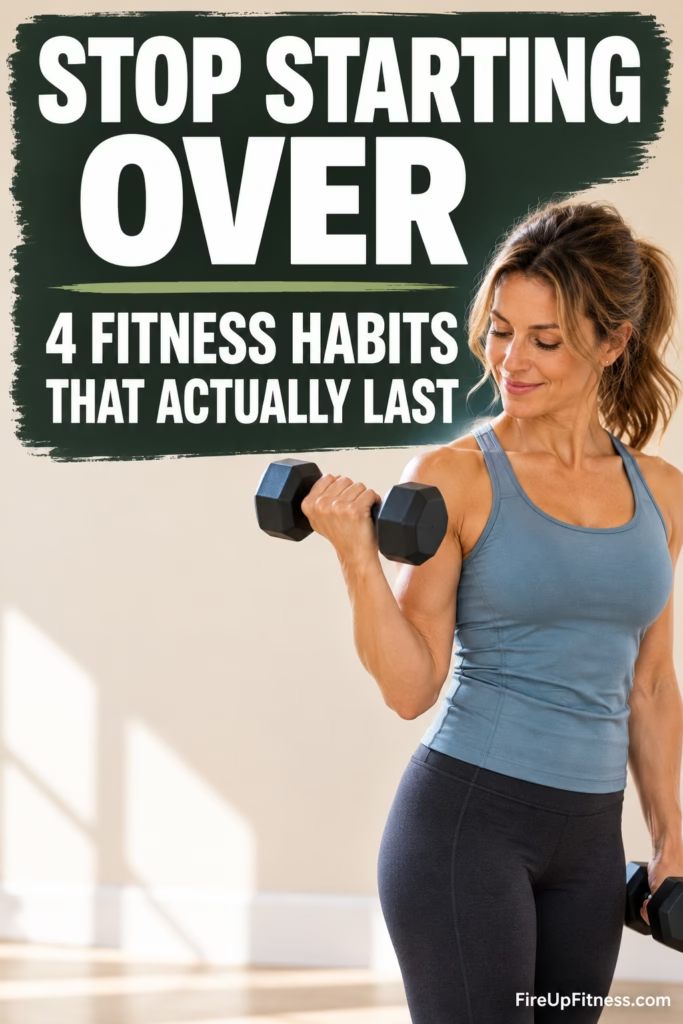
Final Thoughts: Make This the Year You Stop Starting Over
Imagine reaching next January without feeling like you have to begin your fitness journey from scratch.
Not because you exercised every single day.
Not because you followed a perfect diet or never missed a workout.
But because, somewhere along the way, you found a routine that actually worked for you.
You learned to set smaller goals. You stopped measuring every bit of progress by your appearance. You discovered activities you enjoyed, and you stopped letting one difficult week ruin months of effort.
That’s the kind of fitness progress worth working toward.
So forget the pressure to completely reinvent yourself in January.
You don’t need a new body, a perfect schedule, or unlimited motivation to start taking better care of yourself.
You need a realistic first step, a little patience, and a routine you’re willing to return to.
And maybe that’s the best fitness resolution of all: Stop starting over. Start building something you can keep.