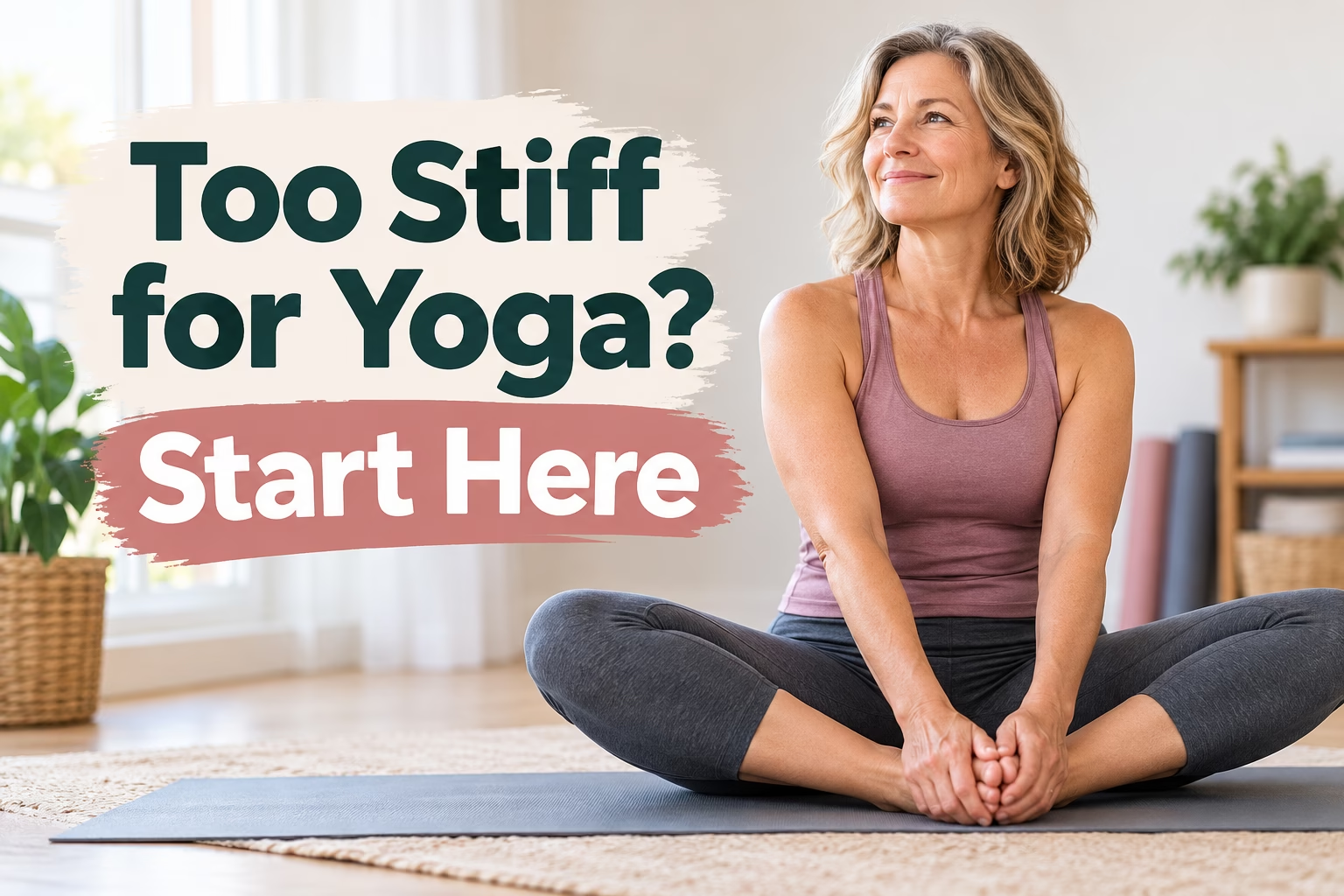
5 Yoga Tips for Beginners Who Aren’t Flexible
Think you’re too stiff for yoga? You might be exactly the person who needs it most.
Maybe you’ve tried yoga before, only to discover that touching your toes feels impossible. Your hamstrings are tight, your hips don’t move the way you’d like, and the woman demonstrating the pose on your screen seems to bend effortlessly.
It’s easy to look at that and think, “Yoga just isn’t for me.”
But here’s something worth remembering: You don’t have to be flexible to start yoga. You practice yoga to gradually improve your flexibility.
Yoga isn’t a competition to see who can stretch the farthest or hold the most impressive pose. It’s a way to move your body, build strength, improve balance, and find a little breathing room in a busy day.
And for women over 40, when stiffness and reduced mobility can become more noticeable, a gentle yoga practice can be especially valuable.
The best part? You don’t need fancy equipment, an hour of free time, or the ability to touch your toes.
These five simple yoga tips for beginners will help you feel more comfortable on the mat, improve your flexibility gradually, and make yoga something you actually look forward to doing.
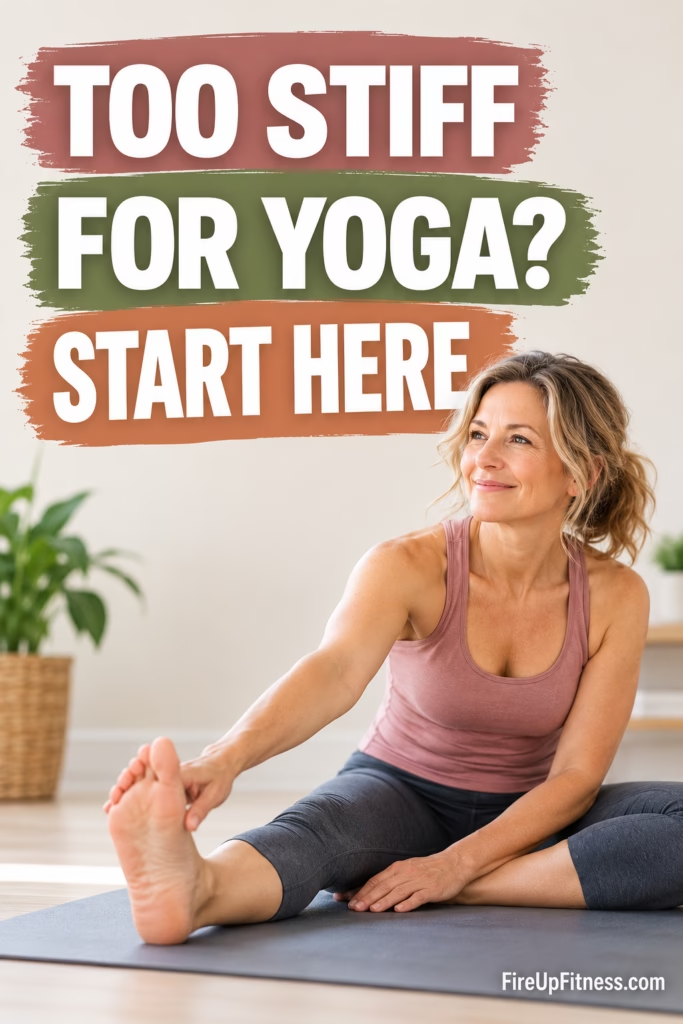
1. Stop Trying to Make Your Body Look Like Someone Else’s
One of the biggest mistakes yoga beginners make happens before they even finish their first pose.
They start comparing.
Maybe the instructor can fold forward until her forehead touches her knees. Meanwhile, you’re reaching toward your shins and wondering why your body won’t cooperate.
Here’s the thing: Your version of a yoga pose doesn’t need to look like anyone else’s.
Everyone has different proportions, joint structures, mobility levels, and movement histories. Some people naturally have more range of motion than others.
That doesn’t make one person better at yoga.
Instead of asking how far you can stretch, pay attention to how your body feels.
A gentle stretch should create a manageable sensation of tension, not sharp pain. You should still be able to breathe comfortably and feel in control.
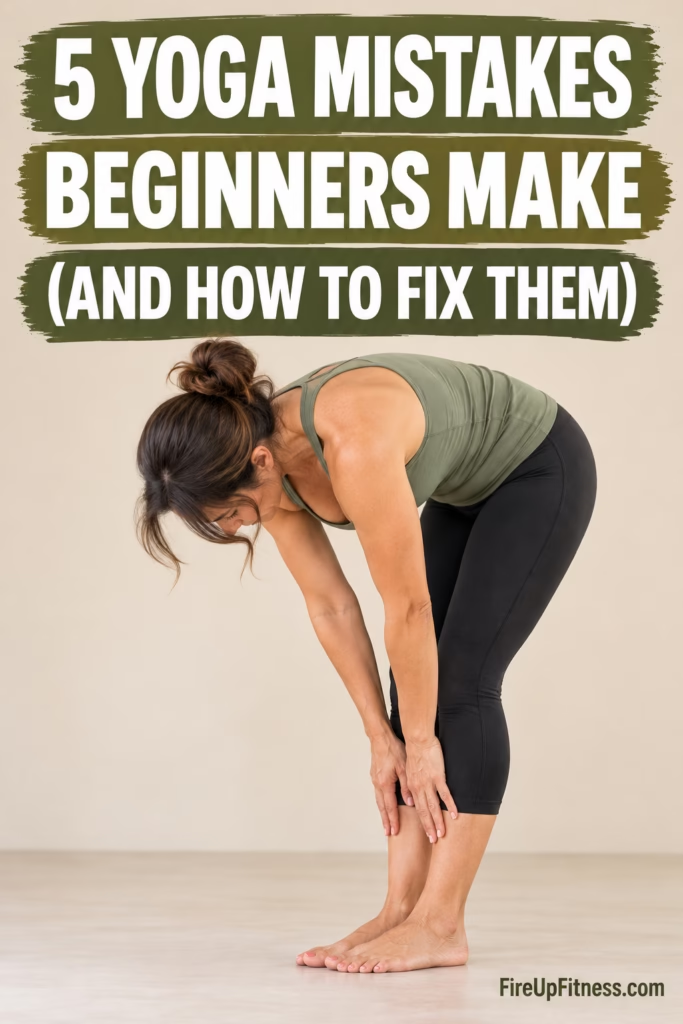
For example, during a standing forward fold, there’s no rule saying your hands must touch the floor.
Bend your knees slightly. Rest your hands on your thighs or yoga blocks. Allow your upper body to relax without forcing yourself deeper.
You’re still practicing yoga.
Try this: The next time you feel tempted to push deeper into a pose, ask yourself, “Am I doing this because it feels good for my body, or because I think I should be able to go farther?”
That small shift in thinking can make your entire practice more enjoyable.
2. Give Your Body More Space to Move
Sometimes a yoga pose feels uncomfortable not because you’re doing it wrong, but because your body needs a little more room.
This is especially common in poses that involve bending forward, squatting, or opening the hips.
One simple adjustment can make a surprising difference: change the distance between your feet.
For example, in a standing forward fold, placing your feet slightly wider than hip-width apart may make the movement more comfortable.
During a yoga squat, a wider stance can create additional room for your hips, depending on your anatomy.
And in Child’s Pose, separating your knees can give your torso more space to settle between your thighs.
The important thing is to find a stance that feels stable and natural rather than automatically assuming wider is always better.
A beginner-friendly trick: When a pose feels cramped or awkward, adjust your foot or knee placement before deciding the pose isn’t right for you.
Small changes can help you discover a version of the movement that works with your body instead of against it.
Yoga should feel like an opportunity to explore movement, not a struggle to fit yourself into a particular shape.
3. Use Your Breathing as a Guide Instead of Forcing the Stretch
Have you ever noticed what happens when you’re trying really hard to stretch?
Your shoulders tense up. Your jaw tightens. Sometimes you even hold your breath without realizing it.
That’s usually a sign to ease back.
In yoga, your breathing can be one of the simplest ways to recognize when you’re pushing too hard.
You don’t need to maintain a perfect smile or pretend every stretch feels wonderful. But you should generally be able to breathe steadily while holding a comfortable pose.
When you start holding your breath, grimacing, or bracing against the movement, reduce the intensity.
Imagine you’re sitting in a gentle seated forward bend.
Rather than pulling yourself toward your toes, sit tall, soften your knees, and slowly lean forward from your hips.
Breathe in comfortably.
As you breathe out, allow your body to relax without forcing it farther.
You might notice a little more ease after several breaths. Or you might not. Both are perfectly normal.
Remember: A deeper stretch isn’t necessarily a better stretch.
A comfortable, controlled movement you can repeat consistently is often more useful than forcing yourself into an uncomfortable position once.
This is particularly important for beginners who want to improve flexibility without making their muscles feel overly sore afterward.
4. Practice Yoga Regularly, Even When Progress Feels Slow
One of the most frustrating things about starting yoga is expecting your body to change quickly.
You practice for a few days, try touching your toes again, and discover that your fingertips still aren’t anywhere near the floor.
It’s tempting to wonder whether you’re wasting your time.
But flexibility usually improves gradually.
Your muscles, joints, and nervous system need opportunities to become comfortable with new movement patterns. Consistent practice can help you develop that comfort over time.
You don’t need to practice advanced poses or attend a yoga class every day.
A few manageable sessions each week can be a good starting point.
And here’s something beginners often overlook: progress isn’t always about stretching farther.
You might notice that getting out of bed feels easier, turning your upper body feels more comfortable, or you can balance on one foot with greater confidence.
Those changes matter, too.
For women over 40, improvements in balance, mobility, and body awareness can be just as meaningful as touching your toes.
Try this: Choose two or three familiar yoga poses and return to them regularly. Instead of measuring how far you can bend, notice whether the movements begin to feel smoother and more comfortable.
Some days your body will feel open and energetic. Other days it may feel stiff or tired.
That doesn’t mean you’ve lost your progress. It’s simply part of having a body that changes from day to day.
5. Start With Just 10 Minutes of Yoga at Home
You don’t need a full yoga class to begin enjoying the benefits of yoga.
In fact, one of the easiest ways to build a lasting habit is to make your practice small enough that it fits naturally into your day.
Ten minutes can be a practical place to start.
You could practice after waking up, during a quiet afternoon, or in the evening when you’re ready to unwind.
The key is choosing a time that feels realistic.
Here is a gentle 10-minute yoga routine for beginners who aren’t very flexible.
Cat-Cow Pose — 2 minutes
Move slowly between rounding and gently arching your back while on your hands and knees. This helps you explore comfortable movement through your spine.
Child’s Pose — 2 minutes
Sit back toward your heels with your knees comfortably apart. Rest your forehead on a cushion or block if needed, and breathe gently.
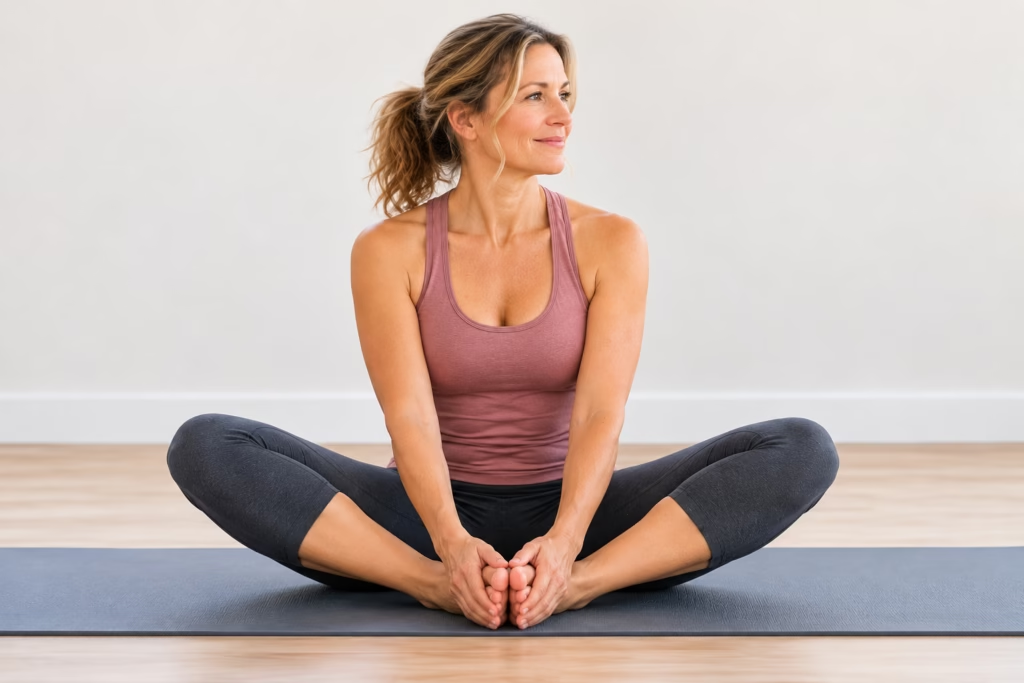
Butterfly Stretch — 2 minutes
Sit with the soles of your feet together and your knees relaxed outward. Keep your back comfortable and avoid pressing your knees toward the floor.Supine Spinal Twist — 2 minutes
Lie on your back and gently guide one bent knee across your body. Spend one minute on each side, keeping the movement comfortable.
Final Relaxation — 2 minutes
Lie comfortably on your back, bend your knees if needed, and let your breathing settle. Give yourself permission to rest.
That’s it. Ten minutes of gentle movement without complicated poses or pressure to perform.
You can shorten any stretch that feels uncomfortable, and you don’t have to complete the routine perfectly.
On busy days, even a few minutes can help you maintain the habit.
What Happens When You Keep Practicing Yoga?
One of the nicest things about yoga is that its benefits extend beyond flexibility.
With regular practice, you may begin to notice changes in how your body moves and how you feel throughout the day.
Some of the potential benefits include:
- Better flexibility: Gentle, repeated stretching can gradually improve your range of motion.
- Improved balance: Many yoga poses challenge your stability and body awareness.
- Greater muscle strength: Supporting your body in different positions can help strengthen muscles.
- Less everyday stiffness: Comfortable movement may help you feel less restricted after sitting or resting.
- Reduced stress: Mindful breathing and relaxation can support a calmer state of mind.
- Improved sleep: Some people find that regular yoga helps them unwind and sleep better.
You don’t need to experience every benefit to make yoga worthwhile.
Sometimes the biggest reward is simply having a few quiet minutes to move, breathe, and reconnect with yourself.
Common Questions About Starting Yoga When You’re Not Flexible
Can I do yoga if I can’t touch my toes?
Absolutely. Touching your toes is not a requirement for yoga. You can bend your knees, use yoga blocks, or choose modified poses that accommodate your current flexibility.
How long does it take to become more flexible with yoga?
It depends on your starting mobility, consistency, age, and individual anatomy. Some people notice small changes within several weeks, while others take longer. There’s no universal timeline, and you don’t need extreme flexibility to benefit from yoga.
Is 10 minutes of yoga a day enough for beginners?
Ten minutes can be a useful starting point for developing consistency, practicing basic movements, and relaxing. Longer or more varied sessions may offer additional benefits, but a short routine is still worthwhile.
Is yoga good for beginners over 40?
Yes. Yoga can be a helpful way to work on flexibility, strength, balance, and relaxation as you get older. Beginners can start with gentle yoga, chair yoga, or modified poses. Anyone with significant joint problems, injuries, or medical restrictions should seek appropriate professional guidance.
Should yoga stretches hurt?
No. Mild stretching tension can be normal, but sharp pain, tingling, or joint pain are signs to stop or modify the movement. Yoga should never require you to force your body into a painful position.
Final Thoughts: You Don’t Have to Be Flexible to Enjoy Yoga
It’s easy to assume yoga is something you need to be good at before you begin.
But that’s like thinking you need to be strong before you start strength training.
The practice itself is how you gradually build those abilities.
Your first yoga session might feel awkward. Your balance might wobble. Your knees might need extra support, and your hands might never come close to your toes.
None of that means you’re doing it wrong.
What matters is finding movements that feel comfortable, respecting your body’s limits, and giving yourself the opportunity to improve.
Start with 10 minutes. Choose a few gentle poses. Breathe. Repeat when you can.
You might be surprised by how much better yoga feels when you stop trying to be flexible and simply allow yourself to be a beginner.
And remember, the goal isn’t to make your body look impressive in a yoga pose. It’s to help your body move and feel better in everyday life.