5 Essential CrossFit Moves Every Beginner Should Master
CrossFit workouts can look intimidating when you first see athletes lifting barbells, jumping onto boxes, and moving through exercises at a fast pace. But behind many CrossFit workouts are a handful of fundamental movements that can be learned gradually.
You don’t need to lift extremely heavy weights or move at competition speed to benefit from them. In fact, learning basic CrossFit exercises with good technique should come before worrying about how much weight you can lift or how quickly you can finish a workout.
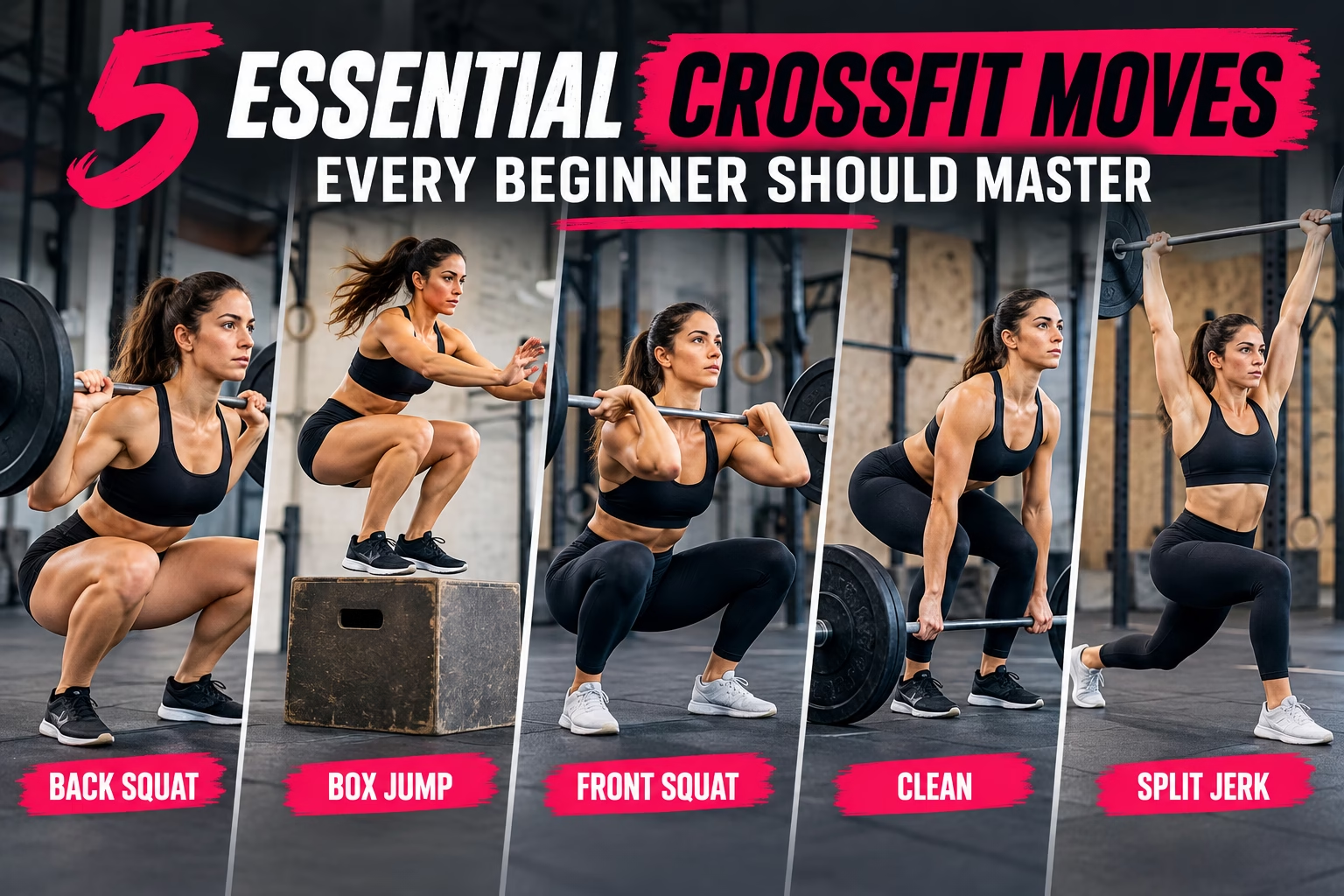
Squats build lower-body strength. Box jumps develop explosive power. Cleans teach you how to move a weight efficiently from the floor. Split jerks introduce powerful overhead lifting.
Together, these exercises can help develop strength, coordination, balance, power, and overall fitness.
Here are 5 essential CrossFit moves worth learning, plus beginner-friendly ways to practice them safely.
Why Mastering CrossFit Basics Matters
One of the appealing things about CrossFit is the variety. A workout might include squats one day and a combination of lifting, rowing, running, or bodyweight exercises another day.
That variety can also make beginners want to learn everything at once.
There is no need to rush.
Good movement patterns create the foundation for more challenging workouts later. Learning how to brace your core, maintain a stable squat, land softly, and control a barbell can make a big difference as exercises become more demanding.
For beginners, think:
Technique → consistency → resistance → intensity.
Instead of asking, “How heavy can I lift?” start by asking, “Can I perform this movement with control?”
That simple shift can make CrossFit training much more approachable.
1. Back Squat
The back squat is one of the most important strength exercises to learn because it trains several major muscle groups at the same time.
Muscles worked:
- Glutes
- Quadriceps
- Hamstrings
- Calves
- Core
- Lower and upper back
The traditional CrossFit version uses a barbell positioned across the upper back. Beginners, however, can learn the movement with bodyweight, a light training bar, or another appropriate variation before adding heavier resistance.
How to do a back squat:
- Position the bar securely across your upper back rather than directly on your neck.
- Stand with your feet roughly shoulder-width apart.
- Keep your feet firmly planted on the floor.
- Take a breath and brace your core.
- Bend your knees and hips as you lower yourself into the squat.
- Keep your chest controlled rather than allowing your upper body to collapse forward.
- Lower as far as you can comfortably while maintaining good positioning.
- Push through your feet to return to standing.
- Finish tall before beginning your next repetition.
Your knees should generally track in the same direction as your toes rather than collapsing inward.
Beginner modification
Practice bodyweight squats before using a loaded barbell.
You can also squat toward a box or bench to become more comfortable with the movement and develop better control.
Common mistake to avoid
Don’t sacrifice technique just to squat deeper.
Your comfortable squat depth will depend partly on your mobility and individual anatomy. Controlled movement is more important than forcing yourself into a particular depth.
2. Box Jump
The box jump adds explosive movement to your CrossFit training.
Unlike a regular squat, where strength is developed through controlled resistance, a box jump asks you to produce force quickly.
Muscles worked:
- Glutes
- Quadriceps
- Hamstrings
- Calves
- Core
It can also challenge coordination and balance.
How to do a box jump:
- Stand a comfortable distance in front of a sturdy box.
- Position your feet approximately hip- to shoulder-width apart.
- Bend your knees and hips slightly into a quarter squat.
- Swing your arms backward.
- Drive through your legs while swinging your arms forward.
- Jump onto the box with both feet.
- Land softly with your knees slightly bent.
- Stand fully upright on top of the box.
- Step down carefully and reset before the next repetition.
Focus on a quiet, controlled landing rather than simply trying to jump as high as possible.
Beginner modification
Not ready to jump?
Do box step-ups instead.
Step onto the box with one foot, drive through that leg to stand, and then step back down carefully.
You can still work your legs and practice using the box without the impact or coordination demands of jumping.
Common mistake to avoid
Don’t choose a high box just because someone else is using one.
A lower box that allows you to land confidently is a much better training tool than a taller box that makes every repetition feel risky.
3. Front Squat
The front squat uses a similar lower-body movement pattern to the back squat, but the position of the bar changes.
Instead of resting across your upper back, the barbell sits across the front of your shoulders in what’s known as the front rack position.
That changes the demands of the exercise and requires you to maintain a strong, upright torso.
Muscles worked:
- Quadriceps
- Glutes
- Hamstrings
- Core
- Upper back
- Calves
How to do a front squat:
- Position the bar across the front of your shoulders.
- Bring your elbows forward and up.
- Stand with your feet approximately shoulder-width apart.
- Brace your core.
- Bend your knees and hips to descend into a squat.
- Keep your chest tall and elbows lifted.
- Lower only as far as you can while maintaining control.
- Push through your feet to stand.
- Keep your elbows from dropping as you return to the starting position.
Think about keeping your elbows pointing forward and slightly upward throughout the exercise.
Beginner modification
Front rack mobility can be challenging when you’re new to the exercise.
Start with a light training bar or practice a goblet squat with a dumbbell or kettlebell. Goblet squats can help you learn to keep your torso upright without immediately dealing with the mobility demands of a barbell front rack.
Common mistake to avoid
Allowing your elbows to drop can make it harder to maintain a stable bar position.
Use a manageable load and focus on posture before increasing resistance.
4. Clean
The clean is one of the more technical CrossFit exercises on this list.
It involves moving a barbell from the floor to your shoulders in one coordinated sequence.
This isn’t simply an arm exercise. A good clean relies heavily on the legs and hips to generate power while the upper body guides the bar into position.
Muscles worked:
The clean involves much of the body, including the:
- Glutes
- Hamstrings
- Quadriceps
- Calves
- Core
- Back
- Shoulders
- Arms
How to perform a clean:
- Begin with the bar on the floor.
- Stand with your feet approximately hip-width apart.
- Grip the bar slightly wider than your legs.
- Brace your core and maintain a strong back position.
- Begin lifting the bar from the floor by driving through your legs.
- Keep the bar relatively close to your body as it passes your knees.
- Extend powerfully through your hips and legs.
- Guide the bar upward.
- Quickly move your body underneath the bar.
- Catch the bar across the front of your shoulders in the front rack position.
- Stand fully upright to complete the repetition.
The clean happens quickly when performed at normal speed, but beginners should learn its different phases before trying to perform the entire movement aggressively.
Beginner modification
Practice the components separately.
For example, you might work on:
- Deadlift positioning
- Hip extension
- Front rack position
- Front squats
- Hang cleans with a light training bar
Breaking the clean into smaller pieces can make the complete movement much easier to understand.
Common mistake to avoid
Don’t try to curl the bar up using mostly your arms.
The clean is a powerful whole-body movement. Your hips and legs should provide much of the force.
Because Olympic-style lifts are technical, beginners can benefit greatly from learning the clean under the supervision of a qualified coach.
5. Split Jerk
The split jerk is another powerful barbell movement frequently associated with Olympic weightlifting and CrossFit.
It begins with the bar in the front rack position and finishes with the weight locked out overhead.
The interesting part is that you’re not simply pressing the weight with your shoulders. Your legs help generate the force needed to drive the bar upward.
Muscles worked:
- Shoulders
- Triceps
- Core
- Glutes
- Quadriceps
- Hamstrings
- Upper back
How to do a split jerk:
- Begin with the bar in the front rack position.
- Stand with your feet approximately hip-width apart.
- Brace your core.
- Bend your knees slightly while keeping your torso upright.
- Drive powerfully through your legs.
- Use that momentum to send the bar overhead.
- Quickly split your feet into a stable lunge-like stance.
- Catch the bar overhead with your arms extended.
- Stabilize the weight.
- Bring your feet back together under control.
The goal is to drive the bar up while moving your body underneath it.
Beginner modification
Before practicing a loaded split jerk, learn the footwork without weight.
You can also use a PVC pipe or very light training bar to practice the dip, drive, split, and recovery.
Common mistake to avoid
Avoid turning the initial dip into a forward-leaning squat.
The dip should generally be short and controlled so you can transfer force efficiently into the bar.
How Beginners Can Practice These CrossFit Moves
You don’t have to perform all five exercises in a fast circuit.
When you’re learning, slowing everything down can actually be more productive.
A simple technique-focused session might include bodyweight squats, light front squats, box step-ups, clean drills, and split-jerk footwork. Take plenty of rest between sets so fatigue doesn’t immediately interfere with your technique.
Once your movement becomes more consistent, resistance and workout intensity can gradually increase.
CrossFit Technique Matters More Than Speed
One mistake beginners sometimes make is believing that every CrossFit workout has to be performed as fast as possible.
It doesn’t.
Speed becomes much less useful when your technique begins falling apart.
For exercises involving barbells, particularly cleans and split jerks, learning the movement correctly should take priority over chasing a faster workout time.
A good rule is simple:
Move well first. Add intensity later.
This is especially important when you’re tired. Fatigue can make an exercise that felt easy during the first few repetitions much more difficult to control toward the end.
Don’t Forget Your Warm-Up
Before performing these CrossFit exercises, spend several minutes preparing your body.
Your warm-up could include:
- Easy walking, cycling, or rowing
- Bodyweight squats
- Hip mobility exercises
- Arm circles
- Shoulder mobility drills
- Glute bridges
- Light movement-specific practice
For barbell exercises, consider performing several warm-up sets with an empty or lightly loaded bar before reaching your working weight.
Your warm-up should prepare you for the workout rather than exhaust you before it begins.
How Often Should Beginners Do CrossFit?
More isn’t automatically better when you’re starting.
Your muscles, joints, and cardiovascular system need time to adapt to a new style of training.
Beginners may find that a few CrossFit-style training sessions per week provide plenty of challenge, particularly when sessions include compound exercises such as squats and Olympic-style lifts.
Recovery matters too.
Sleep, hydration, nutritious food, mobility work, and rest days all play a role in how well you respond to training.
Pay attention to the difference between normal exercise fatigue and pain that signals something isn’t right.
Can You Do CrossFit After 40?
CrossFit-style training isn’t reserved for people in their 20s.
Adults over 40 can perform many of the same fundamental movement patterns when exercises, resistance, range of motion, and intensity are appropriately scaled to their abilities.
You don’t have to jump onto the highest box or lift the heaviest barbell in the gym.
Box jumps can become step-ups. Heavy squats can become lighter squats. Complex barbell exercises can be practiced with a training bar before additional weight is introduced.
Scaling an exercise isn’t failing the workout. It’s adjusting the workout to your current ability.
For women over 40 in particular, resistance training can be a useful part of a well-rounded fitness routine because maintaining muscular strength becomes increasingly important as we age.
Which CrossFit Move Should You Learn First?
Start with the squat.
The squat movement pattern appears repeatedly throughout CrossFit and strength training. Becoming comfortable with bodyweight squats can provide a foundation for learning loaded back squats, front squats, and parts of more technical exercises such as the clean.
A practical progression could look like:
Bodyweight Squat → Goblet Squat → Back Squat → Front Squat → Clean Technique
Jumping and Olympic-style lifting can then be introduced according to your fitness level, mobility, coordination, and training experience.
There’s no prize for rushing through the progression.
Final Thoughts
CrossFit can involve dozens of exercises, but you don’t have to master everything at once.
Start with fundamental movement patterns and give yourself time to develop good technique.
The back squat, box jump, front squat, clean, and split jerk each challenge your body in a different way. Together, they can develop lower-body strength, explosive power, coordination, core stability, and full-body strength.
For beginners, the biggest goal shouldn’t be lifting the heaviest weight or finishing first.
It should be learning to move well, train consistently, and progress gradually.
Master the basics first. The strength, confidence, and more challenging workouts can follow.
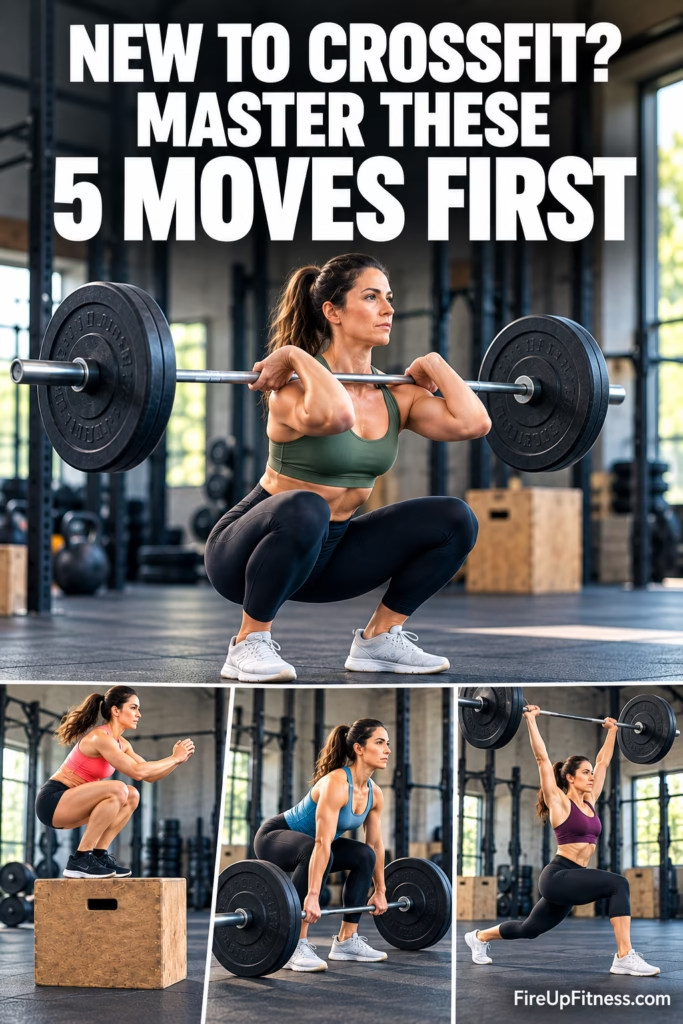
Safety note: CrossFit and Olympic-style barbell exercises can be technically demanding. Consider working with a qualified coach when learning cleans, jerks, and loaded squats. Choose exercise variations appropriate for your current fitness and mobility, and stop an exercise if it causes pain.