How to Meditate at Home: A Beginner’s Guide
Ever sit down to relax, only to realize your mind has about 20 different conversations happening at once?
You’re thinking about tomorrow’s responsibilities, something you forgot to do yesterday, a conversation that didn’t go as planned, and the never-ending list of things waiting for your attention.
Even when your body is resting, your mind seems determined to stay busy.
That’s exactly why meditation can be so helpful.
But here’s what stops many people before they even begin: they think meditation means sitting perfectly still, clearing their minds, and feeling peaceful within minutes.
And when that doesn’t happen, they give up.
The good news? You don’t need a quiet mind to start meditating. You can start with the busy mind you already have.
Whether you’re completely new to meditation or have tried it before without much success, this beginner-friendly guide will show you how to meditate at home, what to expect, and how to make just five minutes of quiet time a habit you actually enjoy.
1. First, Forget Everything You Think Meditation Should Look Like
Picture someone meditating.
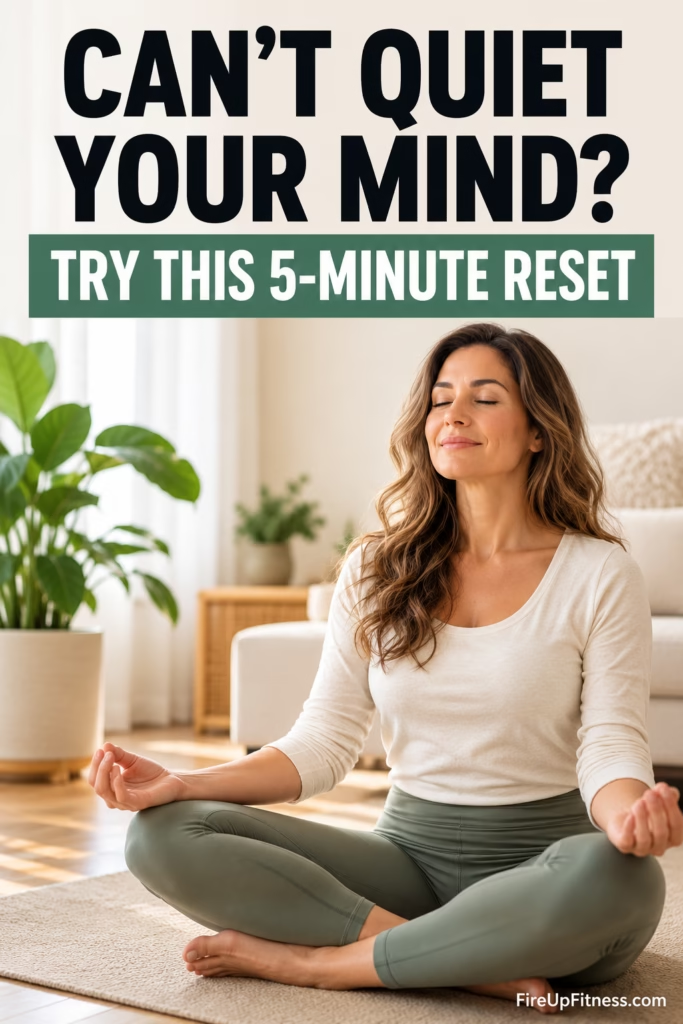
Chances are, you imagine a person sitting cross-legged in a beautiful, quiet room, eyes closed, looking completely peaceful.
Now picture your own home.
Maybe there’s laundry waiting to be folded, someone asking what’s for dinner, your phone buzzing, or a million little things competing for your attention.
Not exactly the peaceful setting you imagined, right?
Here’s something worth remembering: meditation doesn’t require perfect surroundings or a perfectly calm mind.
At its simplest, meditation means intentionally paying attention to the present moment.
You might focus on your breathing, notice the sounds around you, or simply observe your thoughts without getting caught up in them.
Your mind will wander. You’ll remember things you need to do. You might even feel impatient.
None of that means you’re failing.
In fact, recognizing that your attention has wandered and gently bringing it back is an important part of meditation.
You don’t have to stop thinking. You just have to practice noticing where your attention goes.
2. Why Just Five Minutes of Meditation Can Be Worth Your Time
When life feels overwhelming, sitting quietly for five minutes might seem too simple to make a difference.
But small pauses can be surprisingly valuable.
Research suggests that regular mindfulness meditation may help reduce perceived stress, support emotional well-being, and improve attention. Results vary, and meditation isn’t a guaranteed solution for anxiety, sleep difficulties, or other health concerns.
Still, there are several reasons to give it a try.
It gives your mind a break from constant stimulation.
Think about how often you move from one activity to another without stopping. You check your phone while eating, think about work while cooking, and mentally plan tomorrow while getting ready for bed.
Meditation creates an opportunity to do one thing at a time.
It helps you notice stress before it takes over.
Sometimes you don’t realize how tense you feel until you notice your shoulders tightening or your breathing becoming shallow.
A few quiet moments can help you recognize those signals earlier.
It teaches you to respond instead of reacting immediately.
You can’t prevent every frustrating situation, but practicing awareness may help you create a little space between what happens and how you respond.
And perhaps the most encouraging part?
You don’t need to meditate for 30 minutes to begin experiencing the practice. Five minutes is a manageable starting point, and even two minutes can help you establish the habit.
3. How to Meditate at Home in Just Five Minutes
You don’t need meditation cushions, special clothing, candles, or an expensive app.
A comfortable place to sit and a few uninterrupted minutes are enough.
Here’s a simple five-minute meditation routine for beginners.
1
Minute 1: Get comfortable
Sit on a chair, couch, or cushion with your feet or legs comfortably supported. Relax your shoulders and rest your hands in your lap.
You can close your eyes or keep them softly focused on one spot.
2
Minute 2: Notice your breathing
Pay attention to the natural rhythm of your breath.
Notice the air moving through your nose or the gentle rise and fall of your chest. There’s no need to breathe deeply or change anything.
3
Minute 3: Let your thoughts come and go
Your mind might start planning dinner or remembering an unfinished task.
Instead of fighting the thought, quietly acknowledge it and return your attention to breathing.
4
Minute 4: Relax your body
Notice your forehead, jaw, shoulders, and hands.
Are you holding tension anywhere? Allow those muscles to soften where comfortable.
There’s nothing you need to force.
5
Minute 5: Finish without rushing
Notice how your body feels. Take a moment to become aware of the room around you.
Open your eyes if they were closed, stretch gently, and continue your day.
That’s it.
You don’t need to feel wonderfully relaxed afterward. You don’t need to experience a sudden sense of clarity.
The goal is simply to practice being present for a few minutes.
And when your mind wanders 15 times during those five minutes? You’ve had 15 opportunities to practice bringing your attention back.
4. The Biggest Mistake Beginners Make With Meditation
One of the easiest ways to make meditation frustrating is to expect every session to feel peaceful.
Imagine sitting down to meditate after a stressful day.
You close your eyes, focus on breathing, and suddenly remember three unanswered messages, tomorrow’s appointment, and something embarrassing you said last week.
Instead of relaxing, you feel more distracted than before.
It’s tempting to think, I’m just not good at meditation.
But meditation isn’t a test of how long you can go without thinking.
Some sessions may feel relaxing. Others may feel restless, boring, or uncomfortable.
That variation is normal.
A successful meditation session isn’t one where your mind stays quiet. It’s one where you practice returning your attention without criticizing yourself.
Try replacing the thought “I can’t stop thinking” with “I noticed I was thinking.”
That small change can make meditation feel much less intimidating.
5. When Is the Best Time to Meditate?
The best time to meditate is the time you can realistically make available.
Some people love the quiet of early mornings. Others prefer a few minutes in the afternoon or before bed.
There isn’t one perfect schedule.
Morning meditation: Start before the day gets busy
Before checking your phone or diving into your responsibilities, sit quietly for a few minutes.
Morning meditation can give you an opportunity to begin the day with intention rather than immediately reacting to everything around you.
You don’t have to wake up an hour earlier. Even five minutes before breakfast can work.
Afternoon meditation: Take a mental break
Afternoons can feel particularly draining when you’re balancing work, household responsibilities, family needs, or a long list of unfinished tasks.
Instead of automatically reaching for your phone during a break, try sitting quietly for a few minutes.
You might return to your activities feeling a little more settled.
Evening meditation: Make room to unwind
When your body is tired but your mind is still busy, a short meditation session can become part of your evening wind-down routine.
Sit somewhere comfortable, dim the lights, and focus on your breathing.
Meditation may help some people with sleep quality, but it’s not a substitute for treatment of persistent insomnia.
The important thing is to choose a time that fits your life, not one that creates another obligation.
6. What to Do When You Can’t Sit Still or Focus
Here’s something beginners don’t hear often enough: sitting still isn’t comfortable for everyone.
Maybe your back starts aching. Maybe your legs feel restless. Maybe closing your eyes makes you more aware of everything happening around you.
You don’t need to force yourself into an uncomfortable position.
Meditation can take different forms.
Try walking meditation. Walk slowly around your home or garden and pay attention to your footsteps, the movement of your legs, and the feeling of the ground beneath your feet.
Try a guided meditation. Listening to a calm voice can give your attention something to follow, especially when you’re just starting.
Try meditating with your eyes open. Rest your gaze on a plant, a wall, or another neutral object.
Try a shorter session. If five minutes feels difficult, begin with 60 seconds.
There’s no prize for sitting longer than you’re comfortable with.
And if meditation consistently brings up distressing feelings, it’s okay to stop or choose a different relaxation activity. For some people, particularly those with a history of trauma, certain meditation practices can feel unsettling, and professional guidance may be helpful.
The practice should be adaptable to your needs.
7. How to Make Meditation a Daily Habit Without Forcing It
Starting meditation is often easier than remembering to do it again tomorrow.
That’s where small habits become useful.
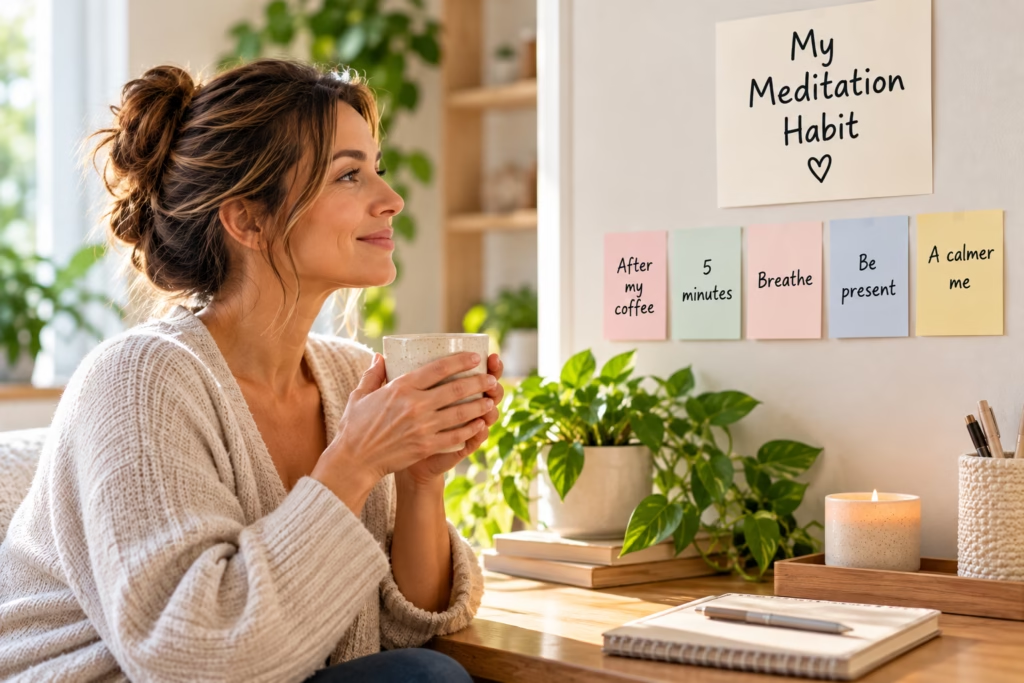
Instead of promising yourself you’ll meditate for 20 minutes every morning, connect a short session to something you already do.
For example, meditate after brushing your teeth, before your morning coffee, or after changing into comfortable clothes in the evening.
You don’t need a complicated routine.
And don’t underestimate the value of keeping it short.
Five minutes you can repeat regularly is a more practical starting point than a 30-minute routine you abandon after two days.
A gentle 7-day meditation challenge for beginners
If you’re unsure how to begin, try this simple plan. It’s designed to help you get comfortable with meditation gradually, without pressure to achieve a particular result.
Your 7-day meditation challenge
0 of 7 days
Day 1
1 minute
Sit comfortably and notice your breathing.
Day 2
2 minutes
Notice when your mind wanders and gently return.
Day 3
3 minutes
Pay attention to your breathing and relax your shoulders.
Day 4
3 minutes
Try meditating before breakfast or bedtime.
Day 5
4 minutes
Notice your thoughts without judging them.
Day 6
5 minutes
Practice a full five-minute meditation.
Day 7
5 minutes
Repeat your favorite practice and reflect on how it felt.
Copy the 7-day plan
You can repeat any day, take breaks, or stay at one minute for the entire week.
The goal isn’t to complete a perfect challenge. It’s to discover what makes meditation feel approachable enough to continue.
8. How to Know Whether Meditation Is Helping
One reason people stop meditating is that they’re waiting for a dramatic change.
They expect to feel completely calm, stop worrying, or suddenly become more patient.
But the effects of meditation, when they occur, may be much quieter.
Perhaps you notice yourself taking a moment before responding to an irritating comment.
Maybe you catch yourself scrolling through your phone without really wanting to.
Or you become aware that your shoulders are tense and decide to relax them.
These are small examples of increased awareness.
You might also notice no obvious changes for a while, and that’s okay.
Meditation isn’t guaranteed to produce noticeable benefits for everyone. It also doesn’t need to become another way to measure your productivity.
Instead of asking, “Am I getting better at meditation?” try asking, “Is this practice helping me make a little room for myself?”
That question may be more useful.
9. Five Things to Remember When Meditation Feels Difficult
There will be days when you don’t feel like meditating.
Days when you’re tired, distracted, frustrated, or simply too busy.
Before deciding meditation isn’t for you, remember these five things:
- You don’t need to clear your mind. Thoughts are part of the experience, not proof that you’re doing something wrong.
- You don’t have to sit cross-legged. A comfortable chair works perfectly well.
- You can start with one minute. A short session is still an opportunity to practice awareness.
- You don’t have to feel calm afterward. Meditation is about practicing attention, not forcing relaxation.
- Missing a day doesn’t erase your progress. You can return whenever you’re ready.
Most importantly, meditation doesn’t have to become another item on your already crowded to-do list.
It can simply be a few moments when nothing else needs your attention.
10. Make Meditation Your Own, Not Another Rule to Follow
There’s something refreshing about a habit that doesn’t require you to buy anything, travel anywhere, or prove anything.
You can meditate in your bedroom, on the couch, in a quiet corner of the living room, or outside on a pleasant day.
You can practice before the house wakes up or after everyone has gone to bed.
Some days you might enjoy five minutes. Other days, one minute might be enough.
The point isn’t to build the most impressive meditation routine.
It’s to find a small moment of stillness that feels useful in your everyday life.
And over time, that habit may help you become more aware of how you’re feeling, what you’re thinking, and when you need a little space.
Final Thoughts: You Don’t Need a Quiet Mind to Begin
It’s easy to believe you’ll start meditating once life settles down.
Once the schedule gets easier. Once the house is quieter. Once you feel less stressed.
But life rarely hands us perfect moments of peace.
Sometimes we have to create a little space for ourselves right in the middle of everything.
That’s what makes meditation for beginners worth exploring.
You don’t need to master it. You don’t need to be naturally calm. And you certainly don’t need to turn it into another challenge you’re afraid of failing.
Start with five minutes. Or start with one.
Sit comfortably, notice your breathing, and allow yourself to be present without needing to accomplish anything.
Your mind doesn’t have to be quiet for you to begin.
And that might be the most freeing part of meditation.
Save this guide for later: The next time your thoughts feel nonstop, come back to this five-minute meditation routine and give yourself a little room to slow down.