
Leg and Glute Workout: 5 Moves for Lifted Glutes
When it comes to shaping your lower body, few things are as empowering as a strong, toned set of glutes. For many women, the goal isn’t just appearance — it’s strength, confidence, posture, and long-term health.
The good news? You do not need surgery, risky procedures, or expensive gym memberships to get results. A well-structured Leg and Glute Workout can help you naturally lift, firm, and strengthen your lower body — right from the comfort of your home.
If you’re ready to train smarter and see real results, this guide will show you how.
Why a Leg and Glute Workout Is So Effective
Your glutes are the largest and most powerful muscle group in your body. They are made up of:
- Gluteus maximus – responsible for shape, power, and hip extension
- Gluteus medius – supports hip stability and side movement
- Gluteus minimus – assists with balance and alignment
When these muscles are weak, you may experience:
- Lower back discomfort
- Knee instability
- Poor posture
- Slower metabolism
When they are strong, you benefit from:
- Better lower body tone
- Improved posture
- Reduced injury risk
- More power in everyday movements
- Increased calorie burn
A properly designed Leg and Glute Workout strengthens all three muscles for balanced development and noticeable results.
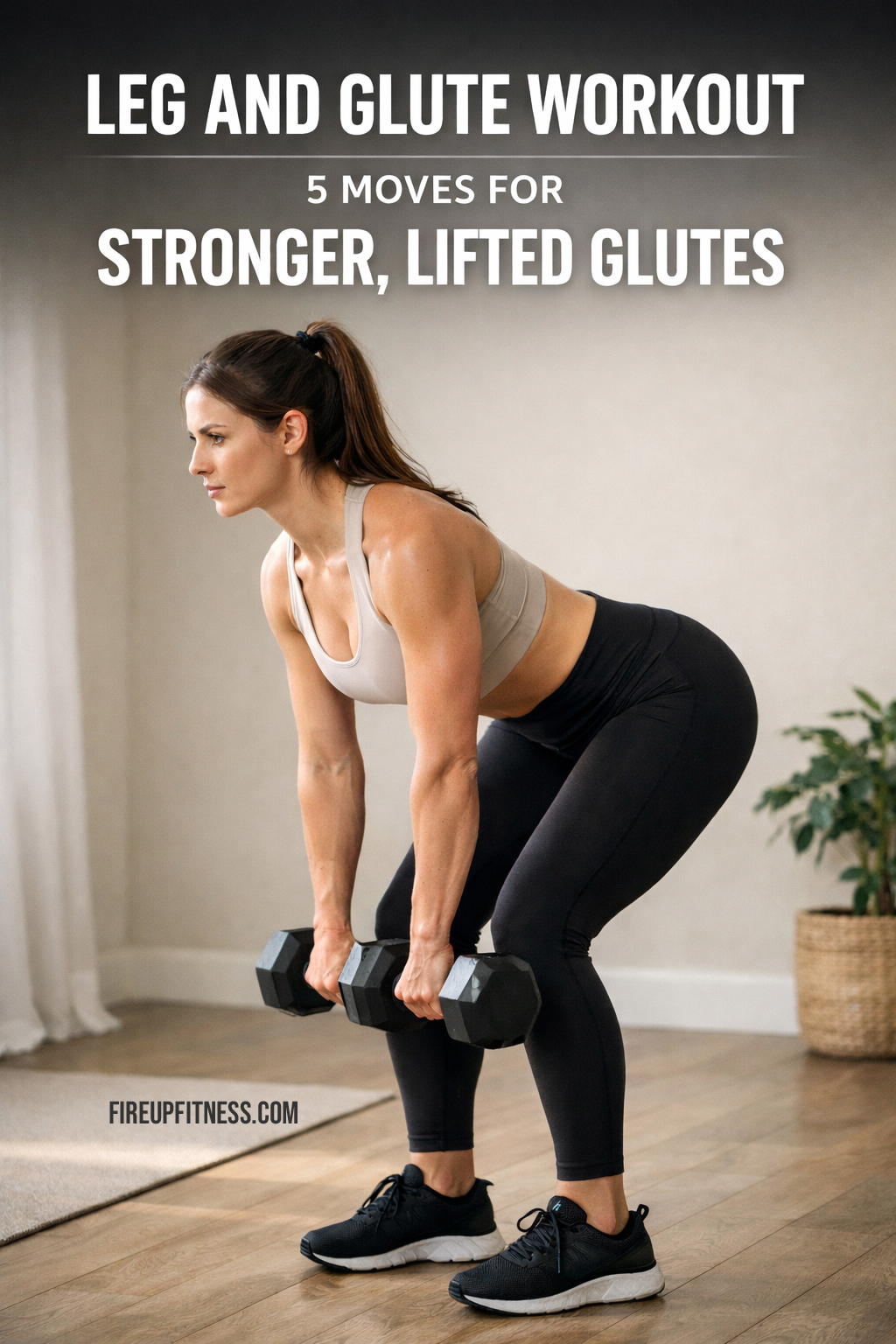
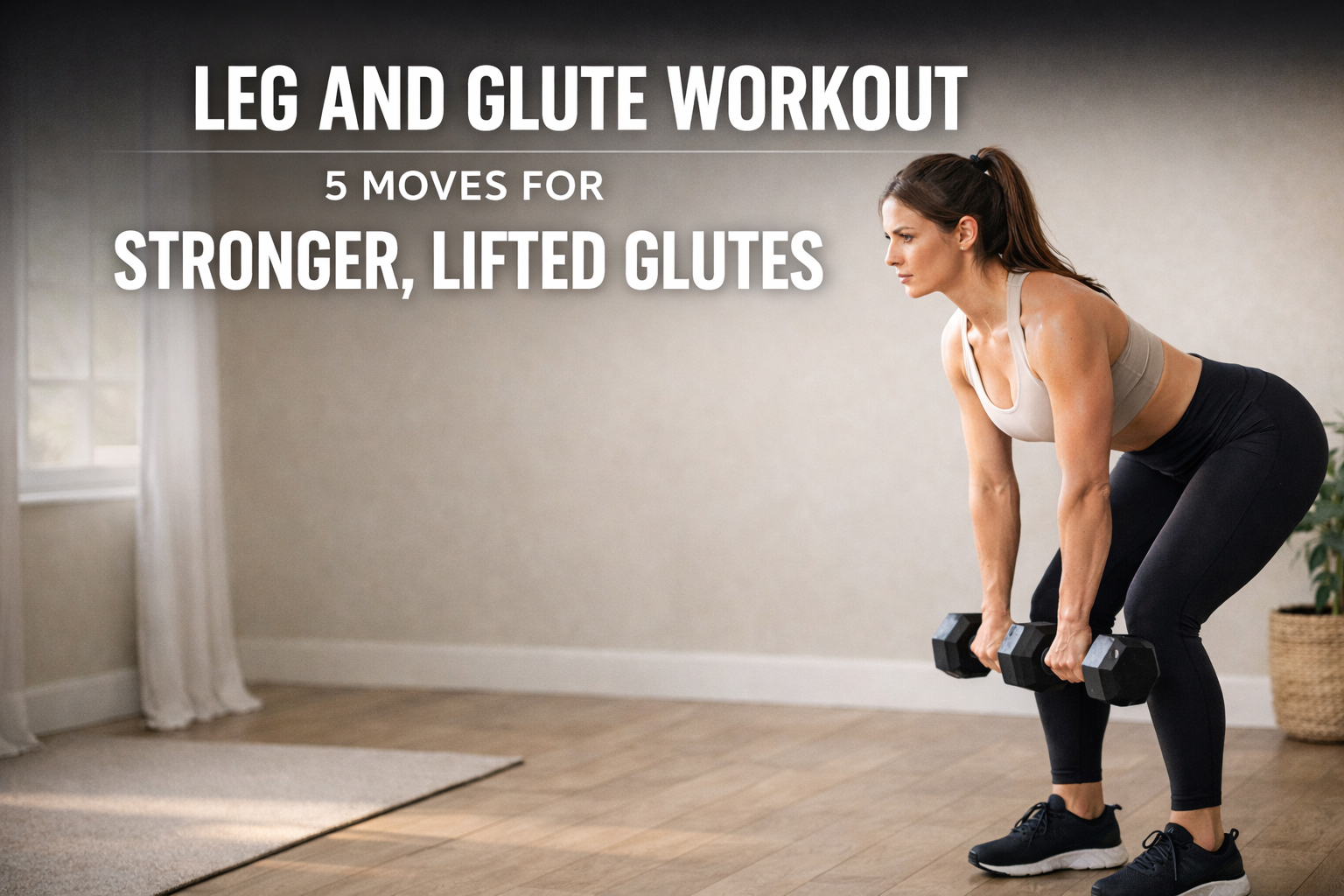
1. Deadlifts: The Foundation of Glute Strength
Deadlifts are one of the most effective exercises for building strong, lifted glutes.
How to Perform Deadlifts
- Hold a pair of dumbbells with an overhand grip.
- Stand with your feet hip-width apart.
- Keep your knees slightly bent.
- Hinge at your hips and lower your torso until it’s nearly parallel to the floor.
- Keep the weights close to your legs.
- Pause briefly, then return to standing by squeezing your glutes.
Why Deadlifts Work
Deadlifts train:
- Glutes
- Hamstrings
- Lower back
The key is the hip hinge. Push your hips back instead of bending deeply at the knees. This directly activates the gluteus maximus — the muscle responsible for shape and lift.
2. Step-Ups: Shape and Lift
Step-ups are simple yet powerful for lower body sculpting.
How to Perform Step-Ups
- Hold two dumbbells.
- Place one foot on a sturdy bench, box, or stair.
- Drive through your heel to lift your body up.
- Stand tall at the top while engaging your glutes.
- Lower slowly with control.
Perform 10–12 reps per leg.
Why Step-Ups Work
They:
- Target glutes and quads
- Improve balance
- Strengthen knees
- Mimic everyday movement patterns
Pressing through your heel increases glute activation significantly.
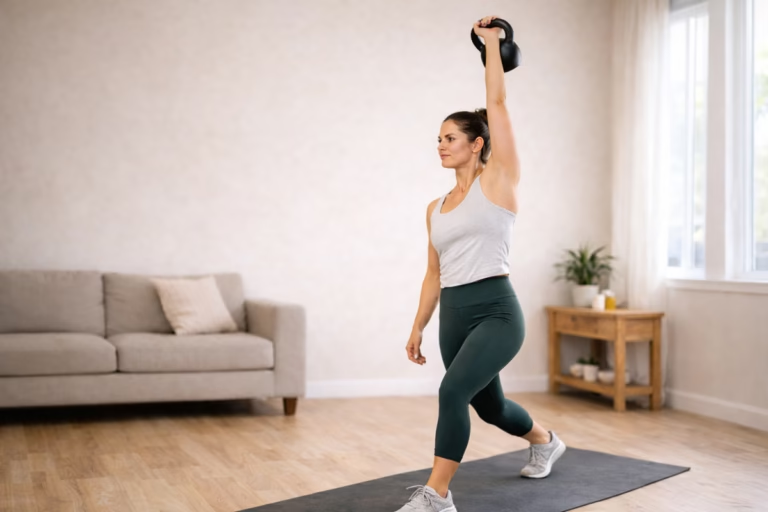
3. Kettlebell Swings: Power and Burn
This dynamic movement combines strength and conditioning.
How to Perform Kettlebell Swings
- Hold a kettlebell (or dumbbell) with both hands.
- Stand with feet hip-width apart.
- Slightly bend your knees.
- Hinge forward at your hips.
- Swing the weight between your legs.
- Thrust your hips forward powerfully.
- Allow the weight to rise to chest height.
- Control it back down and repeat.
Why Kettlebell Swings Work
They:
- Activate glutes explosively
- Strengthen hamstrings
- Boost calorie burn
- Improve hip drive
The movement should come from your hips, not your arms.
4. Single-Leg Jumps: Balance and Strength
Unilateral movements correct imbalances and build stability.
How to Perform Single-Leg Jumps
- Stand on one leg.
- Slightly bend your knee and lean forward.
- Shift your hips back.
- Jump upward off the same foot.
- Land softly and maintain alignment.
Perform 8–10 reps per leg.
Why Single-Leg Jumps Work
They:
- Improve coordination
- Strengthen stabilizers
- Increase power
- Challenge your core
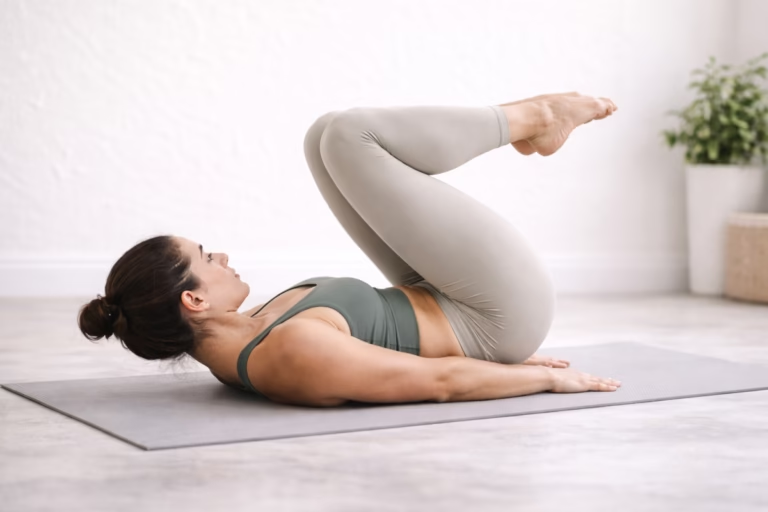
5. Stability Ball Butt Kicks: Isolation and Control
For focused glute engagement, this movement is highly effective.
How to Perform Stability Ball Butt Kicks
- Position your core and pelvis on a stability ball.
- Extend your legs straight behind you.
- Lift one leg toward the ceiling.
- Hold for three seconds.
- Lower slowly.
- Alternate legs.
Perform 12–15 reps per leg.
Why It Works
This exercise:
- Isolates the glutes
- Improves hip stability
- Enhances mind-muscle connection
Controlled movement maximizes effectiveness.
Complete At-Home Leg and Glute Workout Plan
Combine these exercises into one structured routine:
- Deadlifts – 12 reps
- Step-ups – 10–12 reps per leg
- Kettlebell swings – 15 reps
- Single-leg jumps – 8–10 reps per leg
- Stability ball butt kicks – 12–15 reps per leg
Complete 3 rounds.
Rest 60–90 seconds between rounds.
Perform this Leg and Glute Workout 2–3 times per week for best results.
Common Mistakes to Avoid in a Leg and Glute Workout
Even the best exercises won’t deliver results if performed incorrectly. Avoid these common mistakes to maximize your progress.
1. Using Too Much Weight Too Soon
Going heavy before mastering proper form shifts tension away from the glutes and increases injury risk. Start with manageable weights and focus on technique first.
2. Turning Every Movement Into a Squat
Many people bend their knees too much during deadlifts and kettlebell swings. Remember, these are hip-dominant exercises. Push your hips back rather than dropping into a squat.
3. Not Engaging the Glutes at the Top
If you’re not consciously squeezing your glutes at the top of each rep, you’re missing out on activation. Pause briefly and contract the muscle with intention.
4. Letting Knees Collapse Inward
During step-ups or single-leg jumps, knees should track in line with your toes. Letting them cave inward reduces glute engagement and increases strain on the knees.
5. Rushing Through Reps
Speed without control reduces effectiveness. Slow, controlled movements increase time under tension and improve muscle growth.
6. Skipping Recovery
Glutes are large muscles and require proper recovery. Overtraining can slow progress. Allow at least one day of rest between sessions.
Final Thoughts
A strong, sculpted lower body is not built through shortcuts. It’s built through consistent, intentional training.
This Leg and Glute Workout helps you strengthen, lift, and shape your glutes naturally — without extreme measures. When you focus on proper form, progressive overload, and consistency, results will follow.
Train with purpose.
Stay consistent.
Let your strength speak for itself.