3 Cardio Workouts at Home to Build Strength and Stamina
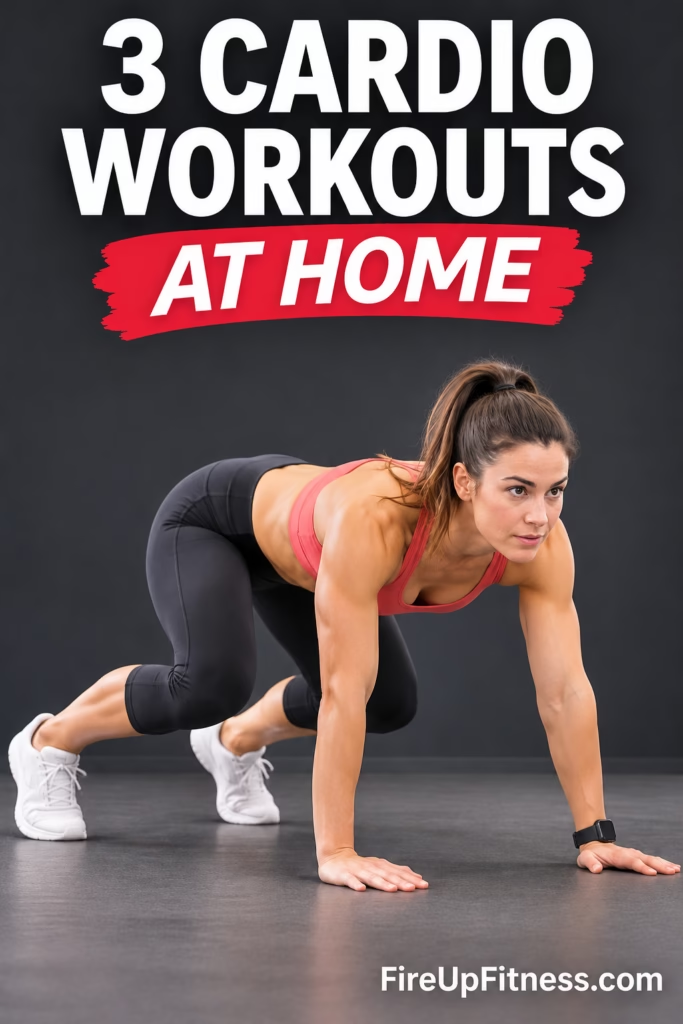
You don’t need a gym membership or expensive exercise equipment to get your heart pumping and challenge your entire body. Some of the most effective cardio workouts can be done right in your living room, backyard, or any open space where you can move comfortably.
A good cardio workout does more than make you sweat. It helps improve cardiovascular endurance, builds stamina, strengthens your muscles, and supports your overall fitness. And when you combine cardio with bodyweight exercises, you can challenge several muscle groups in a single session.
The best part? You can fit these workouts into your schedule without traveling to the gym.
These three cardio workouts at home combine jumping, strength exercises, and dynamic movements to keep your heart rate elevated. Each routine offers a different challenge, so you can choose one based on your fitness level, available time, and energy.
1. Jump Rope and Bodyweight Cardio Circuit
Jumping rope is a simple way to get your heart rate up, but combining it with bodyweight exercises makes the workout even more challenging.
This circuit includes five movements that target your upper body, lower body, and core while testing your cardiovascular endurance.
Workout structure: Complete all five exercises in order. Rest for 60–90 seconds, then repeat until you’ve finished three rounds.
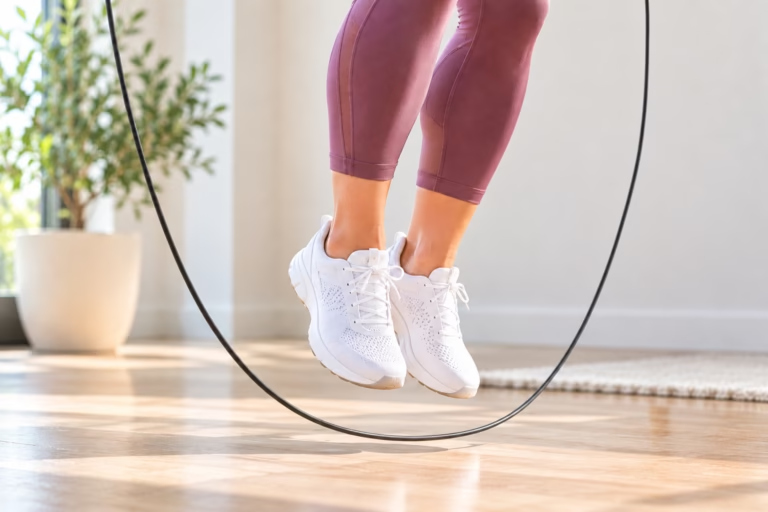
Exercise 1: Jump Rope – 100 Revolutions
Start with 100 jump rope revolutions at a comfortable, steady pace.
- Keep your elbows close to your sides.
- Use your wrists to turn the rope rather than swinging your entire arms.
- Land softly on the balls of your feet with slightly bent knees.
- Maintain an upright posture and relaxed shoulders.
Don’t have a jump rope? You can mimic the movement with small jumps while rotating your wrists.
Exercise 2: Hand-Release Push-Ups – 15 Repetitions
Hand-release push-ups challenge your chest, shoulders, triceps, and core.
- Begin in a high plank position with your hands slightly wider than shoulder-width apart.
- Lower your body until your chest gently touches the floor.
- Briefly lift both hands off the ground.
- Place your palms back down and push yourself up while keeping your body aligned.
For a modified version, perform the movement from your knees.
Exercise 3: Plyometric Lunges – 12 Repetitions
Plyometric lunges add an explosive lower-body movement to the circuit.
- Start in a lunge position with one foot forward and the opposite foot behind you.
- Bend both knees while keeping your chest upright.
- Push through your feet and jump upward.
- Switch your legs in the air and land softly in the opposite lunge position.
- Continue alternating legs for 12 total repetitions.
Keep your front knee aligned with your toes and avoid landing with locked knees.
Beginner modification: Replace jumping lunges with alternating reverse lunges to reduce impact.
Exercise 4: Kimura Sit-Ups – 16 Repetitions
Kimura sit-ups incorporate a twisting movement that challenges your abdominal and oblique muscles.
- Lie on your back with your knees bent and feet flat on the floor.
- Position your arms comfortably beside your body.
- Engage your abdominal muscles and lift your shoulders slightly.
- Rotate your torso to bring your right hand toward your left wrist.
- Return to the starting position and repeat on the opposite side.
Complete 16 repetitions, alternating sides.
Move slowly and avoid pulling on your neck or forcing the rotation.
Complete the Circuit
Once you’ve finished all four exercises, you’ve completed one round.
Take a short recovery break before starting the next round. Aim for three rounds in total, adjusting repetitions when needed to maintain good form.
This workout is particularly useful when you want to combine cardiovascular conditioning with upper-body, leg, and abdominal exercises.
2. JPC Workout: Jumping Jacks, Push-Ups, and Climbers
The JPC workout is a quick bodyweight routine built around three familiar exercises: jumping jacks, push-ups, and mountain climbers.
Although the movements are simple, performing them consecutively creates a full-body challenge that requires coordination and muscular endurance.
How to Do the JPC Workout
Complete the following sequence:
- One jumping jack: Jump your feet apart while raising your arms overhead, then return to the starting position.
- One push-up: Place your hands on the floor, extend your legs into a plank, lower your chest toward the ground, and press back up.
- One mountain climber on each leg: Stay in the plank position and drive one knee toward your chest, then switch legs.
That completes one round.
Perform eight rounds, moving between exercises with control.
How to Make It More Challenging
Once you can complete eight rounds comfortably, gradually increase the number of repetitions per exercise or add more rounds.
You can also maintain a steady pace with shorter transitions between movements, provided your technique remains controlled.
For a lower-impact option, step sideways during jumping jacks and perform push-ups against a sturdy elevated surface.
The JPC circuit is a convenient choice for days when you have limited time but still want to move your entire body.
3. Bear Crawl Cardio Finisher Workout
The bear crawl finisher is the most demanding of these three routines. It combines upper-body strength, single-leg balance, abdominal control, and dynamic movement.
Because several exercises require significant strength and coordination, this circuit is best suited to people who already have some experience with bodyweight training.
Workout structure: Perform the five exercises below for three rounds, resting as needed between movements.
Exercise 1: Push-Ups – 20 Repetitions
Begin in a high plank with your hands beneath or slightly wider than your shoulders.
Bend your elbows to lower your chest toward the floor, then press back to the starting position.
Keep your abdominal muscles engaged and avoid letting your hips sag.
You can divide the 20 repetitions into smaller sets or use an incline to make the exercise more manageable.
Exercise 2: Pistol Squats – 2 Repetitions Per Leg
Pistol squats are advanced single-leg squats that require balance, mobility, and lower-body strength.
- Stand tall and shift your weight onto one leg.
- Extend your opposite leg forward.
- Slowly bend your standing knee and lower your hips as far as you can comfortably control.
- Push through your standing foot to return upright.
- Complete two repetitions before switching legs.
Modification: Hold a sturdy support or lower yourself toward a chair instead of attempting a full pistol squat.
Exercise 3: V-Ups – 15 Repetitions
V-ups challenge your abdominal muscles by lifting your upper and lower body simultaneously.
- Lie flat on your back with your arms extended overhead.
- Engage your core and raise your legs and upper body toward each other.
- Reach your hands toward your feet, forming a V shape.
- Lower yourself slowly without dropping your legs or shoulders abruptly.
Keep the movement controlled rather than relying on momentum.
For an easier variation, bend your knees and perform tuck-ups.
Exercise 4: Medicine Ball Slams
Medicine ball slams add a powerful full-body movement that involves your shoulders, arms, core, and legs.
- Stand with your feet about shoulder-width apart.
- Hold a slam-safe medicine ball securely with both hands.
- Raise the ball overhead without excessively arching your back.
- Engage your core and drive the ball toward the floor in front of you.
- Bend your knees to retrieve the ball safely and repeat.
Start with 8–10 repetitions, since the original circuit doesn’t specify a count.
Use a medicine ball designed for slams, and make sure you have enough space to perform the movement safely.
Exercise 5: Bear Crawl – 15 Meters
Finish the round with a bear crawl, a movement that challenges your shoulders, core stability, and coordination.
- Start on your hands and knees with your wrists beneath your shoulders.
- Lift your knees a few inches off the floor.
- Move your right hand and left foot forward together.
- Continue with your left hand and right foot.
- Crawl forward for approximately 15 meters while keeping your hips relatively level.
Keep your steps small and your back in a neutral position.
When space is limited, crawl forward a few steps and then backward until you’ve covered the intended distance.
Rest before repeating the circuit for a total of three rounds.
How to Choose the Right Cardio Workout
Each of these home cardio workouts has a different focus.
| Workout | Main focus | Suggested level |
|---|---|---|
| Jump Rope Circuit | Cardio endurance and full-body conditioning | Intermediate |
| JPC Workout | Quick cardio and bodyweight strength | Beginner to intermediate |
| Bear Crawl Finisher | Muscular endurance, balance, and core strength | Advanced |
You don’t need to complete all three workouts in one session. Start with the routine that matches your current abilities and gradually build up as your fitness improves.
Tips for Getting the Most Out of Your Home Cardio Workouts
A little preparation can make your workout safer and more comfortable.
- Warm up first. Spend five minutes marching in place, doing arm circles, or performing gentle dynamic movements before beginning.
- Focus on technique. Controlled repetitions are more valuable than rushing through exercises with poor form.
- Adjust the intensity. Take longer breaks, reduce repetitions, or choose lower-impact modifications when necessary.
- Stay hydrated. Keep water nearby, particularly during longer or more demanding sessions.
- Allow time to recover. Give your muscles adequate recovery between challenging workouts, especially when you’re new to strength-based cardio circuits.
During cardio exercise, your breathing should become faster, but you should still feel in control of your movements. Slow down or stop if you experience dizziness, chest pain, or unusual shortness of breath.
How Often Should You Do Cardio Workouts at Home?
For general health, adults are encouraged to aim for at least 150 minutes of moderate-intensity aerobic activity or 75 minutes of vigorous activity each week, along with muscle-strengthening activities on at least two days.
You can work toward these recommendations gradually.
For example, you might begin with two or three home cardio sessions per week and include walking, cycling, or other enjoyable activities on additional days.
The goal is to establish a routine that feels manageable enough to maintain over time.
Final Thoughts
Getting a challenging cardio workout doesn’t require a gym, complicated equipment, or a large workout space.
The jump rope circuit offers a combination of cardio and strength, the JPC routine provides a quick full-body challenge, and the bear crawl finisher adds an advanced option for building stamina and muscular endurance.
Choose a workout that suits your fitness level, make adjustments when needed, and focus on steady progress rather than trying to complete every repetition perfectly on your first attempt.
With a little space and a consistent routine, you can build strength, improve cardiovascular fitness, and enjoy the convenience of exercising at home.