5-Minute Full Body Stretch Routine for Tight Muscles
Feeling stiff after sitting for hours or moving through a busy day? Sometimes, a few minutes of gentle stretching is all you need to feel more comfortable and relaxed.
This 5-minute full body stretch routine combines nine simple stretches that target your shoulders, chest, back, hips, hamstrings, and legs. It’s an easy way to release everyday muscle tension, support flexibility, and add more movement to your routine.
You don’t need any special equipment or previous stretching experience. Just find a comfortable space, follow along with the video, and move at your own pace.
Benefits of a 5-Minute Full Body Stretch
Stretching helps maintain flexibility and allows your muscles and joints to move through a comfortable range of motion. Although longer sessions can be beneficial, short routines are a practical option when time is limited.
Regular stretching may help:
- Reduce muscle stiffness: Ease temporary tightness caused by sitting or remaining in one position.
- Improve flexibility: Maintain or gradually increase your range of motion.
- Support hip mobility: Encourage comfortable movement through the hips and surrounding muscles.
- Relieve everyday tension: Help your shoulders, back, and legs feel less restricted.
- Promote relaxation: Combine gentle movement with slow, steady breathing.
The key is to stretch comfortably without forcing your body beyond its natural limits.
Follow Along With the 5-Minute Full Body Stretch Video
This quick stretching workout includes nine movements, with each stretch held for approximately 30 seconds.
The routine begins with standing upper-body stretches before moving into hip openers, hamstring stretches, and kneeling lunges with gentle spinal rotations.
Follow the instructor in the video or use the instructions below to learn the correct positioning for each stretch.
9 Stretches for a Quick Full Body Routine
1. Standing Overhead Reach
Duration: Approximately 30 seconds
Start by lengthening your upper body and gently stretching your shoulders and torso.
How to do it:
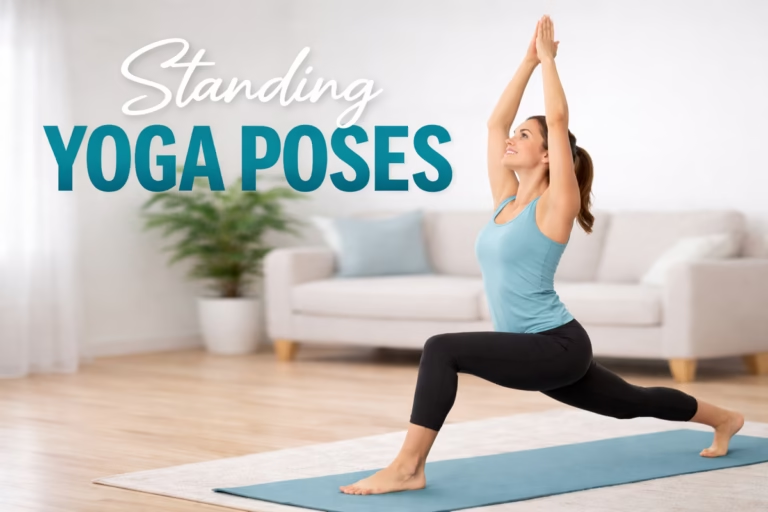
- Stand with your feet hip-width apart and knees slightly bent.
- Raise both arms toward the ceiling.
- Reach upward while keeping your shoulders relaxed and away from your ears.
- Keep your pelvis neutral and breathe naturally.
- Hold the stretch without arching your lower back.
Focus on creating length through your torso rather than reaching as high as possible.
2. Standing Chest Opener
Duration: Approximately 30 seconds
This stretch opens the front of your chest and shoulders, which may feel tight after prolonged desk work.
How to do it:
- Lower your arms and clasp your hands behind your back.
- Gently draw your shoulder blades toward each other.
- Open your chest without pushing your ribs forward.
- Keep your neck relaxed and your posture upright.
- Hold while breathing steadily.
If clasping your hands is uncomfortable, hold a small towel between them.
3. Wide-Leg Hip and Inner Thigh Stretch
Duration: Approximately 30 seconds
This movement targets the inner thighs while encouraging mobility through the hips.
How to do it:
- Step your feet wider than shoulder-width apart.
- Turn your toes slightly outward.
- Bend your knees and lower into a comfortable wide squat.
- Rest your hands on your thighs or place your elbows just above your knees.
- Keep your spine long and gently shift from side to side.
Avoid forcing your knees outward or lowering deeper than your hips comfortably allow.
4. Standing Hamstring Stretch — Right Leg
Duration: Approximately 30 seconds
The hamstrings are located along the backs of your thighs and can feel tight after prolonged sitting.
How to do it:
- Return to standing and extend your right heel forward.
- Keep your right leg comfortably straight with your toes pointing upward.
- Bend your left knee slightly.
- Shift your hips backward and hinge forward from your hips.
- Rest your hands on your supporting thigh.
You should feel a gentle stretch along the back of your right leg. Keep your back comfortably straight rather than rounding forward.
5. Standing Hamstring Stretch — Left Leg
Duration: Approximately 30 seconds
Repeat the movement on your opposite leg.
How to do it:
- Extend your left heel forward with your toes pointing upward.
- Keep your weight primarily on your right leg.
- Bend your supporting knee and move your hips backward.
- Lean forward slightly until you feel the stretch.
- Maintain the position without bouncing.
One hamstring may feel tighter than the other. Work within each leg’s comfortable range instead of trying to achieve identical positions.
6. Kneeling Hip Flexor Stretch — Right Side
Duration: Approximately 30 seconds
Your hip flexors help lift your thighs and support movement at the hip joint. A kneeling lunge gently stretches the front of the hip and thigh.
How to do it:
- Lower your left knee onto a mat or folded towel.
- Place your right foot forward, bending your front knee to approximately 90 degrees.
- Keep your torso upright.
- Gently tuck your pelvis and engage your glutes.
- Shift your hips slightly forward.
You should feel the stretch through the front of your left hip and upper thigh.
Avoid excessively arching your lower back. A small pelvic adjustment is often enough to deepen the sensation.
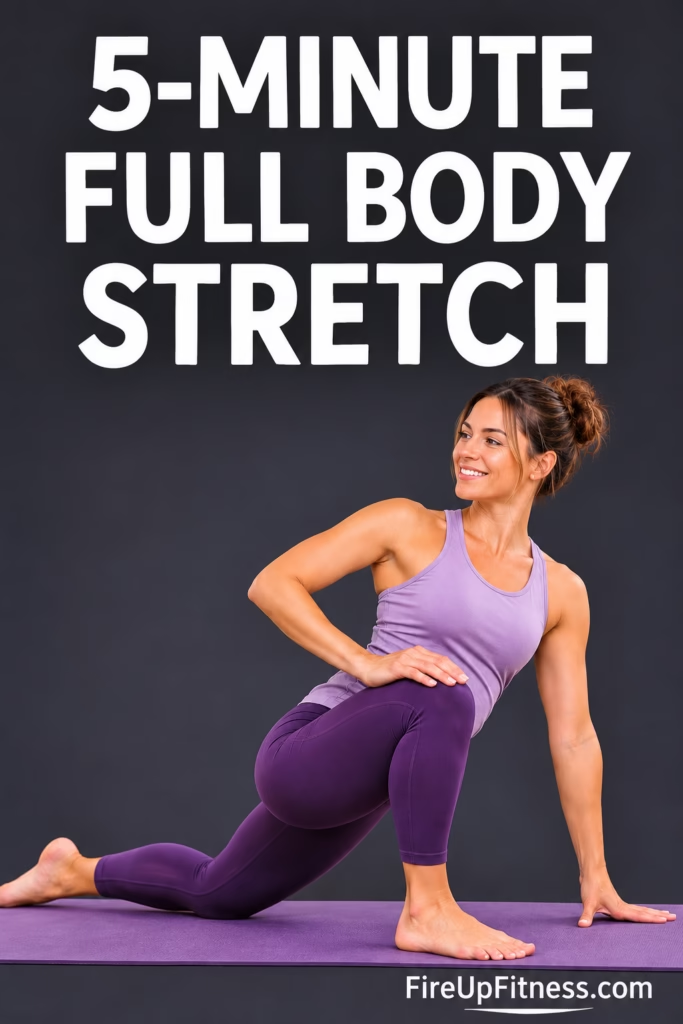
7. Kneeling Lunge With Spinal Twist — Right Side
Duration: Approximately 30 seconds
This variation adds gentle rotation through your upper and middle back while maintaining the kneeling lunge position.
How to do it:
- Remain in the lunge with your right foot forward.
- Place your left hand on your right thigh.
- Slowly rotate your upper body toward the right.
- Keep your hips relatively stable.
- Hold the rotation while breathing comfortably.
Turn only as far as your spine allows without discomfort. Avoid pulling yourself into a deeper twist.
8. Kneeling Hip Flexor Stretch — Left Side
Duration: Approximately 30 seconds
Switch legs to stretch the front of your right hip.
How to do it:
- Place your left foot forward and your right knee on the mat.
- Keep your left knee comfortably aligned over your ankle.
- Gently tuck your pelvis.
- Tighten your glutes and shift your hips slightly forward.
- Hold the stretch with your shoulders relaxed.
Use padding beneath your back knee if needed.
9. Kneeling Lunge With Spinal Twist — Left Side
Duration: Approximately 30 seconds
Finish with a controlled rotation toward your left side.
How to do it:
- Stay in the lunge with your left foot forward.
- Place your right hand on your left thigh.
- Rotate your chest gently toward the left.
- Keep your movement slow and your breathing steady.
- Return to the center before carefully standing up.
Take a moment to notice whether your hips, back, and legs feel more comfortable.
When Should You Do This Full Body Stretch?
You can fit this routine into different parts of your day depending on your schedule and how your body feels.
In the morning: Gentle stretching can help ease stiffness after sleeping. Move slowly and consider walking around briefly before beginning.
During a work break: A short stretching session gives you an opportunity to change positions after sitting at a desk.
After exercise: These static stretches can be a comfortable addition to your post-workout cooldown once your breathing has settled.
Before bedtime: Slow movements and relaxed breathing can help you unwind as part of your evening routine.
Choose a time that feels convenient rather than trying to follow a strict schedule.
Tips for Safe and Effective Stretching
A few simple habits can help you get more comfortable with stretching, especially when you’re just starting.
- Warm up first: Try a few minutes of easy walking or marching in place before holding static stretches.
- Avoid painful positions: Mild muscle tension is normal, but sharp pain, pinching, or numbness is a reason to stop.
- Move gradually: Ease into each stretch without bouncing or making sudden movements.
- Keep breathing: Natural, steady breathing helps you stay relaxed.
- Modify when necessary: Use a chair for balance or a folded towel to cushion your knees.
People with recent injuries, joint problems, or conditions affecting balance should seek appropriate professional guidance before trying unfamiliar stretches.
Can Five Minutes of Stretching Improve Flexibility?
Yes, short stretching sessions can contribute to improved flexibility when practiced consistently.
Your progress depends on your current mobility, how frequently you stretch, and how comfortably you perform each movement.
Holding a stretch for approximately 30 seconds is a practical starting point for many adults. Over time, you may notice that certain positions become easier and your range of motion gradually improves.
However, flexibility develops differently for everyone. Rather than measuring progress by how far you can reach, pay attention to whether everyday movements begin to feel more comfortable.
Stretching also works best as part of a balanced routine that includes regular physical activity and strength training.
Frequently Asked Questions
Is this full body stretch suitable for beginners?
Yes. The routine uses straightforward movements that can be adjusted to different flexibility levels. Beginners can use a smaller range of motion and add support where necessary.
Can I do this stretching routine every day?
Gentle daily stretching is generally appropriate for healthy adults as long as the movements remain comfortable and don’t aggravate an injury.
Do I need a yoga mat?
A yoga mat is optional, although it can provide cushioning during the kneeling stretches. A folded towel also works well.
Can stretching help with tight hips and back muscles?
Gentle stretching may ease temporary stiffness and improve comfortable movement. Persistent, severe, or worsening pain should be evaluated by a healthcare professional.
Final Thoughts
A full body stretching routine doesn’t need to be complicated or time-consuming.
These nine movements offer a convenient way to give your shoulders, back, hips, and legs some attention without committing to a lengthy workout.
Try following the five-minute video whenever your body feels stiff or you need a short movement break. As the stretches become more familiar, you can gradually explore longer sessions when your schedule allows.
Five minutes of intentional movement is a simple place to start building a consistent stretching habit.