7 Best Full-Body Exercises to Get Strong and Toned
What if getting stronger and more toned didn’t require spending hours at the gym?
For many women, finding time to exercise is one of the biggest challenges. Between family responsibilities, work, and everyday commitments, squeezing in a long workout can feel nearly impossible.
But here’s something worth knowing: you don’t need complicated routines or endless gym sessions to build a stronger body.
The right exercises can help you strengthen multiple muscle groups, improve balance, support better posture, and feel more energetic throughout the day.
And the best part? Many of these movements can be done at home with little or no equipment.
Whether you’re just getting started, returning to fitness after a break, or looking for a more manageable routine after 40, these 7 effective exercises can help you build strength and muscle tone without taking over your schedule.
Let’s look at the movements worth making time for.
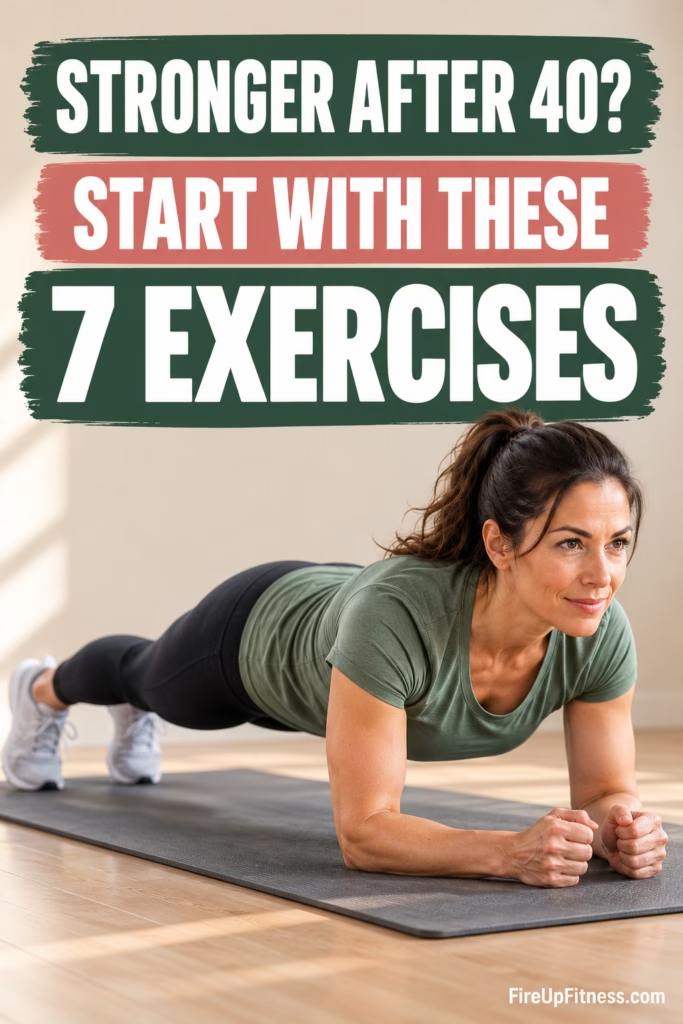
Why Full-Body Exercises Are Worth Your Time
Think about how your body moves throughout the day.
You bend to pick something up, carry groceries, climb stairs, reach overhead, and get up from chairs. Most of these activities require several muscle groups to work together.
That’s exactly what makes full-body strength training so useful.
Instead of focusing exclusively on one small muscle at a time, many effective exercises train several areas simultaneously.
The benefits go beyond muscle tone:
- Stronger muscles: Build strength in your legs, arms, back, shoulders, and core.
- Better balance: Improve stability and coordination during everyday movements.
- Improved posture: Strengthen muscles that help support your body.
- More efficient workouts: Train multiple muscle groups without needing a long exercise session.
- Healthy aging: Maintain the strength needed for an active, independent lifestyle.
You don’t need to master every movement immediately. Start with the exercises that match your ability, learn proper technique, and build from there.
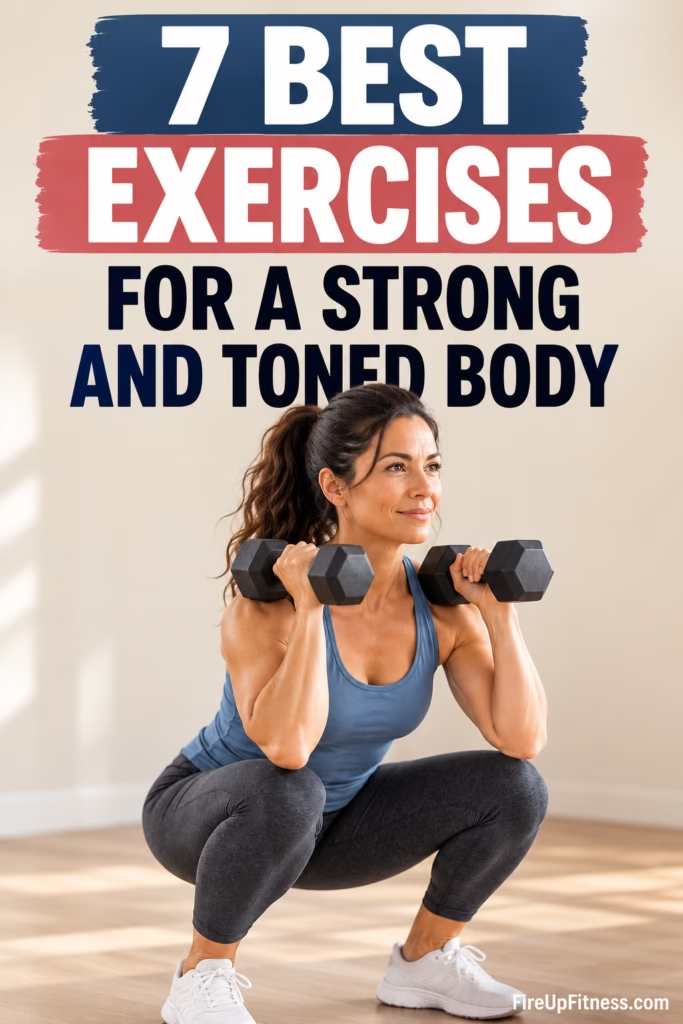
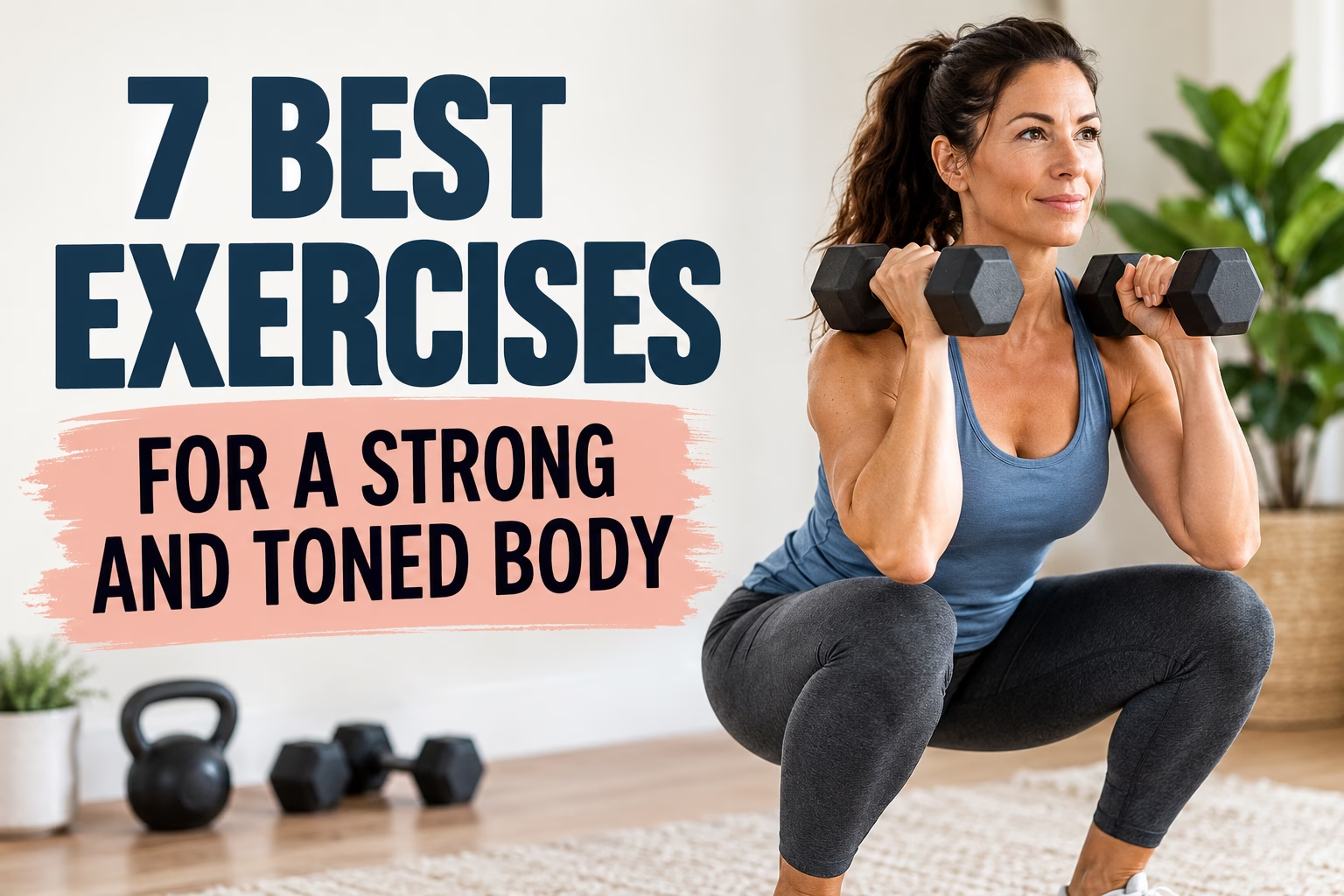
1. Squats – Strengthen Your Legs and Glutes
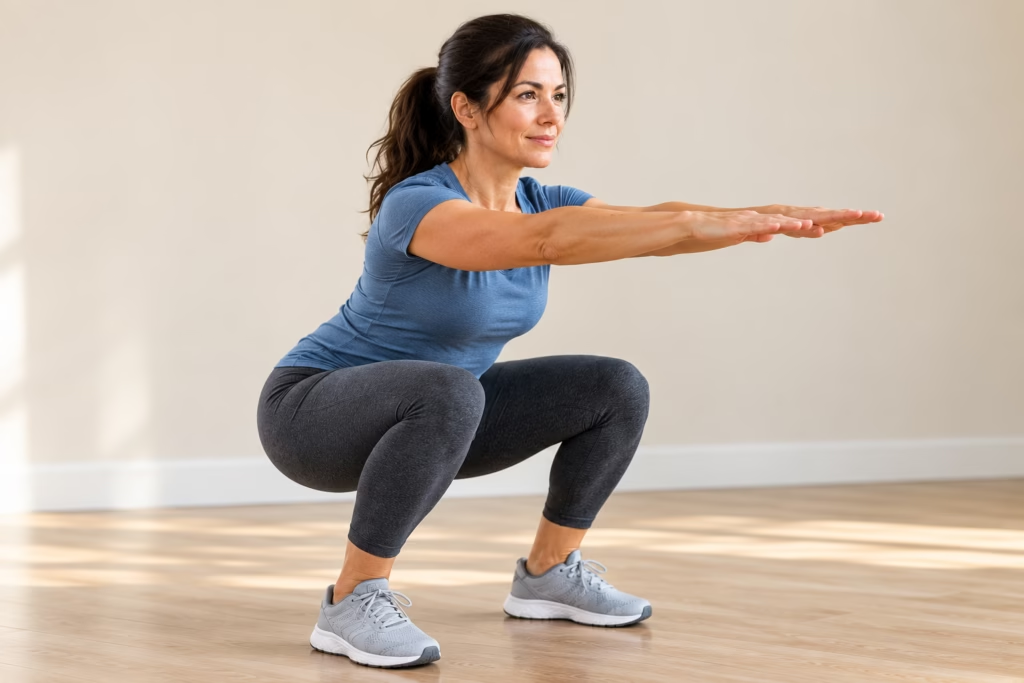
Squats deserve a place in almost every strength-training routine.
Why? Because they’re based on a movement you already perform throughout the day: sitting down and standing back up.
A well-performed squat strengthens your thighs, glutes, and core while improving lower-body control.
How to Do Squats
- Stand with your feet approximately shoulder-width apart.
- Keep your chest comfortably lifted and your abdominal muscles engaged.
- Push your hips backward as though you’re sitting in a chair.
- Bend your knees and lower yourself as far as feels comfortable.
- Press through your feet to return to standing.
Start with: 10–12 repetitions.
Beginner modification: Place a sturdy chair behind you. Lower yourself until your hips lightly touch the seat, then stand again.
Common mistake: Allowing your knees to collapse inward. Keep them tracking in the same general direction as your toes. It’s normal for your knees to travel past your toes when your body proportions and squat depth require it.
Why you’ll love this exercise: Stronger legs make climbing stairs, getting out of chairs, and carrying everyday items feel easier.
2. Lunges – Improve Balance and Lower-Body Strength
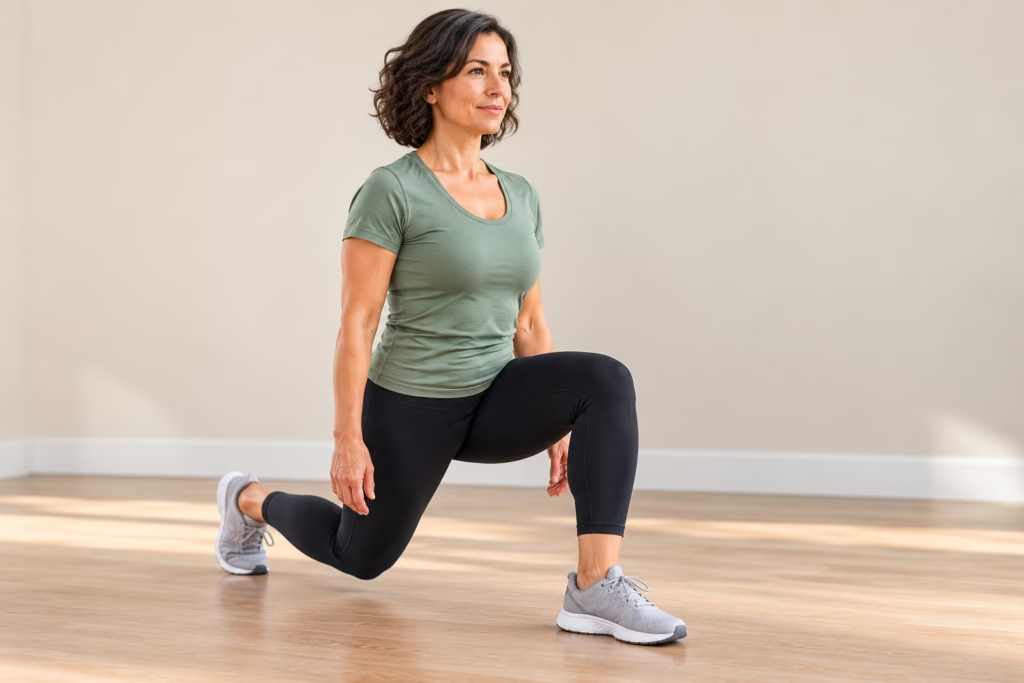
Lunges might look simple, but they challenge your body in a completely different way from squats.
Because each leg works independently, lunges help develop coordination, stability, and strength on both sides of your body.
They’re especially useful for strengthening your glutes, thighs, and the muscles that support your hips.
How to Do Forward Lunges
- Stand tall with your feet hip-width apart.
- Take a comfortable step forward with one foot.
- Bend both knees, lowering your body toward the floor.
- Keep your front foot planted and your torso upright.
- Push through your front foot to return to standing.
- Repeat with the opposite leg.
Start with: 8–10 repetitions per leg.
Beginner modification: Hold a sturdy chair or countertop for balance. You can also try stationary split squats without stepping forward.
Common mistake: Taking a step that’s too short or too narrow, making it difficult to maintain balance.
Why you’ll love this exercise: Lunges strengthen the muscles that support walking, stair climbing, and other single-leg movements.
3. Bench Press – Build Upper-Body Strength
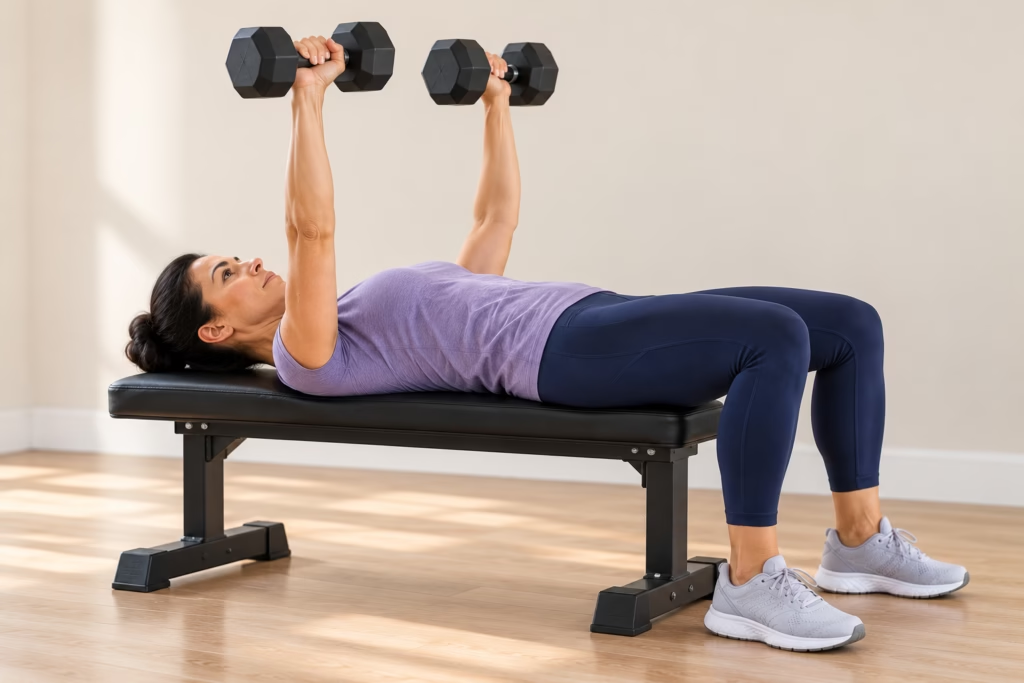
Many women focus heavily on leg exercises while overlooking upper-body strength.
But strong chest, shoulder, and arm muscles are just as important.
Think about pushing a heavy door, moving furniture, or lifting something onto a shelf. These activities become easier when your upper body is stronger.
The bench press is a classic exercise for developing that strength.
How to Do a Bench Press
- Lie on a stable weight bench with your feet planted on the floor.
- Hold a pair of dumbbells near chest level, with your wrists straight.
- Keep your shoulder blades gently drawn back against the bench.
- Press the dumbbells upward until your arms are nearly straight.
- Lower them slowly with control.
Start with: 8–12 repetitions using light dumbbells.
Beginner modification: Try wall push-ups or incline push-ups against a sturdy countertop before progressing to weights.
Common mistake: Using weights that are too heavy, causing your shoulders to shift or your lower back to arch excessively.
Why you’ll love this exercise: It strengthens the muscles used for pushing and helps you develop confidence with upper-body movements.
4. Deadlifts – Strengthen Your Glutes, Back, and Core
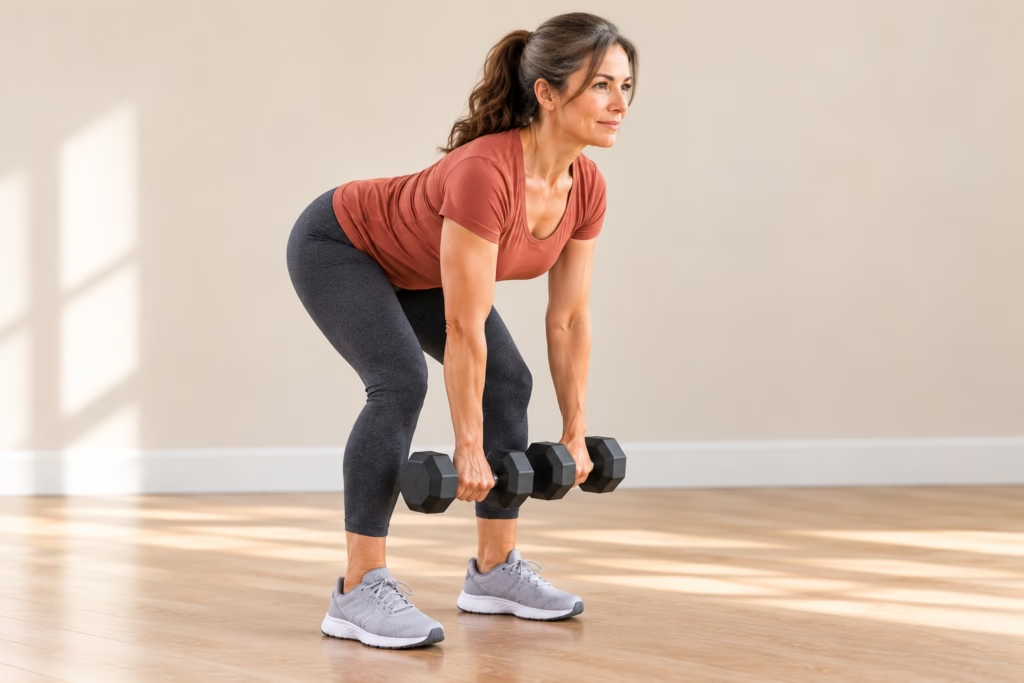
The deadlift is one of the most practical strength exercises you can learn.
It teaches you how to bend at your hips and lift an object while maintaining a stable spine.
That movement pattern is called a hip hinge, and it’s useful far beyond the gym.
Deadlifts primarily strengthen your glutes and hamstrings while challenging your back, core, and grip.
How to Do a Dumbbell Deadlift
- Stand with your feet hip-width apart, holding a light dumbbell in each hand.
- Soften your knees slightly.
- Push your hips backward while keeping your spine neutral.
- Lower the dumbbells close to your legs until you feel a comfortable stretch in your hamstrings.
- Press through your feet and bring your hips forward to stand tall.
Start with: 8–10 repetitions.
Beginner modification: Practice the hip-hinge movement without weights. Once you’re comfortable, use very light dumbbells.
Common mistake: Rounding your back or trying to lift primarily by pulling with your arms.
Why you’ll love this exercise: It builds strength for lifting laundry baskets, picking up shopping bags, and other everyday tasks.
5. Clean and Jerk – Develop Full-Body Power
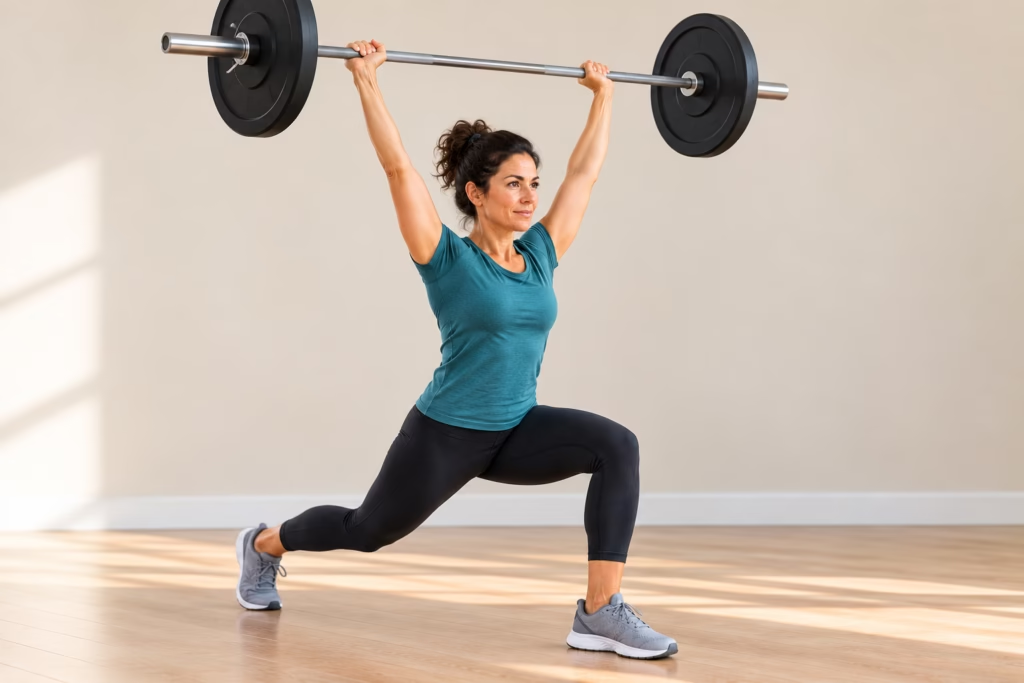
The clean and jerk is different from the other exercises on this list.
It’s an advanced Olympic weightlifting movement that combines lifting a weight from the floor to the shoulders and then driving it overhead.
This exercise challenges your legs, shoulders, core, coordination, and explosive power.
However, it requires considerably more technique than basic strength movements.
How the Clean and Jerk Works
The movement has two main phases.
The clean: You lift a barbell from the floor to your shoulders using a coordinated extension of your legs and hips, then catch the bar in the front-rack position.
The jerk: You dip slightly at the knees, drive upward through your legs, and push yourself beneath the bar to catch it overhead with stable arms.
Both phases require proper timing, mobility, and technique.
For beginners: Learn this movement with a qualified coach rather than attempting it with heavy weights.
A more accessible alternative is a light dumbbell push press.
Try a Dumbbell Push Press Instead
- Stand tall with a light dumbbell at each shoulder.
- Bend your knees slightly.
- Drive through your legs as you press the dumbbells overhead.
- Lower the weights slowly to shoulder height.
Start with: 6–8 controlled repetitions.
Why you’ll love this exercise: It introduces coordinated leg and upper-body strength while offering a simpler way to practice an overhead movement.
6. Planks – Build a Stronger, More Stable Core
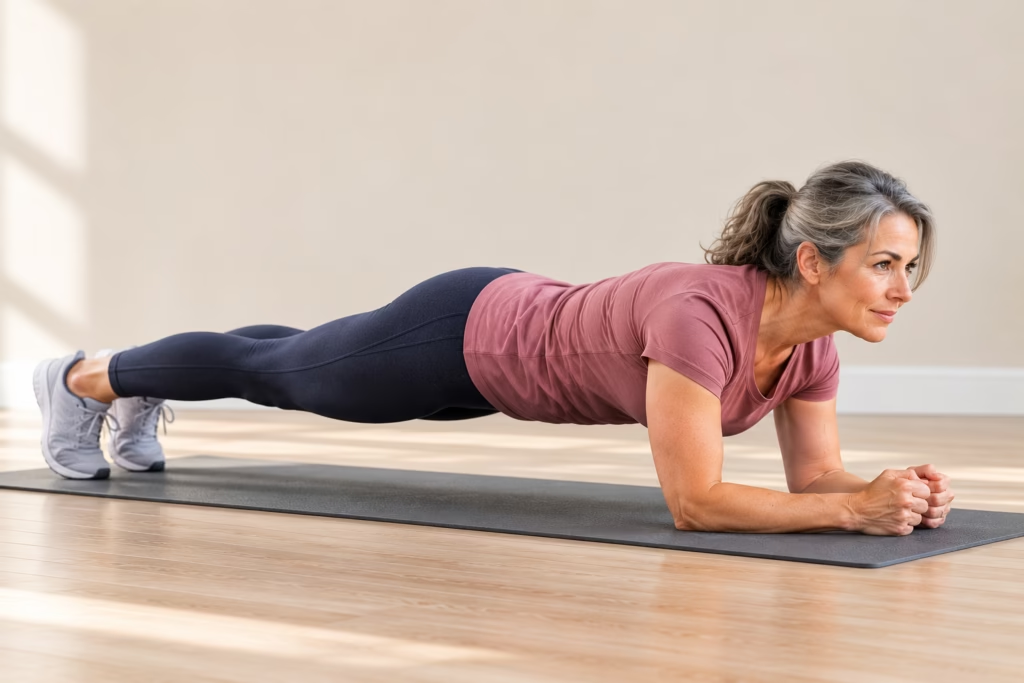
You don’t have to move constantly to get an effective workout.
Sometimes, holding one position is enough to challenge several muscles at once.
That’s what makes planks so useful.
A plank strengthens your abdominal muscles while engaging your shoulders, glutes, and other stabilizing muscles.
And unlike exercises that involve repeated bending, planks teach your core to resist unwanted movement.
How to Do a Forearm Plank
- Place your forearms on an exercise mat, with your elbows beneath your shoulders.
- Extend your legs behind you.
- Lift your body onto your forearms and toes.
- Keep your head, shoulders, hips, and heels in a straight line.
- Gently tighten your abdominal muscles and continue breathing.
Start with: 15–20 seconds.
Beginner modification: Keep your knees on the mat or perform an incline plank with your forearms supported on a stable countertop.
Common mistake: Letting your lower back sag or holding your breath.
Why you’ll love this exercise: A stronger core helps you maintain stability during lifting, walking, and other physical activities.
7. Crunches – Strengthen Your Abdominal Muscles
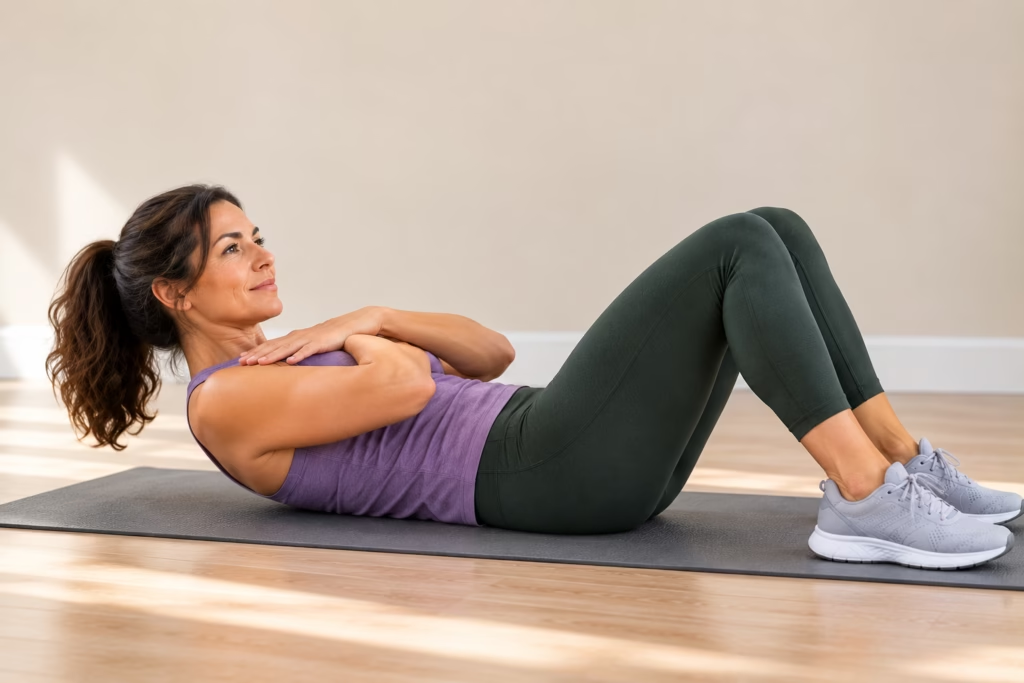
Crunches may be an old-school exercise, but they’re still a useful option for strengthening the abdominal muscles.
The secret is making the movement small and controlled rather than trying to lift your entire upper body off the floor.
You don’t need dozens of fast repetitions to make your abs work.
How to Do Crunches Correctly
- Lie on your back with your knees bent and feet flat on the floor.
- Place your fingertips lightly beside your head or cross your arms over your chest.
- Gently tighten your abdominal muscles.
- Lift your head and shoulders a short distance from the mat.
- Lower slowly without pulling on your neck.
Start with: 10–15 repetitions.
Beginner modification: Try a small abdominal curl with your arms reaching toward your knees. If spinal flexion is uncomfortable, choose a dead bug exercise instead.
Common mistake: Pulling your head forward with your hands or using momentum to lift your shoulders.
Why you’ll love this exercise: Crunches strengthen the rectus abdominis, one of the major muscles at the front of your abdomen.
A Simple Full-Body Workout You Can Actually Stick With
Now that you know the exercises, the next question is how to put them together.
You don’t need to perform all seven movements every day.
In fact, beginners often benefit from starting with a shorter routine and gradually adding more exercises as their strength improves.
Here’s a practical workout you can try two or three nonconsecutive days per week.
Your 20–30 Minute Strength Routine
| Exercise | Repetitions |
|---|---|
| Squats | 10–12 |
| Lunges | 8 per leg |
| Dumbbell Bench Press | 8–12 |
| Dumbbell Deadlifts | 8–10 |
| Plank | 15–30 seconds |
| Crunches | 10–15 |
How to follow the routine:
Begin with 3–5 minutes of gentle movement, such as marching in place, shoulder circles, and easy bodyweight squats.
Perform each exercise with controlled movements, resting for approximately 30–60 seconds between exercises or longer when needed.
Complete one round when you’re just starting. As your endurance improves, gradually work toward two or three rounds.
Finish with a few minutes of gentle stretching.
The clean and jerk is intentionally excluded from this beginner circuit because it requires additional coaching and technical practice. More experienced exercisers can train it separately.
Remember, the goal isn’t to finish as quickly as possible. It’s to perform each movement well.
5 Small Habits That Make Strength Training More Effective
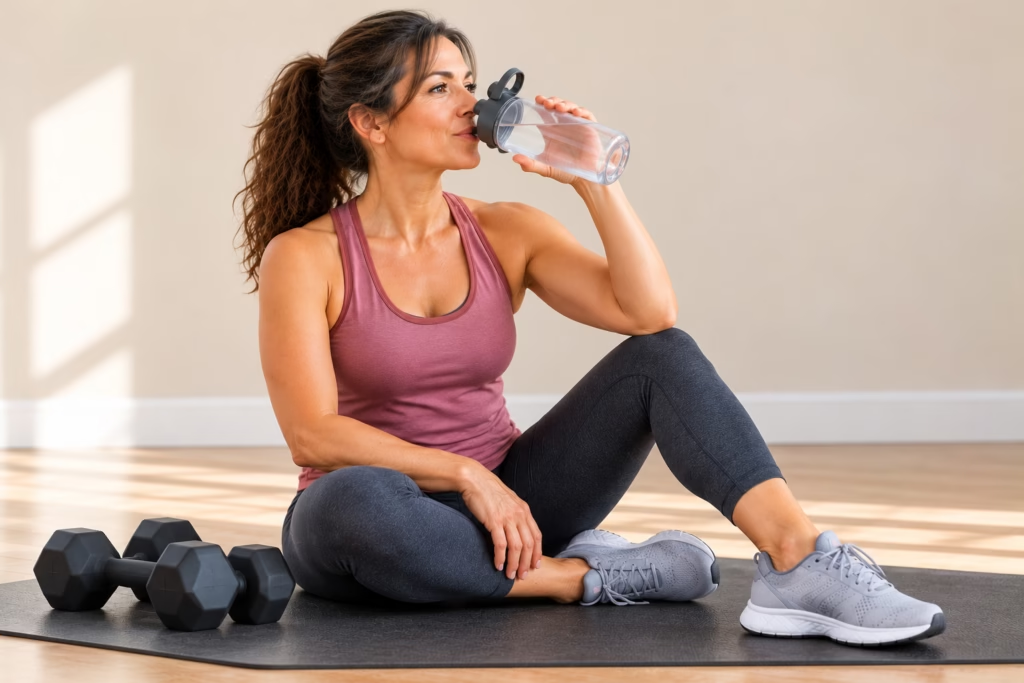
You can have a great workout plan and still struggle to see progress when your daily habits don’t support it.
Fortunately, a few simple adjustments can make your routine easier to maintain.
1. Focus on Consistency Before Intensity
One challenging workout followed by two weeks of inactivity won’t do as much for your fitness as regular training.
Choose a schedule you can realistically follow.
Even two strength-training sessions each week can be a meaningful starting point.
2. Increase the Challenge Gradually
Once an exercise becomes comfortable, give your muscles a reason to keep adapting.
You might add two repetitions, use slightly heavier dumbbells, or perform another set.
Make one small change at a time rather than increasing everything at once.
3. Give Your Muscles Time to Recover
Your muscles need recovery between demanding strength sessions.
Avoid training the same muscles intensely every day, especially when you’re new to exercise.
Use rest days for gentle walks, mobility exercises, or relaxing activities you enjoy.
4. Eat to Support Your Strength
Exercise is only one part of building and maintaining healthy muscles.
Regular meals containing protein, whole grains, fruits, vegetables, and healthy fats provide nutrients your body needs for training and recovery.
Protein-rich foods such as eggs, yogurt, beans, fish, tofu, and chicken can help support muscle maintenance and repair.
5. Pay Attention to How You Feel
Progress isn’t always something you can see in the mirror.
Maybe you can climb the stairs without feeling as tired. Perhaps carrying groceries feels easier, your balance has improved, or you can hold a plank longer than before.
Those improvements matter.
They show that your body is becoming more capable.
Can You Build a Strong and Toned Body Without Going to the Gym?
Absolutely.
Many effective strength exercises can be performed at home with minimal equipment.
Squats, lunges, planks, and crunches require little more than enough floor space to move comfortably.
A pair of dumbbells can add variety to your workouts and allow you to train your upper body and hip-hinge movements more effectively.
As you become stronger, you can gradually increase resistance.
The important thing is to challenge your muscles appropriately, regardless of where you exercise.
A home workout performed consistently can be more useful than a complicated gym routine you rarely follow.
How Long Does It Take to Notice Results?
Everyone progresses at a different pace.
Your starting fitness level, training frequency, recovery, nutrition, and exercise intensity all influence how quickly you notice improvements.
Some people begin feeling more comfortable with exercises within the first few weeks.
Over time, you may notice that movements feel easier, you can complete more repetitions, or you’re ready to use heavier resistance.
Visible changes in muscle definition often take longer and vary from person to person.
Rather than focusing on a deadline, pay attention to what your body can do now compared with when you started.
Strength is something you build through repeated practice.
Final Thoughts: Stronger Starts With Simple Movements
You don’t need an exhausting workout schedule to start feeling stronger.
Sometimes, the most effective approach is also the simplest: learn a few useful exercises, practice them regularly, and gradually challenge yourself as your fitness improves.
Squats strengthen your legs. Lunges improve balance. Pressing exercises build upper-body strength. Deadlifts develop your hips and back. Planks and crunches challenge your core.
Together, these movements can help you build a more capable body that supports your everyday life.
And that’s what makes strength training worth doing.
Start with the exercises you can manage today. Build confidence with every session. Let consistency do the rest.
Save this workout for your next strength-training day, and come back to it whenever you need a simple routine that works with your schedule.