Wall Pilates Arm Workout for Stronger Arms at Home
A wall Pilates arm workout is a simple way to build upper-body strength, improve shoulder stability, and challenge your muscles without needing a complicated exercise routine. With a sturdy wall, a pair of dumbbells, and a little floor space, you can work your arms, shoulders, chest, and upper back in one convenient session.
What makes this workout especially interesting is how the wall changes familiar exercises. A wall push-up can feel more manageable than a traditional floor push-up, while a wall sit combined with dumbbell raises challenges your arms and legs at the same time.
You can also use the wall for support during floor exercises, including an optional glute bridge that adds a little extra core and lower-body engagement.
This wall Pilates workout for arms includes a gentle warm-up, 30-second strength intervals, and relaxing stretches to finish. It’s a practical option for women who want to strengthen their upper body at home while incorporating Pilates-inspired control and mindful movement.
Why Try a Wall Pilates Arm Workout?
Traditional arm workouts often involve standing or sitting while lifting weights. Wall Pilates introduces another element: using the wall to support your body, adjust the difficulty of an exercise, or create a new movement challenge.
Although this routine includes several traditional dumbbell strength exercises, its Pilates-inspired approach emphasizes controlled movements, body awareness, and stability.
Here are some reasons to add it to your weekly fitness routine.
1. Strengthens Multiple Upper-Body Muscles
The workout includes movements that target your:
- Biceps, which help bend your elbows.
- Triceps, which straighten your arms.
- Shoulders, which support lifting and reaching.
- Chest muscles, which help with pushing movements.
- Upper-back muscles, which contribute to shoulder stability and posture.
By combining different exercises, you can work several major upper-body muscle groups without repeating the same movement throughout the session.
2. Makes Some Exercises More Accessible
Wall push-ups and wall plank variations allow you to exercise at an incline instead of supporting your body on the floor.
Standing closer to the wall generally makes these movements easier. Moving your feet farther away increases the challenge.
This flexibility makes wall exercises useful for beginners and anyone looking for a more manageable alternative to certain floor exercises.
3. Adds Core and Lower-Body Engagement
Wall sits challenge your thighs while you perform arm exercises. Later, placing your feet against the wall during floor exercises gives you the option to lift into a glute bridge.
These combinations encourage you to stabilize your body while your arms are moving.
4. Fits Into a Busy Schedule
With 30-second exercise intervals, this routine can fit into a shorter workout session. You can complete it on its own or pair it with another gentle workout, depending on your energy and fitness level.
What You’ll Need for This Wall Pilates Workout
You don’t need much equipment to get started.
- A sturdy, clear wall: Choose a surface without decorations or obstacles.
- A pair of dumbbells: Select weights you can control for approximately 10 repetitions in 30 seconds.
- An exercise mat: Useful for the floor portion of the workout.
- Comfortable workout clothes: Wear something that allows your shoulders and arms to move freely.
The instructor encourages using challenging weights, but heavier isn’t always better. Choose a weight that makes the final repetitions feel challenging without forcing you to compromise your form.
Beginners can start with lighter dumbbells or perform suitable movements without weights.
Warm-Up: Prepare Your Arms and Shoulders
Before beginning the strength exercises, spend a few minutes warming up your shoulders, arms, and upper back.
The video starts with gentle movements designed to increase mobility and prepare the muscles for lifting.
Arm Circles
Extend both arms out to your sides at shoulder height.
Make small circles forward, keeping your arms relatively straight. After several repetitions, reverse the direction.
Keep your shoulders relaxed and avoid shrugging toward your ears.
Arm Windmills
Stand with your feet comfortably apart and extend your arms.
Rotate through your upper body as one arm moves backward, then alternate sides. Repeat the movement in the opposite direction, bringing the arms forward.
Move gently and allow your upper back to rotate without forcing the motion.
Overhead Elbow Pulls
Raise both arms overhead, then bend your elbows and pull them down toward your sides.
Focus on squeezing your upper-back muscles as your elbows move downward.
Return your arms overhead and repeat with control.
Bent-Over Arm Extensions
Hinge forward slightly at your hips while keeping your back neutral.
Draw your elbows backward, then straighten your arms behind you to engage your triceps.
Bend your elbows again and repeat.
Front and Side Raises
With your arms at your sides, lift them forward to approximately shoulder height.
Lower them, then raise them out to your sides.
Alternate between these two movements without swinging your arms.
Once your shoulders feel warm and your arms are moving comfortably, grab your dumbbells and get ready for the main workout.
Wall Pilates Arm Workout: Step-by-Step Exercises
The main workout uses 30-second intervals, with brief breaks to reset between exercises. Follow the instructor’s timing in the video and focus on controlled repetitions rather than speed.
Part 1: Standing Wall Pilates Arm Exercises
EXERCISES 1–7
1. Wall Sit With Alternating Arm Raises
Targets: Shoulders, thighs, and core stability
Start with your back against the wall and your feet slightly forward.
- Slide down into a comfortable wall sit, keeping your knees aligned with your feet.
- Hold a dumbbell in each hand.
- Raise one arm forward toward shoulder height.
- Lower it slowly and repeat with the opposite arm.
- Continue alternating for 30 seconds.
You don’t need to lower into a deep wall sit. A shallow position still challenges your legs while allowing you to concentrate on your arm movements.
Form tip: Keep your back supported against the wall and avoid swinging the dumbbells.
2. Wall Sit With Bicep Curls
Targets: Biceps, thighs, and core
Remain against the wall in a comfortable wall sit.
- Hold your dumbbells at your sides.
- Bend your elbows to curl the weights toward your shoulders.
- Slowly lower the weights.
- Continue for 30 seconds.
The instructor also demonstrates an optional heel lift to increase the coordination challenge.
For a simpler version, keep both feet flat on the floor.
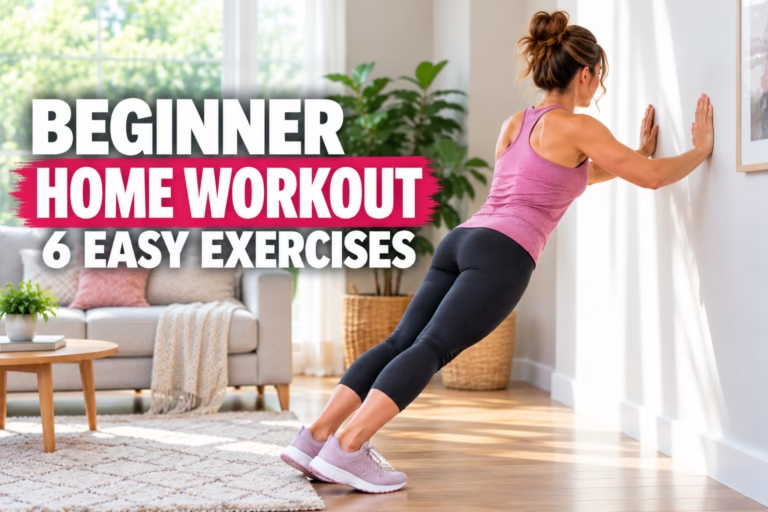
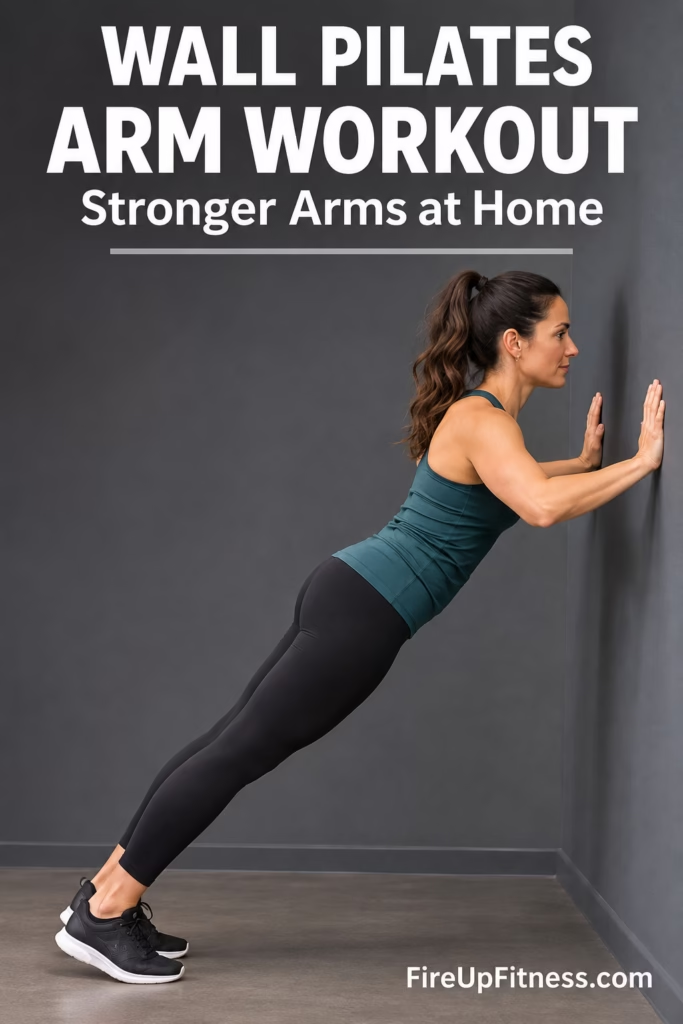
3. Wall Push-Ups
Targets: Chest, triceps, and shoulders
Wall push-ups are an effective way to practice pushing movements without getting down on the floor.
- Stand facing the wall and place your palms against it, around shoulder width apart.
- Step your feet backward until your body forms a straight line.
- Bend your elbows to bring your chest toward the wall.
- Push through your palms to return to the starting position.
- Repeat for 30 seconds.
Keep your abdominal muscles gently engaged and avoid letting your lower back sag.
Beginner modification: Stand closer to the wall to reduce the difficulty.
4. Wall Sit With Bent-Arm Side Raises
Targets: Shoulders and thighs
Return to the wall sit position with a dumbbell in each hand.
- Bend your elbows to approximately 90 degrees.
- Lift one upper arm out to the side, keeping the elbow bent.
- Lower it slowly.
- Repeat with the opposite arm.
- Alternate for 30 seconds.
This variation challenges your shoulders while the wall sit keeps your legs engaged.
Use lighter dumbbells when necessary, particularly if you find it difficult to keep your shoulders relaxed.
5. Wall Plank Shoulder Taps
Targets: Shoulders, chest, and core stability
This exercise challenges your ability to keep your body steady while shifting weight between your arms.
- Face the wall and place both palms against it.
- Step backward into an inclined plank position.
- Lift your right hand and tap your left shoulder.
- Return your right hand to the wall.
- Repeat with your left hand.
- Continue alternating for 30 seconds.
Try to minimize movement through your hips and torso.
For a greater challenge, move your feet farther away from the wall while maintaining good control.
6. Wall Sit With Alternating Shoulder Press
Targets: Shoulders, triceps, and thighs
This exercise combines overhead pressing with a supported wall sit.
- Sit against the wall at a comfortable depth.
- Hold your dumbbells near shoulder height, palms facing inward.
- Press one dumbbell overhead.
- Lower it to shoulder height.
- Repeat with the opposite arm.
- Continue for 30 seconds.
The instructor adds alternating heel lifts for an optional balance and coordination challenge.
Keep your feet flat if you prefer a more stable position.
7. Wall Plank Ups
Targets: Triceps, shoulders, and core
Wall plank ups introduce a controlled transition between your forearms and hands.
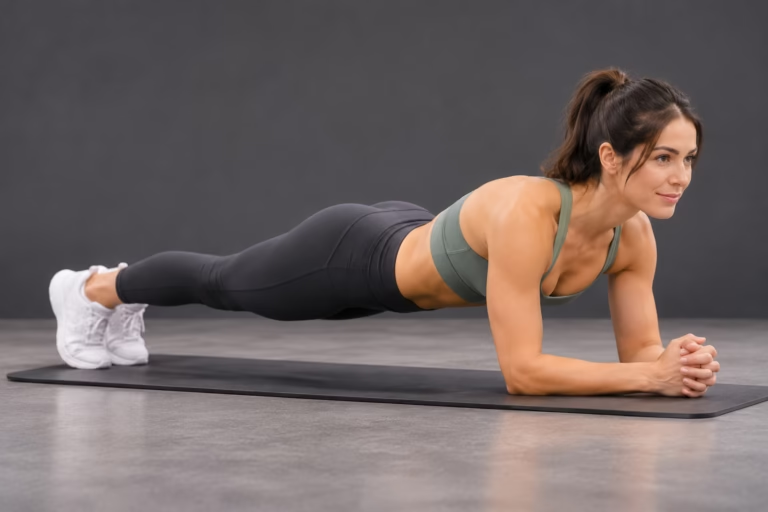
- Face the wall and place your forearms against it.
- Step your feet backward into an inclined plank.
- Press through one hand to straighten that arm.
- Press through the other hand until both arms are extended.
- Lower back to your forearms one arm at a time.
- Repeat for 30 seconds.
Move slowly and keep your body aligned throughout the exercise.
You can stand closer to the wall to make the movement easier.
Part 2: Dumbbell Exercises for the Back of Your Arms
EXERCISES 8–9
These two exercises are performed standing rather than against the wall. They complement the wall movements by focusing on the upper back and triceps.
8. Bent-Over Alternating Rows
Targets: Upper back, rear shoulders, and biceps
- Stand with your feet hip-width apart.
- Hinge forward from your hips with your knees slightly bent.
- Allow the dumbbells to hang beneath your shoulders.
- Pull one elbow backward toward your hip.
- Lower the weight and repeat on the opposite side.
- Alternate for 30 seconds.
Keep your back neutral and avoid twisting your torso as you lift.
9. Alternating Tricep Kickbacks
Targets: Triceps
Remain in a comfortable hip-hinged position.
- Bend your elbows and hold your upper arms close to your sides.
- Straighten one elbow, extending the dumbbell behind you.
- Slowly bend your elbow again.
- Repeat with the opposite arm.
- Continue alternating for 30 seconds.
Focus on moving your forearms while keeping your upper arms relatively still.
You should feel the muscles along the backs of your upper arms working.
Part 3: Floor Exercises With Feet on the Wall
EXERCISES 10–13
The next section changes your position completely.
Instead of standing against the wall, you’ll lie on your back with your feet resting against it.
You can keep your hips on the mat or lift into a glute bridge for an additional challenge.
For the bridge option, position your feet securely against the wall, engage your glutes, and lift your hips only as high as you can comfortably control. Avoid arching your lower back.
10. Alternating Dumbbell Press
Targets: Chest, shoulders, and triceps
- Lie on your back with your feet against the wall.
- Hold a dumbbell in each hand, with your palms facing inward.
- Bend your elbows and position the weights beside your chest.
- Press one dumbbell toward the ceiling.
- Lower it with control and repeat on the opposite side.
- Continue for 30 seconds.
Keep your wrist aligned above your elbow as you press.
You can maintain the glute bridge throughout the interval or rest your hips on the mat.
11. Alternating Chest Press
Targets: Chest, shoulders, and triceps
For this variation, use a traditional chest-press arm position.
- Hold your dumbbells above your chest.
- Bend one elbow to lower the weight toward your side.
- Press the dumbbell upward.
- Repeat with the other arm.
- Continue alternating for 30 seconds.
Avoid allowing your elbows to drop excessively below your torso. The floor naturally limits your range of motion.
Keep your shoulders stable and your movements smooth.
12. Dumbbell Chest Fly
Targets: Chest and shoulder stability
- Lie on your back with your feet supported against the wall.
- Extend both dumbbells above your chest with your palms facing each other.
- Keep a slight bend in your elbows.
- Slowly open your arms outward, as though wrapping them around a large beach ball.
- Bring the weights back together above your chest.
- Repeat for 30 seconds.
Use lighter weights for chest flies than you would for chest presses.
Keep the movement within a comfortable shoulder range and avoid lowering the weights too far.
13. Alternating Lying Tricep Extensions
Targets: Triceps
- Extend both arms toward the ceiling while holding your dumbbells.
- Keep your upper arms relatively steady.
- Bend one elbow to lower the dumbbell carefully beside your head.
- Straighten the elbow to lift the weight again.
- Repeat with the other arm.
- Alternate for 30 seconds.
Choose a manageable weight and maintain control throughout the movement.
Be especially careful to keep the dumbbells away from your face.
Part 4: Final Wall Arm Exercise
14. Narrow Wall Push-Ups
Targets: Triceps, chest, and shoulders
The final strength exercise returns to the wall for a tricep-focused push-up variation.
- Stand facing the wall.
- Place your hands slightly closer together than in a standard wall push-up, around chest height.
- Step your feet backward.
- Bend your elbows, keeping them relatively close to your sides.
- Bring your body toward the wall.
- Press back to the starting position.
- Continue for 30 seconds.
Keep your body aligned and choose a hand position that feels comfortable for your wrists and shoulders.
This variation places greater emphasis on your triceps than a wider-hand push-up.
Cool-Down: Gentle Stretches for Your Arms and Shoulders
After completing the strength portion, take a few minutes to relax the muscles you’ve worked.
Overhead Tricep Stretch
Raise one arm overhead and bend your elbow so your hand moves toward your upper back.
Use your opposite hand to apply gentle pressure if comfortable.
Hold briefly, then switch sides.
Cross-Body Shoulder Stretch
Bring one arm across your chest.
Use your opposite arm to support it and gently draw it closer to your body.
Keep your shoulders relaxed and repeat on the other side.
Wall Bicep Stretch
Place one palm against the wall with your arm extended comfortably.
Slowly rotate your body away from your hand until you feel a gentle stretch through the front of your arm.
Avoid forcing your shoulder backward.
Repeat on the opposite side.
Overhead Side Stretch
Reach both arms overhead and gently lean to one side.
Return to the center and repeat on the other side.
Finish by opening your arms wide, taking a few comfortable breaths, and allowing your shoulders to relax.
Follow Along With the Wall Pilates Arm Workout Video
The easiest way to complete this routine is to follow the instructor as she demonstrates each movement.
The video includes the warm-up, 30-second exercise intervals, transitions between standing and floor exercises, and the final cool-down.
Watch the full wall Pilates arm workout below and follow along at your own pace.
Keep your dumbbells and mat nearby before pressing play so you can move comfortably between exercises.
How to Make This Wall Pilates Workout Work for You
One of the advantages of wall Pilates is that many movements can be adjusted to suit different fitness levels.
| Beginner option | More challenging option |
|---|---|
| Use light dumbbells | Use moderately heavier dumbbells |
| Perform shallow wall sits | Hold a deeper, comfortable wall sit |
| Stand closer during wall push-ups | Step farther away from the wall |
| Keep hips on the mat during floor exercises | Add the optional glute bridge |
| Take longer breaks | Follow the video’s shorter transitions |
Start with a version that allows you to maintain good technique.
As your strength improves, you can gradually increase the weight, adjust your body position, or perform more controlled repetitions.
Remember that Pilates-inspired movement is about quality and control, not simply making every exercise as difficult as possible.
How Often Should You Do Wall Pilates for Arms?
For many adults, training the major muscle groups at least twice per week is a useful goal.
You could include this workout in your routine two or three times weekly, allowing sufficient recovery between challenging upper-body sessions.
On other days, consider incorporating walking, gentle stretching, lower-body strength exercises, or another form of movement you enjoy.
You don’t need to repeat this arm workout every day to make progress. Consistent training, gradual increases in difficulty, and adequate recovery are more important.
Common Mistakes to Avoid During Wall Pilates Arm Exercises
Even simple exercises become less effective when performed without proper control.
Using weights that are too heavy: The goal is to challenge your muscles while maintaining a comfortable range of motion. Reduce the weight if you begin swinging your arms or losing your posture.
Holding your breath: Exhale during the more demanding part of a movement and inhale as you return to the starting position.
Rushing through repetitions: Slower, controlled movements can help you maintain stability and focus on the muscles being trained.
Allowing your lower back to arch: During overhead presses and floor exercises, keep your abdominal muscles gently engaged and maintain a comfortable spinal position.
Ignoring discomfort: Muscle effort is expected, but sharp pain, dizziness, or joint discomfort is a reason to stop and reassess. Anyone managing an injury or medical condition should seek appropriate professional guidance before beginning.
Frequently Asked Questions About Wall Pilates Arm Workouts
Can wall Pilates help strengthen your arms?
Yes. Wall push-ups, plank variations, and dumbbell exercises can strengthen the muscles of your arms, shoulders, and chest when performed consistently with appropriate resistance.
Do you need dumbbells for wall Pilates arms?
Not for every exercise. Wall push-ups, wall plank ups, and shoulder taps use your body weight. However, dumbbells add resistance to the curls, raises, presses, and other strength movements included in this particular routine.
Is this wall Pilates workout suitable for beginners?
Many of the exercises can be modified for beginners. Start with lighter weights, a shallow wall sit, and a more upright position for wall push-ups. You can also keep your hips on the floor during the bridge exercises.
Can wall Pilates improve posture?
Strengthening the shoulders, upper back, and core may help support better postural control. However, improving posture also involves mobility, everyday movement habits, and overall strength.
Can you do this workout without a gym?
Absolutely. A clear wall, some floor space, a mat, and a pair of dumbbells are all you need to follow the complete routine at home.
Final Thoughts: Build Stronger Arms With Wall Pilates
You don’t need an elaborate home gym to give your upper body a meaningful workout.
This wall Pilates arm routine combines familiar strength exercises with creative wall-supported variations, making it a refreshing alternative to a standard dumbbell session.
From wall sits and shoulder presses to inclined push-ups and floor-based chest exercises, each movement offers an opportunity to build strength, practice stability, and become more comfortable with controlled movement.
Start with weights and modifications that suit your current ability. Over time, you may notice that familiar exercises feel easier, your movements become steadier, and you’re ready for new challenges.