7 Best Glute Exercises for Women for a Stronger Butt
A strong, toned butt may be a popular fitness goal, but building your glutes is about much more than how you look in leggings.
Your glutes are some of the largest and most powerful muscles in your body. They help you walk, climb stairs, squat, get up from a chair, maintain good posture, and generate power during exercise. Strong glutes also help support your hips and contribute to better control of your knees and lower body.
The problem? Many of us spend hours sitting every day. Over time, a sedentary routine can leave the glutes weak and underused.
The good news is that you don’t need complicated gym equipment or endless workouts to start strengthening them. A few well-chosen glute exercises for women, performed consistently and with good form, can make a noticeable difference in strength, shape, and everyday movement.
Below are seven of the best exercises to include in a butt workout at home or at the gym.
Why Strong Glutes Matter
Your butt is primarily made up of three muscles:
- Gluteus maximus: The largest glute muscle and a major contributor to hip extension.
- Gluteus medius: Helps stabilize the pelvis and move the leg away from the body.
- Gluteus minimus: Works alongside the gluteus medius to support hip movement and stability.
Training all three gives you a more complete glute workout than simply doing hundreds of squats.
Stronger glutes can support better lower-body strength, improve stability during everyday activities, and make exercises such as squats, lunges, walking, and climbing stairs feel easier.
And yes, building the glute muscles can also create a firmer, rounder, more lifted appearance over time.
Let’s get to work.
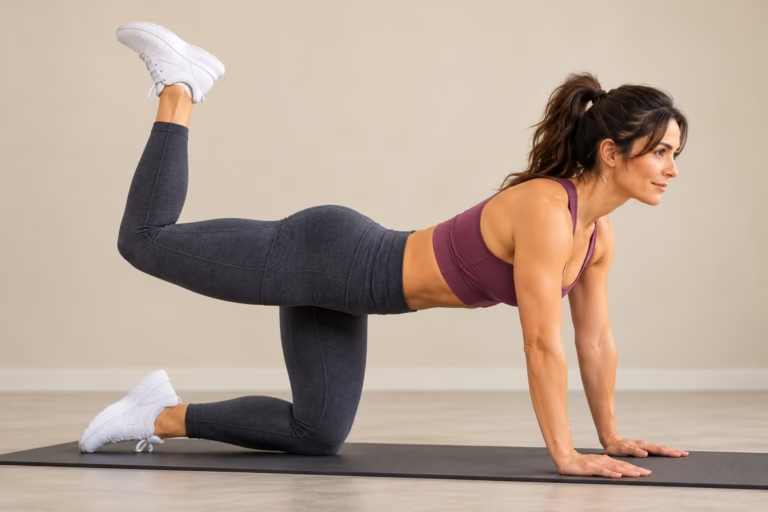
1. Resistance Band Donkey Kicks
Donkey kicks are a simple exercise that allows you to concentrate almost entirely on your glutes. Adding a resistance band makes the movement more challenging without requiring heavy weights.
How to do it:
Begin on your hands and knees with your wrists underneath your shoulders and knees underneath your hips.
Keep your core gently engaged and your spine neutral.
Place a resistance band around your thighs or position it according to the type of band you’re using.
Keeping your right knee bent, lift your right leg upward and slightly backward.
Think about pushing the sole of your foot toward the ceiling rather than simply swinging your leg.
Pause briefly at the top and squeeze your right glute.
Slowly lower your knee toward the starting position.
Complete 10–15 repetitions, then switch sides.
Beginner modification:
Skip the resistance band until you feel comfortable controlling the movement.
Form tip:
Don’t try to lift your leg as high as possible. Once your lower back starts arching excessively, you’re no longer placing the emphasis where you want it.
A smaller, controlled movement with a strong glute contraction is more effective than a huge uncontrolled kick.
2. Wide-Stance Squats
You don’t necessarily need a barbell to make wide-stance squats effective.
A bodyweight squat is an excellent starting point, while more experienced exercisers can gradually add dumbbells, kettlebells, or a barbell.
The wider stance changes the movement slightly and works your glutes, thighs, and inner thighs together.
How to do it:
Stand with your feet wider than shoulder-width apart.
Turn your toes slightly outward.
Brace your core and keep your chest lifted.
Push your hips backward while bending your knees.
Lower yourself into a comfortable squat while keeping your knees tracking in the same general direction as your toes.
Press through your feet to stand back up.
Squeeze your glutes as you return to standing.
Complete 10–15 repetitions.
Beginner modification:
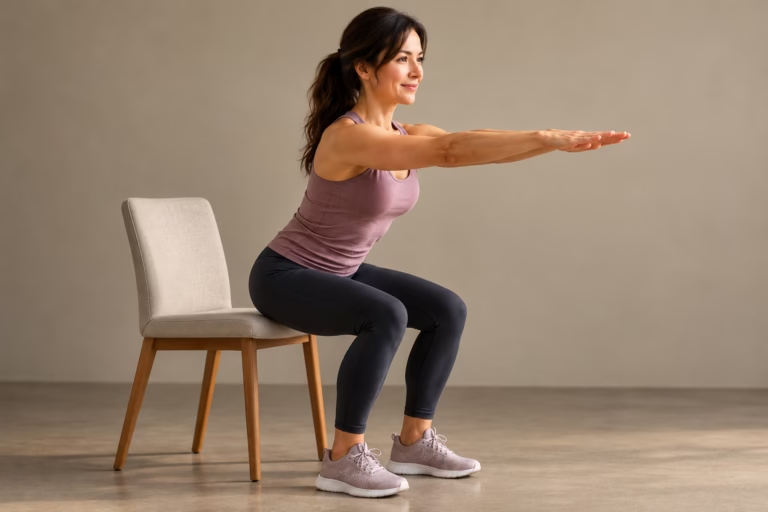
Perform the squat in front of a sturdy chair. Lower yourself toward the chair, lightly touch it, then stand back up.
Make it harder:
Hold one dumbbell vertically in front of your chest to turn the exercise into a goblet squat.
There’s no need to rush into heavy barbell squats. Progressively increasing resistance while maintaining good form is a much better strategy.
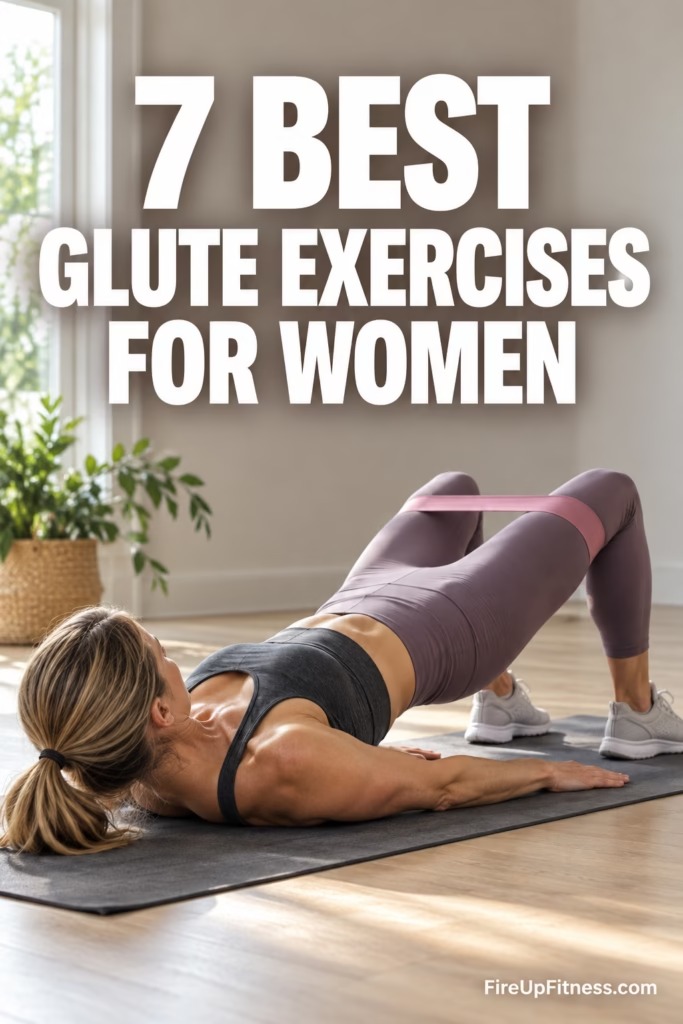
3. Glute Bridges
Don’t underestimate this classic exercise.
The glute bridge is one of the easiest ways to learn how to deliberately contract your glutes, making it particularly useful for beginners or anyone who spends much of the day sitting.
How to do it:
Lie on your back with your knees bent and feet flat on the floor.
Place your feet approximately hip-width apart.
Keep your arms relaxed beside your body.
Gently brace your core.
Press through your feet and squeeze your glutes as you lift your hips.
Raise your hips until your body forms a relatively straight line from your shoulders toward your knees.
Hold for one or two seconds at the top.
Slowly lower your hips back toward the floor.
Complete 12–15 repetitions.
Make it more effective:
Don’t simply lift and lower your hips quickly.
Pause at the top and deliberately squeeze your glutes. That little pause can make the exercise considerably more challenging.
Make it harder:
Try:
- Resistance band glute bridges
- Dumbbell glute bridges
- Single-leg glute bridges
- Elevated glute bridges
Progress gradually rather than jumping immediately to the hardest version.
4. Reverse Lunges
Want to work your butt and legs at the same time? Add reverse lunges.
Stepping backward rather than forward can feel more manageable for many beginners while still giving the glutes and thighs plenty of work.
How to do it:
Stand tall with your feet about hip-width apart.
Step your right foot backward.
Bend both knees as you lower your body.
Keep most of your control through the front leg.
Press through your front foot to return to standing.
Squeeze your glute as you stand.
Repeat on the opposite side.
Perform 8–12 repetitions per leg.
Beginner modification:
Hold onto a wall, countertop, or sturdy chair for balance.
Don’t worry about getting extremely low. Start with a range of motion you can control comfortably.
5. Bulgarian Split Squats
Ready for a bigger challenge?
Bulgarian split squats are one of those exercises that look simple until you actually try them.
They train each leg individually, which can help improve lower-body strength and balance while giving your glutes plenty of work.
How to do it:
Stand a short distance in front of a sturdy bench or low platform.
Place one foot behind you on the elevated surface.
Keep most of your weight on your front leg.
Bend your front knee and lower your body under control.
Press through your front foot to return to the starting position.
Complete 8–10 repetitions, then switch legs.
Glute tip:
A slight forward lean of your torso can help emphasize the glutes, provided your back remains neutral and the movement stays controlled.
Beginner alternative:
Keep your back foot on the floor and perform a stationary split squat instead.
Master that version before adding elevation.
6. Frog Pumps
Frog pumps may look a little unusual, but they’re a great addition to an at-home glute workout because they require no equipment and can produce an intense glute contraction.
How to do it:
Lie on your back.
Bring the soles of your feet together and allow your knees to open outward.
Keep your feet relatively close to your hips.
Brace your core.
Press your hips upward while squeezing your glutes.
Pause briefly at the top.
Lower your hips under control.
Complete 15–20 repetitions.
Because this exercise uses a relatively short range of motion, focus on the squeeze rather than trying to lift your hips extremely high.
7. Step-Ups
Sometimes the most effective exercises are movements that resemble things you already do in everyday life.
Step-ups strengthen your glutes and legs while also challenging balance and coordination.
You’ll need a sturdy step, exercise platform, or low bench.
How to do it:
Place your right foot completely on the platform.
Press through your right foot as you step upward.
Bring yourself into a tall standing position.
Lower yourself slowly and under control.
Complete your repetitions before changing legs.
Aim for 8–12 repetitions per side.
Important tip:
Avoid pushing excessively from the foot that’s still on the floor. Try to make the working leg do most of the work.
Start with a low step and increase the height only when you’re comfortable.
15-Minute Glute Workout at Home
You don’t have to perform every exercise every day to see progress.
Try this simple 15-minute butt workout at home two or three times per week:
Resistance Band Donkey Kicks — 12 reps per side
Wide-Stance Squats — 15 reps
Glute Bridges — 15 reps
Reverse Lunges — 10 reps per side
Frog Pumps — 20 reps
Rest approximately 30–60 seconds between exercises when needed.
Complete 2–3 rounds depending on your fitness level.
Beginners can start with one or two rounds and gradually build from there.
How Often Should You Train Your Glutes?
More isn’t automatically better.
For most beginners, training the glutes two or three times per week is a practical starting point. Your muscles need recovery time between challenging sessions.
Rather than doing the exact same workout every day, focus on consistency and gradual progression.
As you become stronger, you can progress by:
- Adding resistance
- Using stronger resistance bands
- Adding dumbbells
- Performing additional repetitions
- Adding another set
- Slowing down each repetition
- Using more challenging exercise variations
This concept is called progressive overload.
Your body adapts to exercise. Eventually, an exercise that once felt difficult becomes easy. Gradually increasing the challenge gives your muscles a reason to continue adapting.
Can These Exercises Give You a Bigger Butt?
Glute exercises can help build the muscles that create the shape of your butt, but everyone’s results will look different.
Genetics, body structure, nutrition, training experience, recovery, and consistency all influence how your glutes develop.
Instead of chasing someone else’s body shape, focus on building stronger glutes and improving your own muscle definition.
For muscle growth, resistance matters.
Bodyweight exercises are fantastic for beginners, but eventually you may need more resistance from bands, dumbbells, kettlebells, barbells, or harder exercise variations.
Don’t Forget Protein and Recovery
Your workout provides the stimulus for muscle growth, but recovery is when your body does the rebuilding.
Try to support your workouts with balanced meals that include adequate protein, carbohydrates, healthy fats, fruits, vegetables, and fluids.
Protein is especially important because it supplies amino acids used to maintain and repair muscle tissue.
And don’t overlook sleep.
Training harder while constantly feeling exhausted isn’t a shortcut to better results. Good recovery helps you return to your next workout ready to perform well.
Common Glute Workout Mistakes
Even good exercises become less effective when they’re rushed.
One of the biggest mistakes is simply going through the motions instead of controlling each repetition.
Pay attention to these common problems:
Using momentum: Swinging your legs or bouncing through repetitions reduces control.
Arching your lower back: This is especially common during donkey kicks and bridges. Keep your core engaged and let your hips do the work.
Going too heavy too quickly: Resistance should challenge you without destroying your form.
Doing only squats: Squats are useful, but your glutes benefit from different movement patterns.
Never progressing: Doing the same 10 bodyweight repetitions for months may eventually stop feeling challenging.
Training glutes every day: Muscles need adequate recovery, particularly after challenging resistance workouts.
What About Women Over 40?
Strengthening your glutes becomes especially valuable as you get older.
Maintaining lower-body muscle and strength can make everyday movements such as climbing stairs, carrying groceries, getting off the floor, and walking longer distances easier.
Women over 40 don’t need a completely different collection of exercises. The bigger priority is choosing movements you can perform comfortably and consistently while progressing at an appropriate pace.
Start with bodyweight versions when necessary. Use a chair or wall for balance. Add resistance gradually.
There’s no prize for using the heaviest dumbbells in the room.
The goal is to become stronger than you were before.
A Few Minutes of Glute Training Can Add Up
Building stronger, more defined glutes doesn’t require doing hundreds of squats every day.
The secret is much less exciting: good exercises, good form, progressive resistance, recovery, and consistency.
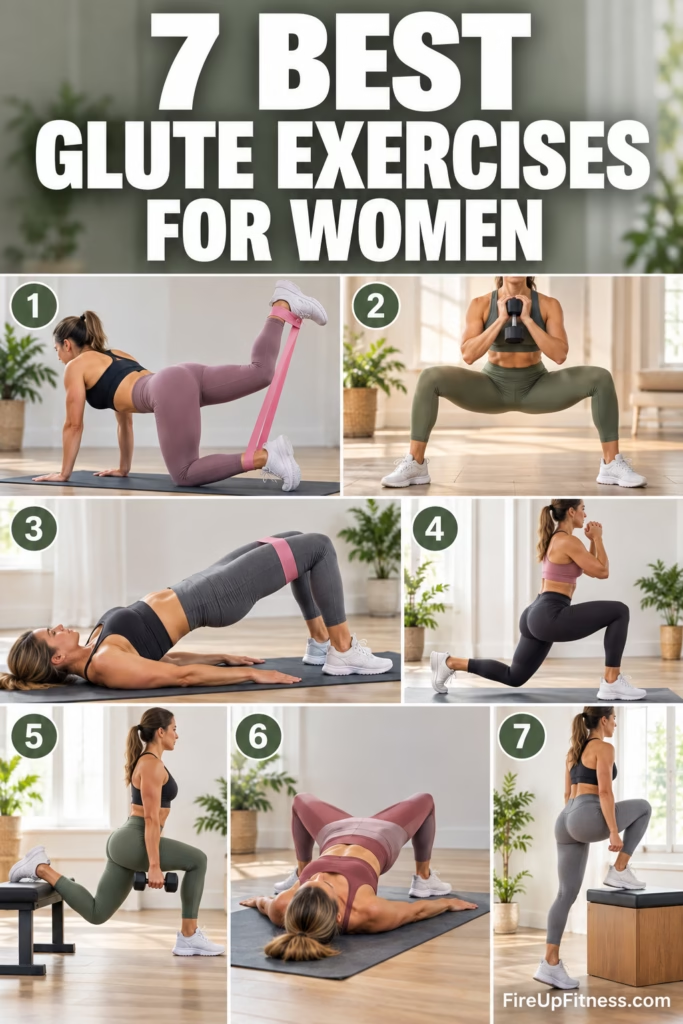
Donkey kicks, squats, glute bridges, lunges, split squats, frog pumps, and step-ups give you several ways to train your glutes from different angles.
Choose four or five exercises and build a routine you can realistically stick with.
Your glutes aren’t just there for appearance. They’re an important part of a strong lower body—and giving them some focused attention can help you feel stronger during both workouts and everyday life.
Safety note: Stop an exercise if you experience sharp or unusual pain. Anyone dealing with an injury, persistent hip, knee, or back pain, or another medical concern should get individualized guidance from an appropriate healthcare professional before starting a new exercise program.