
What to Eat and When: Breaking a Fast After 50
For many women over 50, intermittent fasting doesn’t succeed or fail because of the fasting window.
It succeeds or fails because of what happens around meals.
The first meal of the day.
The timing of dinner.
Whether food feels grounding—or rushed and insufficient.
After 50, these details stop being small. They shape how fasting feels, how energy holds up, and how well the body rests at night. This guide explores how food quality and timing quietly support intermittent fasting, without turning meals into rules or checklists.
Why Food Matters More Than Fasting Hours After 50
Earlier in life, the body often tolerated imperfect meals.
Skipping protein. Eating lightly. Rushing through food. The effects were easy to ignore.
After 50, the feedback becomes clearer.
Many women notice that when meals are poorly balanced, fasting feels:
- Harder than it should
- More draining
- Mentally distracting
When meals are nourishing and timed well, fasting often fades into the background.
This is why many women eventually stop asking “How long should I fast?” and start asking “How can my meals support this?”
That shift aligns closely with the philosophy in Intermittent Fasting for Women Over 50: A Gentler Approach.
Breaking a Fast Is a Moment That Matters
Breaking a fast after 50 sets the tone for the rest of the day.
Not because it needs to be perfect—but because the body responds quickly to what it receives after a long pause.
Meals that are too light or unbalanced can lead to:
- Hunger returning quickly
- Energy crashes later in the day
- Strong cravings in the evening
Meals that feel complete tend to create steadiness instead.
This is why many women find fasting easier when the first meal is treated as support, not something to rush through.
Why Protein Becomes Central After 50
One of the most consistent patterns women notice is this:
Fasting feels dramatically easier when meals are anchored in protein.
Protein-forward meals often:
- Support longer satiety
- Steady blood sugar responses
- Reduce intense hunger later
This doesn’t require tracking or precision. It’s about making sure meals feel substantial enough to carry you through the fasting window that follows.
Without adequate protein, fasting can feel harsher than intended—even when fasting hours are reasonable.
Balance Matters More Than Eating “Light”
There’s a common belief that breaking a fast should be gentle or minimal.
After 50, overly light meals often backfire.
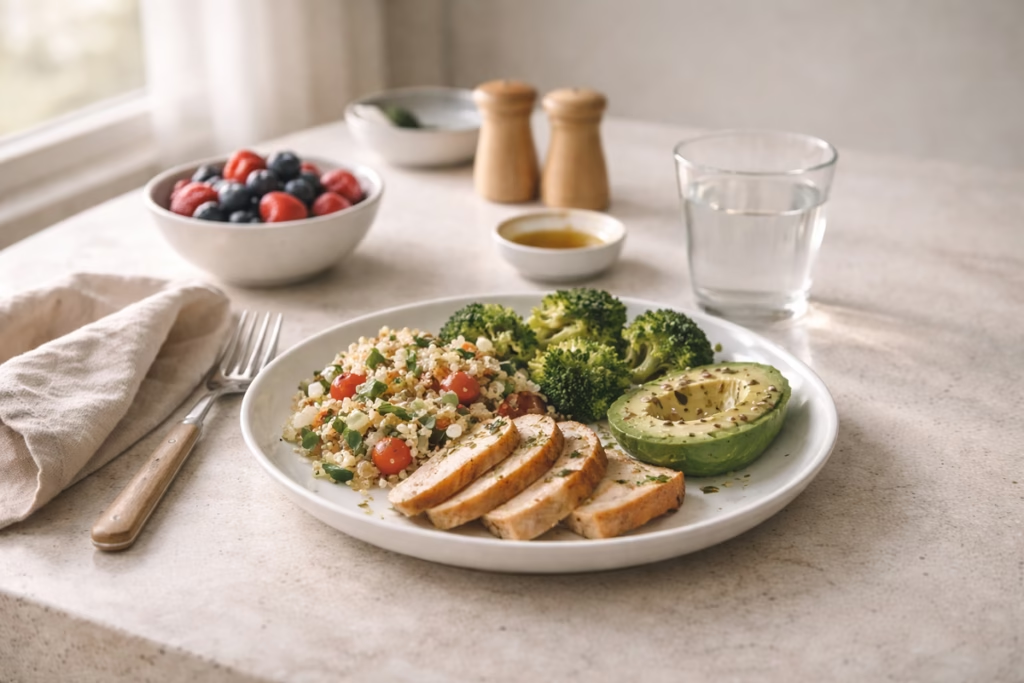
Meals that feel supportive usually include:
- A clear protein source
- Fiber-rich foods
- Enough fat to feel satisfied
This balance helps the body settle instead of searching for more food shortly afterward.
When meals feel grounding, fasting stops feeling like something that needs fixing later in the day.
Timing the First Meal: Earlier Isn’t a Failure
Some women assume that pushing the first meal later is the goal of intermittent fasting.
After 50, many discover the opposite.
Breaking a fast earlier—especially after poor sleep or stress—often:
- Improves energy
- Reduces irritability
- Prevents overeating later
Eating earlier isn’t “breaking the plan.”
It’s responding to the body’s needs.
This flexibility is a key reason many women prefer adaptable fasting routines, as explored in Best Intermittent Fasting Routines for Women Over 50.
Dinner Timing Quietly Shapes Everything
If there’s one meal that influences fasting success after 50, it’s dinner.
Late dinners that once felt harmless can begin to affect:
- Sleep quality
- Morning hunger
- Energy the next day
Many women notice that earlier dinners:
- Improve sleep
- Reduce nighttime discomfort
- Make fasting feel easier the next day
This doesn’t mean dinner needs to be early every night—but it often becomes a supportive default.
Late Dinners, Stress, and Sleep
Late dinners often overlap with high-stress days.
Work runs long. Evenings feel rushed. Eating becomes reactive rather than intentional.
After 50, the combination of stress and late eating can amplify:
- Restless sleep
- Morning fatigue
- Difficulty fasting the next day
This is why many women adjust fasting by finishing dinner earlier rather than delaying breakfast aggressively.
The connection between stress, sleep, and fasting is explored further in Intermittent Fasting After Menopause: Stress, Hormones, and Long Fasts.
When Late Dinners Are the Better Choice
There are times when late dinners make sense.
Social events. Travel. Family gatherings. Emotional moments.
In these situations, forcing an early dinner can create more stress than relief. Many women find it kinder to accept the late meal and adjust fasting the next day.
This permission-based approach keeps fasting from becoming rigid or punitive.
Meals as Anchors, Not Rewards
As fasting matures into a long-term routine, meals take on a different role.
They stop being something you “earn” after fasting.
They become anchors that support energy, mood, and stability.
This mindset shift often marks the moment fasting becomes sustainable.
Meals are no longer compensation for fasting—they’re what make fasting work.
7 Gentle Meal Ideas to Break a Fast After 50
Breaking a fast is just as important as the fast itself — especially after age 50. Choosing the right foods can help ease digestion, support steady energy, and prevent blood sugar spikes. These meal ideas are designed to be simple, nourishing, and balanced, making them ideal for easing back into eating while practicing intermittent fasting.
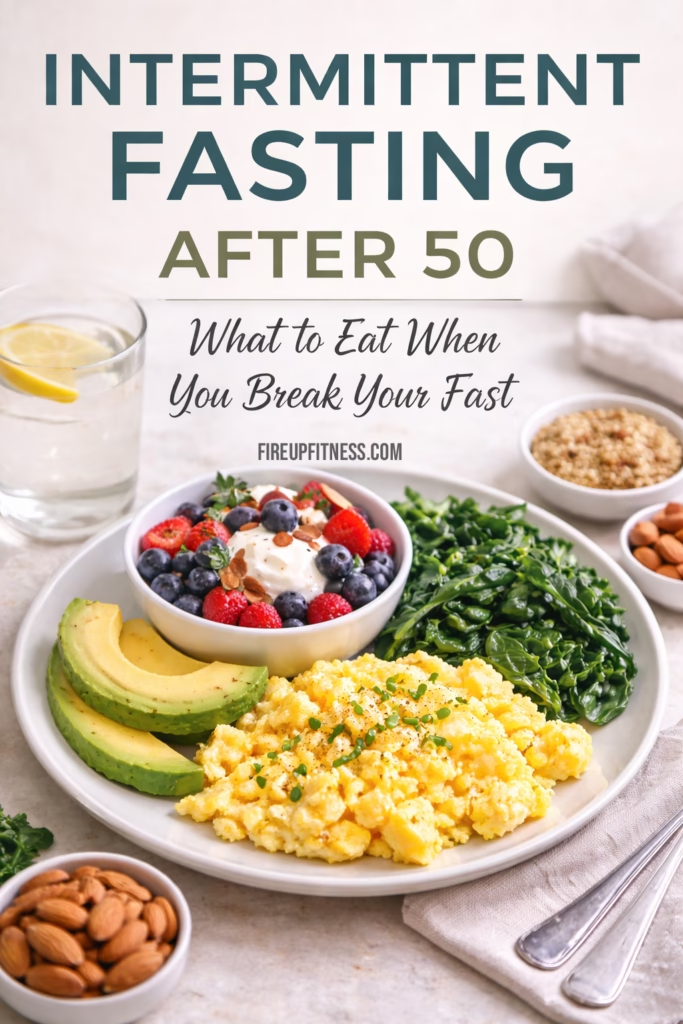
1. Scrambled Eggs with Sautéed Spinach & Avocado
A classic, easy-to-digest first meal. Eggs provide high-quality protein, while spinach and avocado add fiber and healthy fats to keep you full without feeling heavy.
Why it works after fasting:
Protein + fat help stabilize blood sugar and prevent energy crashes.
2. Greek Yogurt with Berries & Nuts
Plain Greek yogurt topped with blueberries or strawberries and a small handful of nuts is light but satisfying.
Why it works:
Supports gut health, provides protein, and gently wakes up digestion after a fast.
3. Bone Broth with Soft Vegetables & Shredded Chicken
A warm, nourishing option if you prefer something very gentle to start.
Why it works:
Hydrating, mineral-rich, and easy on the stomach — ideal for longer fasts.
4. Cottage Cheese with Fruit & Chia Seeds
Low-effort, high-protein, and surprisingly filling.
Why it works:
Protein helps preserve muscle mass after 50, while chia seeds add fiber without heaviness.
5. Avocado Toast with Eggs
Whole-grain or sourdough toast topped with mashed avocado and a soft-cooked egg.
Why it works:
Balanced carbs, fats, and protein help ease your body back into eating without overwhelming digestion.
6. Smoothie with Protein, Greens & Healthy Fats
A smoothie made with almond milk, protein powder, spinach, berries, and flax or chia seeds.
Why it works:
Great if solid food feels too heavy right after fasting, while still providing nutrients and satiety.
7. Salmon with Steamed Vegetables
A small portion of salmon paired with zucchini, broccoli, or greens.
Why it works:
Omega-3 fats support heart and joint health, which becomes especially important after 50.
Closing Reflection
After 50, food timing and quality stop being background details.
They become information.
When meals are nourishing and timed with care, intermittent fasting often becomes quieter—less effortful, less stressful, and far easier to live with.
Not because you’re doing more.
But because you’re supporting what your body is already asking for.