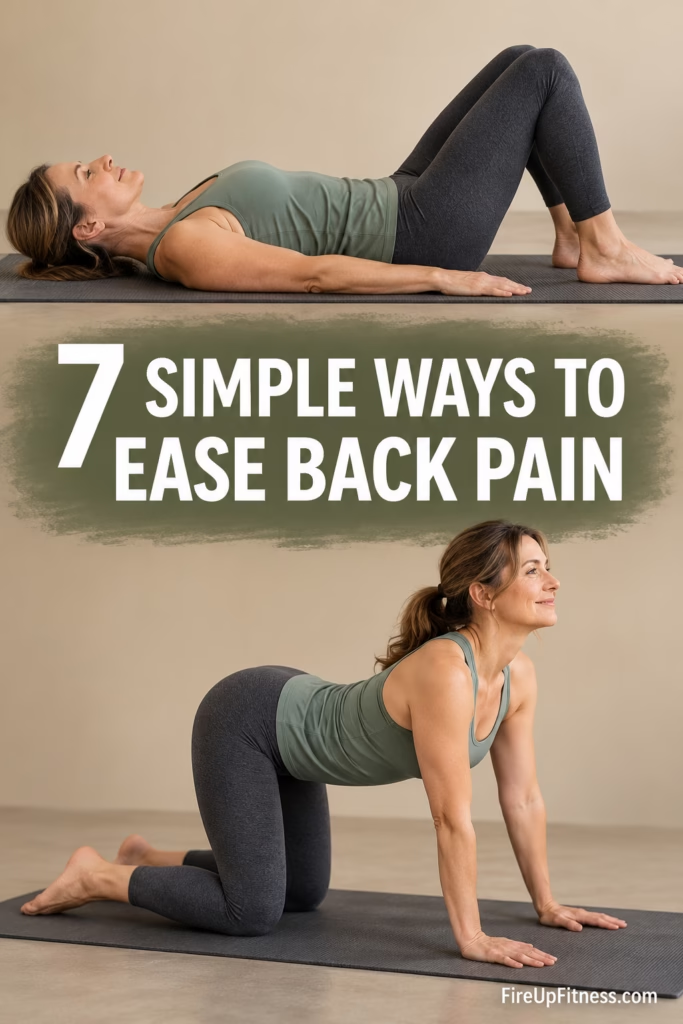
7 Back Pain Remedies for Lower Back Pain Relief
Lower back pain can make even the simplest daily activities feel uncomfortable. Getting out of bed, bending down to pick something up, sitting at your desk, or standing in the kitchen can become challenging when your back feels stiff, sore, or tight.
Sometimes, back discomfort develops after lifting something heavy, sitting for long hours, or sleeping in an awkward position. Other times, it may be related to muscle strain, arthritis, or irritation of the sciatic nerve.
The good news is that simple back pain remedies, gentle movement, and a few changes to your daily routine may help ease discomfort and support better mobility.
You don’t always need complicated equipment or an intense workout. A warm compress, a short walk, or a few gentle lower back pain exercises may help you feel more comfortable.
Here are seven practical ways to relieve back pain at home, along with tips for building a healthier, stronger back.
1. Try Gentle Oil Massage to Relax Tight Back Muscles
A gentle massage can be a comforting way to ease muscle tension after a long day, especially when your lower back feels tight from sitting or standing.
Some traditional pain relief remedies use coconut, sesame, or mustard oil for massage. Although these oils can make massage more comfortable, there is limited scientific evidence that the oils themselves treat lower back pain.
How to try it:
- Place a small amount of coconut or sesame oil in your hands.
- Rub your palms together to warm the oil slightly.
- Massage the muscles on either side of your lower back using slow, gentle circular movements.
- Continue for 5–10 minutes, avoiding direct pressure on the spine.
- Stop if the massage causes discomfort or increases your symptoms.
Avoid very hot oil and homemade garlic-infused preparations that may irritate or burn the skin.
Helpful tip: Gentle massage may be particularly relaxing before bedtime. However, avoid deep massage if your back pain follows an injury or is accompanied by numbness, weakness, or shooting pain down your leg.
2. Use Cold Therapy for Recent Back Injuries
Cold therapy is one of the simplest back pain remedies to try when discomfort begins after a minor muscle strain.
A cold pack may temporarily reduce pain and help manage swelling around irritated tissues.
How to use cold therapy:
- Fill a reusable cold pack or plastic bag with ice.
- Wrap it in a thin towel to protect your skin.
- Place it against the uncomfortable area of your lower back.
- Leave it in place for 10–20 minutes.
- Repeat several times throughout the day as needed, allowing your skin to return to its normal temperature between applications.
Cold therapy may be especially useful during the first 24–48 hours after a minor injury, although some people find warmth more comfortable.
Never apply ice directly to your skin or fall asleep with an ice pack in place.
3. Apply Gentle Heat for Lower Back Pain Relief
When your back feels stiff or your muscles are tight, warmth may help you relax and move more comfortably.
Heat therapy is a popular option for lower back pain relief because it can temporarily reduce muscle tension and make gentle movement easier.
How to use heat therapy:
- Place a warm heating pad on your lower back for 15–20 minutes.
- Take a comfortably warm shower.
- Use a warm compress while resting in a supported position.
- Follow heat therapy with a short, gentle walk or easy stretching.
Always keep a protective layer between your skin and the heating pad, and avoid sleeping with an electric heating pad turned on.
What about Epsom salt baths?
Some people enjoy adding Epsom salt to a warm bath as part of their relaxation routine. However, there is not strong evidence that Epsom salt itself provides additional back pain relief.
The warmth and relaxation may be the main benefits.
Back pain relief during pregnancy
Pregnancy can place additional demands on the lower back and pelvis as posture and body mechanics change.
For women searching for sciatica pain relief during pregnancy, gentle warmth may provide temporary comfort, but overheating should be avoided.
Use a comfortably warm, not hot, compress for a short period. Avoid hot tubs, saunas, and very hot baths, and consult your prenatal healthcare provider before trying new treatments.
4. Choose Safe, Soothing Back Pain Remedies
Traditional home remedies sometimes recommend applying warm cabbage leaves or cabbage paste to the lower back.
However, there is no reliable clinical evidence that cabbage leaves treat lower back pain, and applying hot homemade mixtures can cause burns or skin irritation.
Instead, focus on simple, low-risk methods that may help your muscles relax.
Try this gentle relaxation routine:
- Lie on your back with your knees bent and feet supported, or rest on your side with a pillow between your knees.
- Place a small pillow under your knees if lying on your back feels comfortable.
- Breathe slowly and naturally for 2–3 minutes.
- Relax your shoulders, hips, and lower back without forcing a stretch.
- Change positions or take a short walk when you’re ready.
For many people, combining comfortable positioning with gentle activity is more helpful than relying on unproven home treatments.
The goal is not to remain perfectly still. It is to give your back a chance to relax while maintaining comfortable movement throughout the day.
5. Keep Moving With Gentle Daily Activities
When lower back pain appears, your first instinct might be to spend the entire day resting.
However, prolonged bed rest can make stiffness worse and may delay recovery from common, uncomplicated lower back pain.
One of the most practical ways to relieve back pain is to continue moving within your comfort level.
You don’t need an intense workout to begin.
Try these simple activities:
- Walk around your home for 5–10 minutes.
- Take short movement breaks during long periods of sitting.
- Perform light household activities that don’t aggravate your symptoms.
- Change positions regularly throughout the day.
- Gradually return to your usual routine as discomfort improves.
Walking is particularly helpful because it encourages gentle movement without requiring special equipment.
Start with a comfortable distance and increase gradually as your back tolerates it.
Remember: Movement should feel manageable. Avoid pushing through sharp pain, increasing leg symptoms, or significant discomfort.
6. Practice Gentle Lower Back Pain Exercises
A simple stretching routine may help improve mobility, reduce stiffness, and support the muscles around your spine.
You don’t need to perform complicated yoga poses or strenuous back pain exercises.
Start with these three beginner-friendly movements.
Exercise 1: Cat-Cow Stretch
Cat-Cow is a gentle movement that encourages spinal mobility and may help relieve everyday back stiffness.
How to do it:
- Begin on your hands and knees with your hands under your shoulders and knees under your hips.
- Inhale as you gently lift your chest and allow your back to move into a comfortable arch.
- Exhale as you slowly round your back toward the ceiling.
- Move gradually between the two positions.
- Repeat 5–8 times.
Avoid forcing your spine into an exaggerated arch.
Exercise 2: Pelvic Tilts
Pelvic tilts are simple lower back pain exercises that encourage gentle movement and help you become more aware of your abdominal and pelvic muscles.
How to do it:
- Lie on your back with your knees bent and feet flat on the floor.
- Gently tighten your abdominal muscles.
- Tilt your pelvis slightly so your lower back moves toward the floor.
- Hold for 2–3 seconds without holding your breath.
- Relax and repeat 8–10 times.
During pregnancy, ask your prenatal healthcare provider about an appropriate seated, standing, or hands-and-knees variation rather than spending extended periods lying flat.
Exercise 3: Gentle Knee-to-Chest Stretch
This stretch may help some people ease tension around the lower back and hips.
How to do it:
- Lie on your back with both knees bent.
- Slowly bring one knee toward your chest.
- Hold behind your thigh without pulling forcefully.
- Maintain the position for 10–15 seconds.
- Release and repeat on the opposite side.
Perform 2–3 repetitions per leg.
Skip this movement if it increases leg pain, tingling, or numbness. It may also be unsuitable during pregnancy, particularly later in pregnancy.
A Simple 5-Minute Back Pain Exercise Routine
| Exercise | Duration |
|---|---|
| Cat-Cow stretch | 1 minute |
| Pelvic tilts | 1 minute |
| Gentle knee-to-chest stretch | 1 minute |
| Comfortable standing or walking | 2 minutes |
These movements are intended for uncomplicated lower back stiffness and are not suitable for every spinal condition. Choose only the exercises that feel comfortable.
7. Improve Your Sleep Habits to Support Back Recovery
Poor sleep and lower back pain can create a frustrating cycle.
When your back hurts, falling asleep may be difficult. When you don’t sleep well, pain can feel more intense the following day.
Getting consistent, restorative sleep is an important part of supporting overall recovery.
Try these simple sleep habits:
- Maintain a consistent bedtime and wake-up time.
- Avoid large amounts of caffeine late in the day.
- Keep your bedroom cool, dark, and comfortable.
- Use supportive pillows to reduce uncomfortable positions.
- Practice gentle breathing or relaxation before bedtime.
Best sleeping positions for lower back comfort
Side sleeping: Place a pillow between your knees to help keep your hips and spine comfortably aligned.
Back sleeping: Place a pillow beneath your knees to reduce strain on your lower back.
During pregnancy: Side sleeping with pillows supporting your knees and abdomen may improve comfort. Follow your maternity care team’s sleeping-position guidance, especially later in pregnancy.
There is no single perfect sleeping position for everyone. Choose a supported position that allows you to rest without worsening your symptoms.
What About Sciatica Pain Relief?
Not all lower back pain comes from the same source.
Sciatica refers to symptoms caused by irritation or compression of nerve roots that contribute to the sciatic nerve. It commonly produces pain that travels from the lower back or buttock into one leg.
Other symptoms may include tingling, numbness, or weakness.
While some of the home remedies above may provide temporary comfort, sciatica pain relief often requires an approach based on the underlying cause.
Gentle walking, comfortable positioning, and individualized physical therapy exercises may help some people.
Avoid aggressive stretching or any movement that makes pain travel farther down your leg.
Sciatica pain relief during pregnancy
Pregnancy-related back and leg pain may come from several causes, including pelvic girdle pain and nerve irritation. Not all pain that travels into the leg is sciatica.
Pregnancy-safe approaches may include gentle walking, supportive positioning, modified pelvic tilts, and guidance from a prenatal physical therapist.
Because every pregnancy is different, speak with your prenatal healthcare provider before beginning new lower back pain exercises or treatments.
Everyday Habits That Help Prevent Lower Back Pain
Finding relief is important, but supporting your back between painful episodes matters too.
Small daily habits can make a meaningful difference in your mobility and comfort.
Try maintaining a comfortable sitting posture, changing positions regularly, keeping frequently used items within easy reach, and bending through your hips and knees when lifting objects.
Strengthening your abdominal, hip, and glute muscles can also help your body manage everyday physical demands.
A balanced routine that includes walking, flexibility exercises, and appropriate strength training can support long-term back health.
When Should You See a Doctor for Lower Back Pain?
Although many episodes of lower back pain improve with time and conservative care, some symptoms require medical attention.
Seek emergency medical care if back pain is accompanied by new loss of bladder or bowel control, numbness around the groin or saddle area, or severe or rapidly worsening leg weakness.
Seek prompt medical assessment for back pain following significant trauma, pain with fever, or new or worsening numbness or weakness. Persistent pain, pain that significantly interferes with daily activities, or symptoms that do not improve should also be evaluated.
During pregnancy, contact your maternity care team promptly for new or severe back pain, especially when accompanied by vaginal bleeding, fluid leakage, fever, abdominal cramping, or contractions.
Final Thoughts: Small Daily Habits Can Make a Difference
Lower back pain can interrupt your routine, affect your sleep, and make everyday movement uncomfortable. But relief doesn’t always begin with a complicated treatment plan.
Sometimes, the most useful first steps are simple: applying gentle heat, taking a short walk, improving your sleeping position, or practicing comfortable lower back pain exercises.
The key is to listen to your body, avoid movements that worsen your symptoms, and build consistent habits that support your back.
A stronger, more comfortable back begins with small movements and daily care.
With patience, appropriate activity, and professional guidance when needed, you can work toward better mobility and greater confidence in everyday movement.