Exercises With Back Pain for Lower Back Pain Relief
Lower back pain can quietly take control of your life.
It starts as mild stiffness. Then bending feels uncomfortable. Sitting too long becomes unbearable. Eventually, even simple tasks — tying your shoes, getting out of bed, carrying groceries — feel intimidating.
Many people assume the solution is complete rest.
But in most cases, the opposite is true.
The right Exercises With Back Pain can accelerate recovery, rebuild stability, and provide long-term lower back pain relief. Strategic movement improves circulation, strengthens the muscles that support your spine, and reduces the likelihood of recurring flare-ups.
If you’ve been hesitant to move because of discomfort, this guide will show you how to approach Low Back Pain Exercises safely, effectively, and confidently.
Why Exercise Is Critical for Lower Back Pain Relief
Your lower back is supported by a network of muscles:
- Abdominals
- Obliques
- Glutes
- Hip flexors
- Hamstrings
- Deep spinal stabilizers
When these muscles weaken — often from prolonged sitting or inactivity — your spine absorbs more stress than it should.
That added stress leads to inflammation, tightness, and pain.
Gentle, structured Low Back Pain Exercises help:
- Improve spinal stability
- Increase flexibility
- Restore proper alignment
- Reduce muscle imbalances
- Improve blood flow for healing
Movement, when done properly, is not the enemy of recovery — it’s the foundation of it.
1. Partial Crunches (Core Stabilization Without Strain)
Unlike traditional sit-ups, partial crunches activate abdominal muscles without placing excessive pressure on your lower back.
Why This Works
Strong abdominal muscles reduce the workload on your lumbar spine. A stronger core equals better support and improved posture.
How to Perform It Safely
- Lie on your back with knees bent and feet flat on the floor.
- Cross your arms over your chest or place hands lightly behind your neck (do not pull).
- Tighten your abdominal muscles.
- Lift your shoulders just a few inches off the floor.
- Exhale as you rise.
- Hold for 2 seconds.
- Lower slowly with control.
Keep your lower back gently pressed against the floor throughout.
Recommended: 8–12 repetitions, 2 sets.
Avoid This Mistake
Do not lift too high. The movement is small and controlled — not a full sit-up.
2. Hamstring Stretches (Relieve Tension That Pulls on the Lower Back)
Tight hamstrings are one of the most overlooked contributors to back discomfort. When the back of your legs are tight, they pull on your pelvis, increasing strain on the lower spine.
Why This Is Important
Improving hamstring flexibility reduces tension in the lumbar region and improves posture alignment.
How to Do It
- Lie flat on your back.
- Bend one knee with foot flat on the floor.
- Loop a towel around the foot of the opposite leg.
- Slowly lift the straightened leg upward.
- Gently pull until you feel a stretch in the back of the thigh.
Hold for 30 seconds.
Repeat 3–5 times on each leg.
Key Tip
The stretch should feel mild to moderate — never sharp or painful.
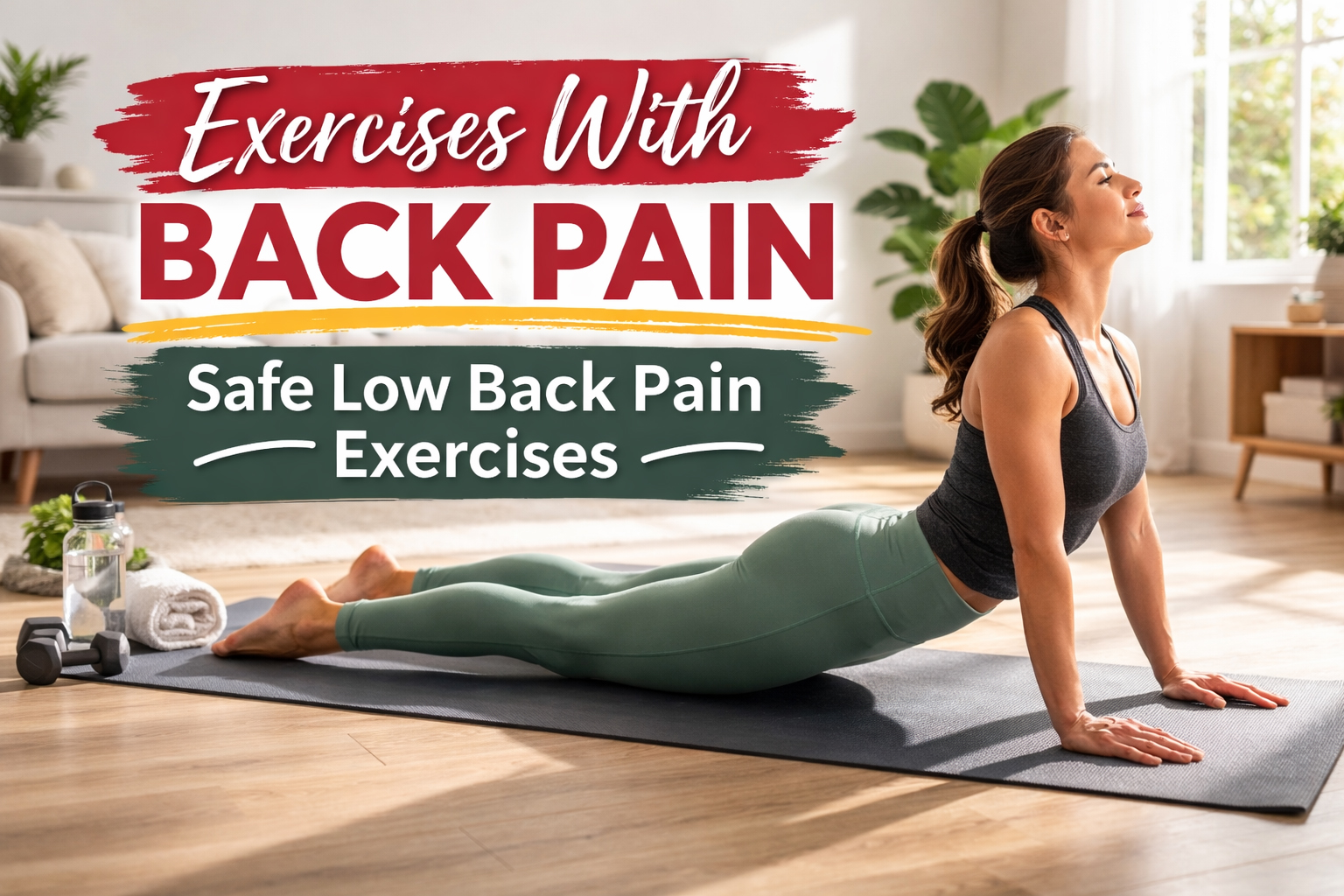
3. Press-Up Back Extensions (Encourage Healthy Spinal Movement)
Press-ups help strengthen the muscles along your spine while encouraging extension movement, which can relieve certain types of disc-related discomfort.
Why It Helps
It promotes mobility in the lumbar spine and can reduce pressure buildup in some cases of mechanical back pain.
How to Perform
- Lie on your stomach.
- Place hands under shoulders.
- Press your upper body upward while keeping hips on the floor.
- Keep your neck neutral and shoulders relaxed.
- Hold for 5–10 seconds.
- Lower slowly.
Repeat 8–10 times.
If this feels intense, start by resting on your elbows instead.
4. Pelvic Tilts (Rebuild Spinal Control)
This simple yet powerful movement retrains your body to control spinal positioning.
How to Do It
- Lie on your back with knees bent.
- Tighten abdominal muscles.
- Flatten your lower back into the floor.
- Hold for 5 seconds.
- Relax and repeat.
Perform 10–15 repetitions.
Pelvic tilts are foundational for Exercises With Back Pain because they restore control without compression.
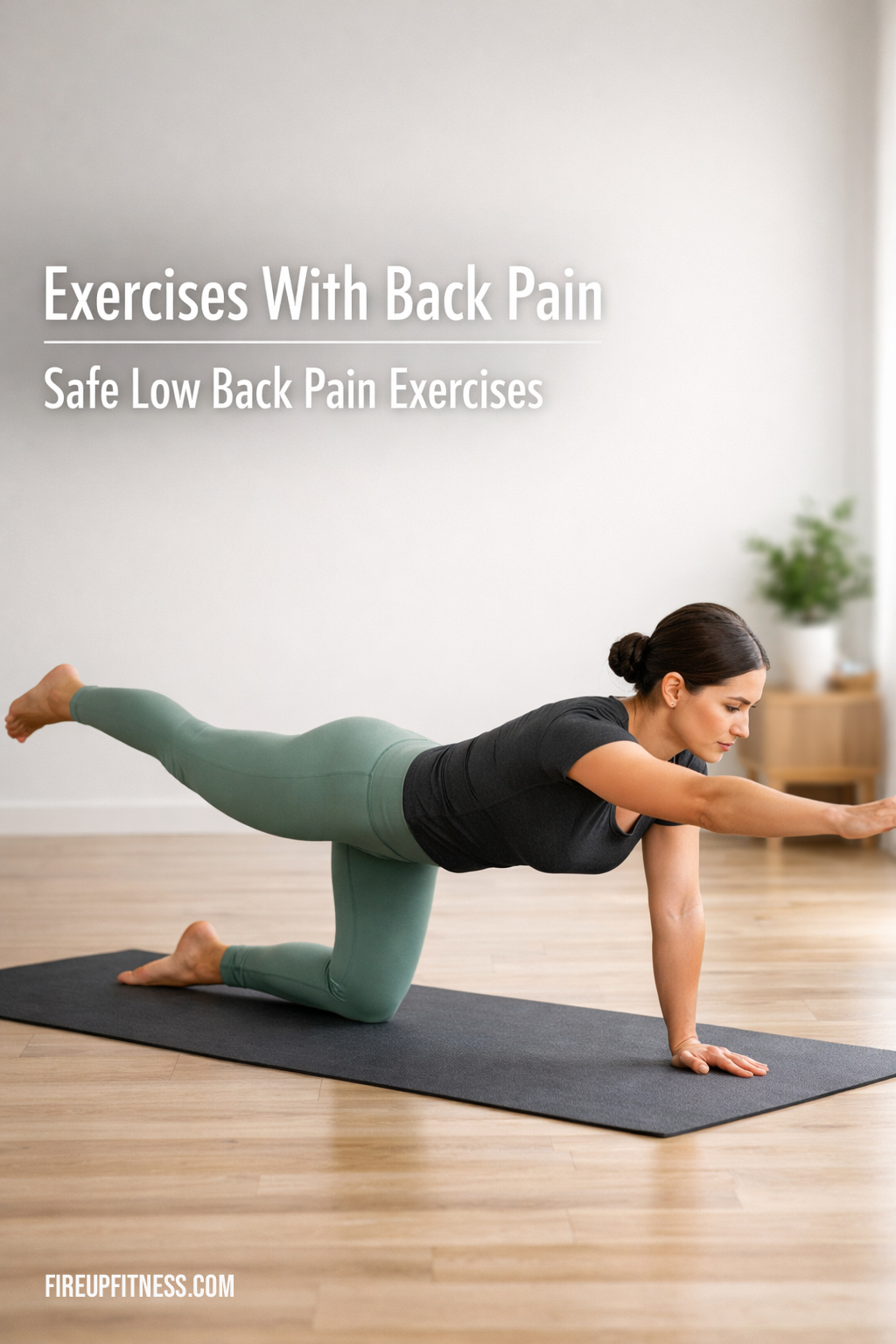
5. Bird-Dog (Core Stability and Balance)
This movement strengthens deep stabilizers without loading the spine heavily.
How to Perform
- Start on hands and knees.
- Extend one arm forward and opposite leg back.
- Keep hips level and spine neutral.
- Hold for 5 seconds.
- Return and switch sides.
Perform 8–10 reps per side.
This is one of the safest and most effective Low Back Pain Exercises for long-term lower back pain relief.
Common Causes of Recurring Lower Back Pain
If pain keeps returning, consider these contributing factors:
- Sitting more than 6–8 hours daily
- Weak glute muscles
- Poor lifting technique
- Carrying weight unevenly
- Sleeping in unsupportive positions
- Skipping strength training
Addressing these habits enhances the benefits of your exercise routine.
Mistakes That Can Worsen Back Pain
Even good intentions can backfire if done incorrectly.
Avoid:
- High-impact workouts during flare-ups
- Twisting movements under load
- Heavy lifting too soon
- Holding your breath during exercises
- Ignoring persistent or radiating pain
The goal is progress — not pushing through discomfort.
How Often Should You Do Low Back Pain Exercises?
For optimal lower back pain relief:
- Gentle stretching: Daily
- Strength work: 3–4 times per week
- Duration: 15–20 minutes per session
Consistency matters more than intensity.
Long-Term Strategy for a Stronger Back
Short-term relief is important. Long-term resilience is essential.
To reduce future episodes:
- Strengthen your core and glutes
- Improve posture while sitting and standing
- Stay active daily
- Maintain healthy body weight
- Incorporate mobility work regularly
Your back is designed to move — not remain rigid.
When to Consult a Medical Professional
Seek professional guidance if you experience:
- Numbness or tingling down your legs
- Severe or worsening pain
- Pain after trauma
- Loss of bladder or bowel control
Always consult your doctor before starting new Exercises With Back Pain, especially if you have chronic conditions.
Final Thoughts
Back pain doesn’t mean you have to stop exercising — it means you need to exercise smarter.
The right Low Back Pain Exercises can restore strength, improve flexibility, and provide lasting lower back pain relief when practiced consistently and carefully.
Start small. Focus on form. Stay patient.
A stronger, more resilient back is built through controlled movement — not complete avoidance.