10-Minute Seated Pilates for Shoulder Mobility
Shoulders can feel surprisingly stiff after a long day of working at a computer, driving, or simply spending too much time in the same position. You might notice that reaching overhead feels less comfortable, your upper back feels tight, or your shoulders seem to creep toward your ears without you realizing it.
The good news is that you don’t need an intense workout to give your shoulders some attention.
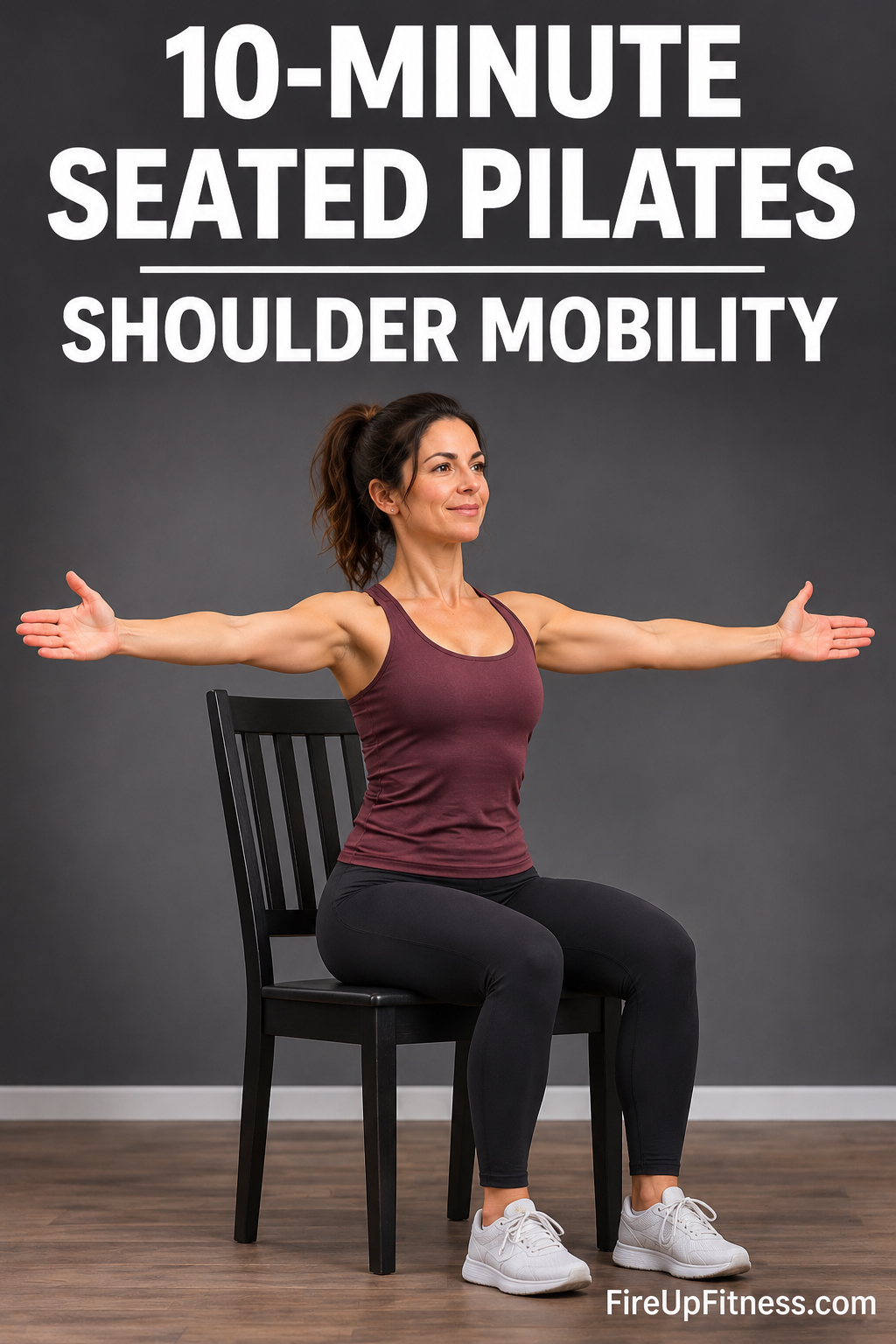
This 10-minute seated Pilates workout for shoulder mobility combines gentle, controlled movements with mindful breathing to help your shoulders and upper back move more comfortably. You can complete the entire routine while sitting in a sturdy chair, making it a practical option for busy mornings, work breaks, or evenings when you want to unwind.
Unlike traditional arm workouts that focus on lifting weights, this routine emphasizes smooth movement, posture awareness, and muscular control.
There are no dumbbells, planks, or floor exercises. Just seven simple Pilates-inspired movements you can practice at your own pace.
Why Shoulder Mobility Matters for Women
Your shoulders are involved in countless everyday activities, from reaching into a cabinet to putting on a jacket or carrying groceries.
The shoulder joint allows movement in several directions, but comfortable shoulder movement also depends on how well your shoulder blades, upper back, and surrounding muscles work together.
When you spend long periods sitting, particularly with your arms positioned in front of you, you may notice temporary stiffness or reduced movement.
Regular mobility exercises can help you explore your available range of motion and maintain comfortable movement.
A gentle mobility workout may also help you become more aware of habits such as raising your shoulders, rounding your upper back, or holding unnecessary tension in your neck.
Shoulder mobility vs. shoulder flexibility
Although these terms are often used interchangeably, they describe slightly different qualities.
Shoulder mobility refers to your ability to move your shoulder through its available range with control.
Shoulder flexibility describes how much your muscles and other soft tissues can lengthen to allow movement.
Both matter, but mobility training places additional emphasis on actively controlling the movement rather than simply holding a stretch.
That’s why this seated Pilates routine includes arm circles, shoulder-blade movements, and gentle upper-back rotations instead of relying entirely on static stretches.
Why Try Seated Pilates for Shoulder Mobility?
Pilates emphasizes controlled movement, coordinated breathing, and awareness of body positioning.
These principles make it well suited to a gentle shoulder mobility routine.
Seated Pilates offers several practical advantages.
You can focus on upper-body movement. Sitting on a stable chair reduces the need to concentrate on standing balance.
It requires minimal space. You can practice in your living room, bedroom, or office.
It’s easy to adjust. You can make arm movements smaller, slow down, or take breaks whenever necessary.
It encourages posture awareness. Sitting upright while moving your arms helps you notice how your shoulders, ribs, and upper back work together.
It fits into a busy schedule. Ten minutes is manageable without needing to change clothes or prepare a workout area.
This isn’t a substitute for strengthening your upper body, but it can complement your regular Pilates workout routine, resistance training, or daily stretching practice.
What You Need for This 10-Minute Pilates Workout
You only need a sturdy chair without wheels.
Choose one that allows you to sit comfortably with your feet supported on the floor. A chair without armrests is preferable because it gives your arms more room to move.
You may also want a small cushion behind your lower back if you need additional support.
Before beginning:
- Sit toward the middle or front of your chair, as comfortable.
- Place both feet flat on the floor, approximately hip-width apart.
- Keep your spine comfortably upright without forcing your chest forward.
- Relax your shoulders away from your ears.
- Allow your hands to rest on your thighs.
You don’t need to maintain a perfectly straight posture throughout the session. The goal is to find a comfortable starting position that allows your shoulders and upper back to move freely.
Your 10-Minute Seated Pilates Workout Plan
This routine includes seven exercises performed in a continuous sequence.
| Exercise | Duration |
|---|---|
| 1. Seated Pilates Breathing and Shoulder Release | 1 minute |
| 2. Shoulder-Blade Glides | 1 minute |
| 3. Seated Pilates Arm Circles | 1 minute |
| 4. Alternating Overhead Arm Reaches | 1 minute 30 seconds |
| 5. Seated Chest-Opening Arm Sweeps | 1 minute 30 seconds |
| 6. Seated Upper-Back Rotation With Arm Reach | 2 minutes |
| 7. Seated Shoulder Rolls and Gentle Release | 2 minutes |
| Total | 10 minutes |
Move continuously but comfortably between exercises. The allotted times include any brief repositioning.
You can also shorten the routine by performing each exercise for 30–45 seconds.
7 Seated Pilates Exercises for Better Shoulder Mobility
1. Seated Pilates Breathing and Shoulder Release
Duration: 1 minute
Begin with a gentle breathing exercise to settle into the routine.
Breathing is an important part of Pilates because it helps coordinate movement and encourages awareness of your rib cage and trunk.
How to do it:
- Sit comfortably with your feet flat on the floor.
- Rest your hands lightly on your lower ribs or thighs.
- Inhale slowly through your nose, allowing your rib cage to expand naturally.
- Exhale gently through your mouth.
- As you exhale, allow your shoulders to relax without forcing them downward.
- Continue breathing slowly for approximately one minute.
Notice whether your shoulders lift toward your ears when you inhale. Try to keep your neck relaxed while allowing your rib cage to move.
Pilates tip: Avoid pulling your stomach inward forcefully or holding your breath. Let your breathing remain comfortable.
2. Shoulder-Blade Glides
Duration: 1 minute
Your shoulder blades play an important role in how your arms move.
This exercise introduces gentle scapular movement without requiring you to lift your arms overhead.
How to do it:
- Sit upright with your arms relaxed at your sides.
- Gently draw your shoulder blades toward each other.
- Pause briefly without lifting your shoulders.
- Release the movement.
- Next, reach both arms slightly forward at shoulder height, allowing your shoulder blades to move apart.
- Return to your starting position.
- Repeat slowly for one minute.
Keep the movement small and comfortable.
You should feel your upper back participating rather than trying to squeeze your shoulder blades together as tightly as possible.
Beginner modification: Keep your hands resting on your thighs and practice gently drawing your shoulder blades together before releasing.
3. Seated Pilates Arm Circles
Duration: 1 minute
Arm circles are a familiar movement, but Pilates-style control changes how you perform them.
Rather than making fast, exaggerated circles, you’ll focus on keeping your torso steady while your arms move smoothly.
How to do it:
- Sit comfortably with your spine upright.
- Extend both arms out to your sides at a comfortable height, no higher than shoulder level.
- Begin making small forward circles.
- Continue for approximately 30 seconds.
- Reverse the direction for another 30 seconds.
Keep your elbows soft rather than rigidly locked.
Your circles can be very small, especially if your shoulders feel stiff.
Form tip: Avoid lifting your shoulders toward your ears. If your neck begins to tense, lower your arms or take a short break.
This exercise can also fit into a gentle Pilates arm workout when you want to practice controlled shoulder movement without weights.
4. Alternating Overhead Arm Reaches
Duration: 1 minute 30 seconds
Overhead reaching helps you practice moving your arms upward while maintaining comfortable control of your rib cage and upper body.
This exercise is particularly useful for noticing whether you compensate for limited shoulder movement by arching your lower back.
How to do it:
- Sit upright with both arms relaxed at your sides.
- Inhale gently to prepare.
- As you exhale, slowly raise your right arm forward and upward.
- Reach only as high as feels comfortable.
- Lower your arm with control.
- Repeat with your left arm.
- Continue alternating for 90 seconds.
Allow your shoulder blade to rotate naturally as your arm rises.
Avoid forcing your shoulder downward or trying to keep it completely still.
Beginner modification: Raise your arm only to chest or shoulder height.
Pilates tip: Keep your ribs comfortably aligned over your pelvis rather than leaning backward to lift your arm higher.
5. Seated Chest-Opening Arm Sweeps
Duration: 1 minute 30 seconds
This movement combines gentle shoulder opening with controlled upper-back positioning.
It’s a useful addition to an at-home Pilates workout, especially after spending time with your arms in front of your body.
How to do it:
- Sit upright with your feet planted.
- Bring both arms forward at chest height with your palms facing each other.
- Inhale as you slowly open your arms outward.
- Keep your elbows slightly bent.
- Stop when you feel a comfortable opening across the front of your chest.
- Exhale as you bring your arms back together.
- Continue for 90 seconds.
Move through a comfortable range without forcing your arms behind your torso.
Form tip: Keep your neck relaxed and avoid thrusting your ribs forward to create a larger movement.
For a gentler variation, bend your elbows and perform smaller opening movements.
6. Seated Upper-Back Rotation With Arm Reach
Duration: 2 minutes
Shoulder movement isn’t only about the shoulder joint.
Your thoracic spine, or upper back, also contributes to comfortable reaching, turning, and everyday upper-body movement.
This seated exercise combines gentle upper-back rotation with an easy arm reach.
How to do it:
- Sit upright with your feet flat and knees facing forward.
- Bring your hands together in front of your chest.
- Slowly rotate your upper body toward the right.
- As you turn, gently open your right arm toward the side.
- Keep your hips facing forward.
- Return to the center.
- Repeat on the left side.
- Continue alternating for two minutes.
Allow your head to follow the movement naturally.
The goal isn’t to twist as far as possible. Focus on smooth, controlled rotation without pulling on your spine.
Beginner modification: Keep both hands together at chest level and perform a smaller upper-body rotation without extending an arm.
Pilates tip: Exhale as you rotate and inhale as you return to the center, provided that breathing pattern feels natural.
7. Seated Shoulder Rolls and Gentle Release
Duration: 2 minutes
Finish your seated Pilates workout with slow shoulder rolls and a gentle release.
This final movement allows you to revisit your shoulder range of motion without adding resistance.
How to do it:
- Sit comfortably with your arms relaxed.
- Slowly lift your shoulders slightly toward your ears.
- Roll them backward and gently downward.
- Continue for approximately 30 seconds.
- Reverse the direction for another 30 seconds.
- Rest your hands on your thighs.
- Spend the remaining minute taking slow, comfortable breaths and gently turning your head a little to each side, if comfortable.
Keep the shoulder rolls smooth and avoid making them unnecessarily large.
As you finish, notice whether your shoulders feel more relaxed or whether reaching and turning feel easier.
There’s no need to force a stretch at the end of the session.
How to Get More From Your Shoulder Mobility Workout
The quality of your movement matters more than how far you can reach.
Here are a few ways to make your practice more comfortable and effective.
Move Slowly Enough to Stay in Control
Fast movements can make it difficult to notice when your shoulders begin compensating.
Try slowing down and paying attention to the movement of your arms, shoulder blades, and upper back.
Use a Comfortable Range of Motion
Your shoulders don’t need to move through their maximum range during every repetition.
A smaller, controlled movement is more useful than a larger movement that causes discomfort.
Keep Your Neck Relaxed
Many people unintentionally tense their neck while lifting their arms.
Check periodically whether your shoulders are rising unnecessarily or your jaw is tightening.
Coordinate Your Breathing
You don’t need to follow a rigid breathing pattern.
Inhale and exhale naturally, using your breath to support smooth movement rather than holding it during difficult positions.
Practice Consistently
A short routine performed regularly can be easier to maintain than an occasional lengthy session.
Consider adding these exercises to your morning routine or using them as a gentle movement break during the day.
How Often Should You Do Seated Pilates for Shoulder Mobility?
You can practice this gentle routine most days, provided the movements remain comfortable and don’t aggravate any symptoms.
For example, you might use it:
- In the morning before starting work.
- During a midday break from sitting.
- After a long drive.
- Before a regular upper-body workout as part of a broader warm-up.
- In the evening when you want a calm movement session.
You don’t have to complete all ten minutes every time.
Even a few controlled shoulder movements can be a practical way to break up long periods of inactivity.
For general strength and joint health, continue including appropriate resistance training alongside your mobility practice.
Common Mistakes During Seated Shoulder Mobility Exercises
1. Forcing the Arms Overhead
Raising your arms higher isn’t always better.
If your shoulders feel restricted, work within a smaller range and gradually explore more movement as comfortable.
2. Arching the Lower Back
During overhead reaches, it’s common to lean backward to make the arms appear to travel farther.
Try to keep your ribs comfortably aligned over your pelvis while allowing your upper back and shoulder blades to move naturally.
3. Holding Your Breath
Breath-holding may create unnecessary tension during gentle exercises.
Continue breathing comfortably throughout the routine.
4. Moving Too Quickly
Rapid arm circles and shoulder rolls can make it harder to maintain control.
Slow, deliberate movements are better suited to the purpose of this session.
5. Treating Pain as a Normal Stretch
A mild stretching sensation may be comfortable, but sharp pain, catching, tingling, or increasing discomfort shouldn’t be ignored.
Stop any exercise that causes these symptoms. Persistent shoulder pain or significant movement restrictions should be assessed by a qualified healthcare professional.
Can Seated Pilates Help With Posture?
Seated Pilates may support posture awareness by helping you notice how your head, rib cage, shoulders, and pelvis are positioned during movement.
However, posture isn’t about maintaining one perfectly straight position throughout the day.
Your body benefits from changing positions and moving regularly.
A short flexibility workout or mobility routine can encourage that variety, particularly when your day involves prolonged sitting.
For more comprehensive upper-body fitness, combine mobility exercises with strengthening movements for your shoulders, upper back, chest, and arms.
Frequently Asked Questions
Is seated Pilates good for beginners?
Yes. Seated Pilates can be accessible for beginners because it reduces the balance demands of standing exercises and doesn’t require getting down onto the floor.
Start with small movements and adjust the routine to your comfort level.
Can I do this Pilates workout at my desk?
Yes, provided you’re sitting on a stable chair with enough room to move your arms safely.
Avoid chairs with wheels that could shift unexpectedly.
Do I need weights for shoulder mobility exercises?
No. This routine uses gentle bodyweight movements.
Weights may be useful for separate strengthening exercises, but they aren’t necessary for this mobility session.
Will Pilates improve shoulder flexibility?
Pilates exercises may help you practice comfortable movement and active control through your available range of motion.
Improvements vary depending on your starting mobility, consistency, and any underlying limitations.
Is this routine suitable for women over 40 or 50?
Many women in these age groups can enjoy gentle seated mobility exercises.
Age alone doesn’t determine which movements are appropriate. Your current shoulder comfort, physical abilities, and medical history matter more.
Can I do this workout with shoulder pain?
Not all shoulder pain has the same cause.
Gentle movement may be appropriate for some conditions, but this general routine isn’t designed to treat shoulder injuries. Seek individualized guidance if you have persistent pain, a recent injury, or significant restrictions.
Is seated Pilates better than mat Pilates?
Neither is universally better.
Seated Pilates offers convenience and accessibility, while mat Pilates provides additional opportunities for exercises involving the trunk, hips, and whole body.
The best option depends on your goals and what you can perform comfortably.
Final Thoughts
Your shoulders work throughout the day, often without much attention until they begin to feel stiff or uncomfortable.
This 10-minute seated Pilates workout for shoulder mobility offers a simple way to introduce more movement into your routine without needing special equipment or a large amount of space.
By combining shoulder-blade glides, controlled arm reaches, gentle chest-opening movements, and upper-back rotation, you can practice moving your upper body with greater awareness and control.
Start with a comfortable range, breathe naturally, and let the movements become smoother over time.
Save this seated Pilates routine for your next morning stretch or work break. Ten minutes of gentle movement can be a useful addition to your daily fitness habits.