12 Swimming Benefits for Your Body and Mind
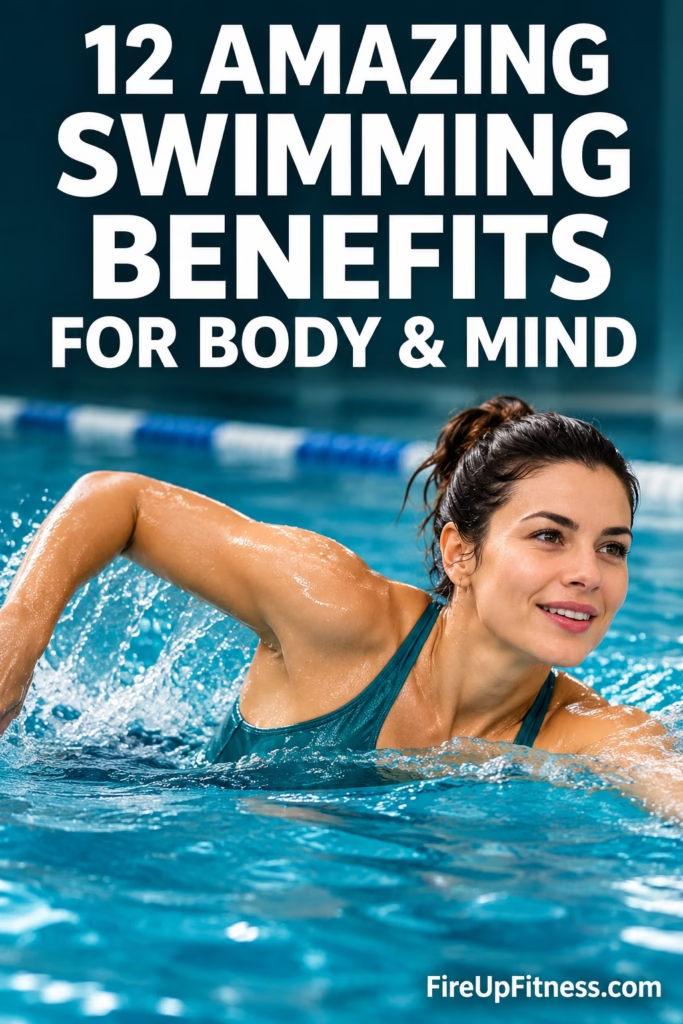
Swimming is more than a refreshing way to cool off. It is one of the most enjoyable full-body exercises you can add to your fitness routine. Whether you prefer a relaxing swim or an energetic workout in the pool, every session gives your body an opportunity to move, strengthen, and recharge.
The best part? You don’t need to be an athlete or spend hours swimming laps to experience the benefits of swimming. Even a short, comfortable session can help you become more active while being gentle on your joints.
From improving cardiovascular fitness and building muscle endurance to supporting mental well-being, swimming benefits extend far beyond the pool.
And sometimes, all you need is a little swimming motivation to put on your swimsuit, step into the water, and get moving.
Why Swimming Is One of the Best Full-Body Workouts
Unlike exercises that primarily focus on your legs, arms, or core, swimming engages several major muscle groups simultaneously.
Your arms pull through the water, your legs provide propulsion, and your core helps stabilize your body. Meanwhile, your heart and lungs work to supply oxygen to your moving muscles.
Water also creates natural resistance. Every stroke requires your muscles to push against it, helping develop strength and endurance without the same impact associated with running or jumping.
Another reason swimming is so appealing is its versatility. You can swim slowly to enjoy gentle movement or increase your pace for a more challenging cardio workout.
Let’s explore 12 swimming benefits that make this activity worth including in your weekly fitness routine.
1. Swimming Provides a Complete Full-Body Workout
One of the greatest swimming benefits is how many muscles you can engage in a single session.
Swimming involves your:
- Arms and shoulders for pulling and pushing through the water.
- Back muscles for supporting each stroke.
- Core muscles for maintaining balance and body alignment.
- Glutes and legs for kicking and propulsion.
- Chest muscles for assisting with upper-body movement.
Different swimming strokes emphasize different muscle groups, making it possible to vary your workout without changing activities.
Freestyle, breaststroke, and backstroke each challenge your body in slightly different ways.
Fitness tip: Alternate between comfortable swimming strokes to keep your sessions interesting and develop balanced muscular endurance.
2. Swimming Supports Heart Health
Swimming is an aerobic exercise, which means it increases your heart rate and challenges your cardiovascular system.
With regular practice, swimming can help improve cardiovascular endurance and support healthy heart function.
As your fitness improves, you may notice that everyday activities such as climbing stairs, walking longer distances, or carrying groceries feel easier.
You don’t have to swim quickly to benefit. A steady, comfortable pace can be a good starting point.
For beginners, short swimming intervals with rest breaks between laps can make cardiovascular training more manageable.
3. Swimming Is Gentle on Your Joints
Many traditional workouts involve repeated impact on your knees, hips, and ankles.
Swimming is different because water supports much of your body weight, reducing the load on your joints.
This makes swimming an appealing exercise for people who find high-impact activities uncomfortable.
It may be particularly useful for:
- Adults looking for low-impact workouts.
- Older adults who want to remain physically active.
- People experiencing some types of joint discomfort.
- Anyone seeking variety from running or jumping exercises.
Swimming is not completely stress-free for the joints, however. Certain strokes or poor technique can aggravate shoulder, neck, or knee problems.
Choose movements that feel comfortable, and seek professional guidance when managing an injury or medical condition.
4. Swimming Helps Build Muscle Strength and Endurance
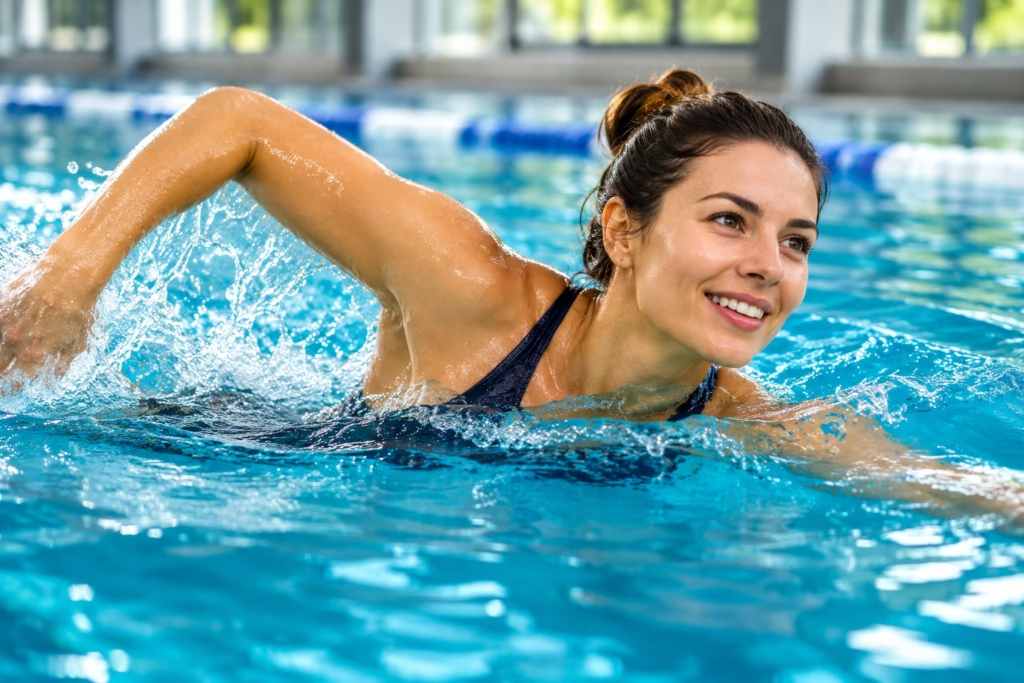
Every movement in the pool requires you to work against water resistance.
This resistance helps strengthen muscles and improve their ability to perform repeated movements over time.
Your shoulders, arms, back, core, and legs all contribute to moving your body through the water.
Regular swimming can help develop muscular endurance, improve movement control, and support overall physical conditioning.
However, swimming does not completely replace resistance training. Combining swimming with bodyweight exercises or strength training can provide additional benefits for muscle strength and bone health.
Swimming motivation: Focus on how much stronger your strokes feel rather than how fast you complete each lap.
5. Swimming Can Improve Your Mood and Reduce Stress
There is something calming about being in the water.
The rhythmic movement of swimming, combined with controlled breathing, can create an opportunity to focus on the present moment.
Physical activity is associated with improvements in mood and mental well-being, and swimming can be an enjoyable way to experience those benefits.
A comfortable swimming session may help you:
- Release built-up tension.
- Take a mental break from daily responsibilities.
- Feel refreshed after a busy day.
- Build confidence through physical activity.
You don’t need to turn every swim into an intense workout. Sometimes, moving gently through the water is enough to make the experience worthwhile.
6. Swimming Improves Stamina and Physical Endurance
Have you ever felt tired after swimming only a few laps?
Swimming challenges your cardiovascular system and muscles simultaneously, especially when you’re still developing your technique.
As you practice consistently, your body gradually adapts to the activity.
You may find yourself swimming longer distances, needing fewer rest breaks, or maintaining a comfortable pace with less effort.
The key is gradual progression.
Instead of trying to double your swimming distance immediately, add a little more time or another lap when your current routine starts feeling easier.
Small improvements can build meaningful endurance over several weeks.
7. Swimming Supports Better Sleep
Regular physical activity is associated with better sleep quality, and swimming can be one enjoyable way to stay active.
A swimming session helps you use energy, move your muscles, and create a healthy separation between daily responsibilities and relaxation.
Some people find that swimming leaves them pleasantly tired and more relaxed later in the day.
However, sleep responses vary. An intense swimming session close to bedtime may leave some people feeling too energized to fall asleep easily.
Experiment with morning, afternoon, or early evening swimming to discover what works best for your schedule.
8. Swimming Can Improve Flexibility and Mobility
Swimming requires coordinated movements through your shoulders, hips, ankles, and spine.
As you reach forward, rotate your body, and kick through the water, your joints move through repeated ranges of motion.
Over time, swimming may support comfortable mobility and movement coordination.
However, swimming alone may not significantly increase flexibility in every muscle group.
For a more balanced routine, combine your swimming sessions with gentle stretching exercises.
Try focusing on your shoulders, chest, hip flexors, and calves after swimming, when your muscles are warm.
9. Swimming Strengthens Your Core
Your core plays an important role in keeping your body stable and streamlined in the water.
During freestyle and backstroke, your abdominal and back muscles help control body rotation and maintain alignment.
A stable core also helps reduce unnecessary movement, allowing you to swim more efficiently.
Rather than thinking only about your arms and legs, pay attention to how your entire body works together.
Technique tip: Maintain a long, comfortable body position and gently engage your abdominal muscles without holding your breath.
Consistent swimming can contribute to better core endurance, especially when paired with exercises such as planks, bird dogs, and dead bugs.
10. Swimming Can Help You Maintain an Active Lifestyle
One of the most valuable benefits of swimming is that it offers an enjoyable alternative to conventional workouts.
Not everyone loves running on a treadmill or following intense exercise videos.
Swimming provides a different environment where movement can feel refreshing rather than repetitive.
You can choose from several activities, including recreational swimming, lap swimming, water aerobics, and guided aquatic fitness classes.
This variety can make it easier to stay physically active throughout the year.
Finding an activity you genuinely enjoy is often more sustainable than forcing yourself to follow a routine you dislike.
11. Swimming Supports Coordination and Balance
Swimming involves coordinating your arms, legs, breathing, and body position.
Each stroke requires a series of controlled movements that work together to propel you through the water.
As your technique improves, you develop greater awareness of how your body moves.
For example, freestyle requires alternating arm movements, rhythmic kicking, and timed breathing.
These coordinated actions can improve swimming-specific motor skills and body control.
Water-based exercises may also help some people practice balance in a supported environment, although improvements in balance on land depend on the exercises performed.
12. Swimming Can Boost Confidence and Motivation
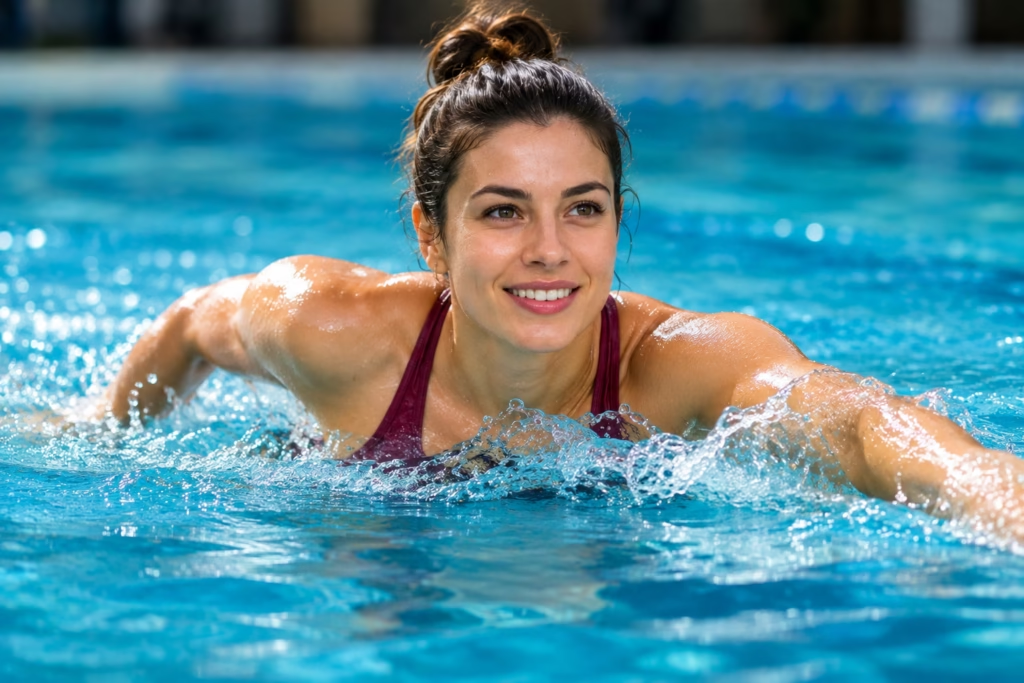
Progress in swimming is not always measured by speed or distance.
Sometimes, confidence grows when you learn to float comfortably, complete your first uninterrupted lap, or master a new swimming stroke.
These achievements can make exercise feel rewarding.
You begin to recognize what your body is capable of rather than focusing only on how it looks.
That feeling of accomplishment can encourage you to return to the pool and continue improving.
Remember, swimming is a skill that develops through practice. Comparing your progress with experienced swimmers is rarely helpful.
Celebrate your own milestones, however small they may seem.
How to Start Swimming for Fitness as a Beginner
Starting a swimming routine doesn’t have to be complicated.
The goal is to build confidence, establish a comfortable pace, and gradually increase your activity level.
Before beginning lap swimming, make sure you can swim safely in the chosen water depth. New swimmers should take lessons with a qualified instructor and use a supervised pool.
A Simple 20-Minute Beginner Swimming Workout
This routine is designed for adults who already know how to swim safely and can comfortably complete short distances.
| Activity | Duration |
|---|---|
| Gentle swimming warm-up | 5 minutes |
| Comfortable freestyle or breaststroke | 3 minutes |
| Rest or gentle water walking | 2 minutes |
| Moderate-paced swimming | 3 minutes |
| Rest or easy swimming | 2 minutes |
| Slow, relaxed swimming | 5 minutes |
| Total | 20 minutes |
Adjust the intervals according to your swimming ability. You can take additional breaks whenever necessary.
As your endurance improves, gradually extend the swimming portions while keeping your movements controlled.
The goal is not to exhaust yourself. It is to finish feeling accomplished and motivated to swim again.
How Often Should You Swim to See Benefits?
The ideal swimming frequency depends on your current fitness level, swimming ability, and personal goals.
Beginners may find that two or three sessions per week provide a manageable starting point.
Example weekly swimming schedule
| Monday | 20-minute easy swim |
| Tuesday | Walking or strength training |
| Wednesday | 25-minute swimming session |
| Thursday | Rest or gentle stretching |
| Friday | 20–30-minute swimming session |
| Saturday | Optional light activity |
| Sunday | Rest or recovery |
For general health, adults are encouraged to accumulate at least 150 minutes of moderate-intensity aerobic activity per week, or 75 minutes of vigorous activity, along with muscle-strengthening activities on at least two days.
Swimming can contribute toward those aerobic activity recommendations.
You can also combine swimming with walking, cycling, Pilates, or strength training to create a balanced fitness routine.
Swimming Motivation: 7 Ways to Stay Consistent
Finding the motivation to exercise can be challenging, especially when your schedule is busy.
Fortunately, you don’t need perfect motivation to build a consistent swimming habit.
Here are seven practical ways to make swimming something you look forward to.
- Set realistic goals. Start with something achievable, such as swimming twice a week for 20 minutes.
- Choose a convenient pool. A nearby swimming facility can make it easier to maintain your routine.
- Prepare your swim bag in advance. Keep your swimsuit, goggles, towel, and other essentials ready.
- Track your progress. Record your swimming duration, completed laps, or improvements in technique.
- Swim with a friend. Having a swimming partner can make sessions more enjoyable and help you stay accountable.
- Try different swimming activities. Alternate between lap swimming, recreational swimming, and aquatic fitness classes.
- Celebrate small achievements. Completing another lap or feeling more comfortable in the water is progress worth recognizing.
One of the best forms of swimming motivation is noticing how you feel after each session.
Instead of focusing entirely on performance, pay attention to improvements in your energy, confidence, and enjoyment.
Swimming vs. Walking: Which Is Better?
Both swimming and walking offer valuable health benefits, and neither is automatically better for everyone.
| Swimming | Walking |
|---|---|
| Low-impact, water-supported exercise | Weight-bearing, low-impact exercise |
| Engages upper and lower body | Primarily engages lower body |
| Requires access to a suitable pool | Easy to do in many locations |
| Requires swimming skills and water safety awareness | Generally easier for beginners |
| Builds cardiovascular endurance | Builds cardiovascular endurance |
Swimming may be especially appealing when you want a water-supported full-body workout.
Walking offers convenience and weight-bearing movement that can help support bone health.
Combining both activities can add variety to your weekly exercise schedule.
Common Swimming Mistakes to Avoid
Learning proper technique can make swimming more comfortable and enjoyable.
Some common mistakes include swimming too quickly before developing endurance, holding your breath underwater, lifting your head excessively while breathing, and neglecting rest breaks.
Another mistake is overlooking water safety.
Always swim in an appropriate, supervised environment, follow pool rules, and avoid swimming alone. Do not practice prolonged breath-holding or underwater endurance challenges.
A qualified swimming instructor can help you improve technique and build confidence safely.
Frequently Asked Questions About Swimming Benefits
Is swimming good exercise for women?
Yes. Swimming is an effective aerobic activity for women and can help improve cardiovascular endurance, muscular endurance, and overall fitness. Its low-impact nature also makes it appealing to people who prefer gentler forms of exercise.
Can swimming help strengthen your arms and legs?
Yes. Swimming uses water resistance to challenge your arms, shoulders, back, and legs. Consistent practice can help improve muscular endurance and contribute to strength development.
Is 20 minutes of swimming enough?
A 20-minute session can provide meaningful physical activity, particularly for beginners. The benefits depend on your swimming intensity, ability, and consistency. You can gradually increase your session duration as your fitness improves.
Is swimming better than going to the gym?
Swimming and gym workouts serve different purposes. Swimming is particularly useful for aerobic conditioning and muscular endurance, while gym-based resistance training can be more effective for building maximal strength and muscle mass. Combining both can be beneficial.
Can beginners enjoy swimming benefits?
Absolutely. Beginners can work toward improved fitness and confidence through swimming lessons and gradually increasing activity. Learning water safety and proper technique should come before attempting structured swimming workouts.
Final Thoughts: Find Your Swimming Motivation and Enjoy the Water
Swimming offers something special: the opportunity to challenge your body while enjoying the refreshing feeling of moving through water.
You can build endurance, strengthen muscles, support heart health, and create a healthy routine that feels enjoyable rather than overwhelming.
The most important thing is not how quickly you swim or how many laps you complete.
It is showing up consistently, moving at a pace that suits your abilities, and recognizing the progress you make along the way.
Your swimming journey doesn’t have to start with a perfect workout. It can begin with one comfortable lap, one small goal, and the decision to keep going.
So grab your swimsuit, find a safe place to swim, and give yourself the opportunity to discover the many benefits of swimming.