
10,000 Steps a Day: Benefits for Health and Body Fat Loss
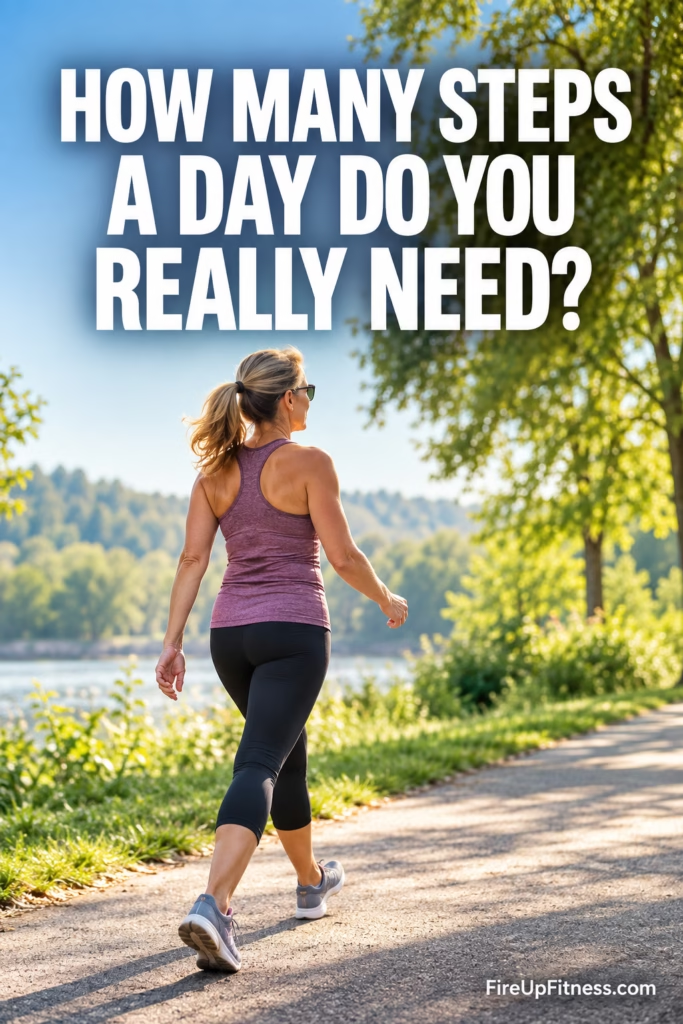
For years, 10,000 steps a day has been treated like the gold standard of walking.
Hit 10,000 and you had a good day. Fall short and it could feel like you didn’t do enough.
But walking doesn’t work that way.
Your daily step count matters, but it’s only part of the picture. How quickly you walk, how consistently you move, and how much effort you put into some of those steps can matter too.
That’s encouraging news, especially when 10,000 steps feels unrealistic.
You may not need to spend hours walking around trying to make your fitness tracker hit five digits. A combination of more daily movement and periods of brisk walking can be a practical way to improve fitness, increase calorie expenditure, support heart health, and help with body fat loss.
So instead of asking only:
“How many steps should I walk a day?”
There may be a better question:
“How can I make the steps I’m already taking work harder for me?”
Let’s break it down.

Is 10,000 Steps a Day Really Necessary?
Here’s something many people don’t realize:
10,000 steps is not a magic number.
It can be an excellent daily movement goal, especially for someone who enjoys walking and has enough time to reach it. But you don’t suddenly receive all the benefits of walking when your tracker changes from 9,999 to 10,000.
Walking benefits accumulate.
That means going from 3,000 steps to 5,000 steps can be meaningful. Moving from 5,000 toward 7,500 can add even more activity to your day. And reaching 10,000 or more may be perfectly reasonable for someone who enjoys being active.
The problem begins when we treat 10,000 as an all-or-nothing target.
Someone currently averaging 3,500 steps may see 10,000 and think:
I’ll never have enough time for that.
A better approach is to improve from where you are now.
More movement is the goal—not perfection.
Walking Pace Matters Too
Imagine two people.
One walks slowly for a longer period and accumulates a high number of steps.
The other has less time but includes several periods of purposeful, brisk walking throughout the day.
Both are exercising.
The important difference is intensity.
When you increase your walking speed, your muscles work harder. Your breathing increases. Your heart has to pump more blood. Your body uses more energy.
That means a brisk walk can provide a stronger cardiovascular challenge than casually strolling the same number of steps.
This doesn’t mean slow walking is useless.
Far from it.
Comfortable walking is still valuable movement, particularly for beginners, older adults, people returning to exercise, or anyone dealing with joint discomfort.
The takeaway is simple:
Step count and walking pace can work together.
You can walk more.
You can walk faster.
Or you can gradually do a little of both.

What Counts as Brisk Walking?
You don’t necessarily need to stare at your smartwatch to know whether you’re walking briskly.
Pay attention to your body.
During a brisk walk, you should generally notice:
- Your breathing becoming faster.
- Your heart rate increasing.
- Your body feeling warmer.
- Your walking stride becoming more purposeful.
- Talking becoming slightly more difficult, although you can still speak in short sentences.
Think:
“I’m exercising.”
Not:
“I’m casually wandering around the grocery store.”
But brisk is relative.
A pace that feels easy to someone who walks every day may feel challenging to someone who has been inactive for several years.
Age, fitness level, mobility, body size, terrain and health can all influence walking intensity.
You don’t have to compete with someone else’s pace.
Find a speed that noticeably increases your effort while still allowing you to maintain good posture and control.
How Many Steps a Day Should You Aim For?
Instead of choosing an arbitrary target, start by figuring out how much you already walk.
Wear your fitness tracker or carry your phone normally for several days without deliberately trying to increase your steps.
Then look at your average.
Suppose you’re currently walking about 4,000 steps a day.
Rather than immediately demanding 10,000 from yourself, try moving toward:
5,000 → 6,000 → 7,000+ steps
over time.
Someone already averaging 8,000 steps may decide that gradually reaching 10,000 is perfectly manageable.
Your goal should challenge you without making walking feel like another impossible task on your to-do list.
What If You Can’t Reach 10,000 Steps?
This is where walking pace becomes especially useful.
You might have work, family responsibilities, bad weather, limited daylight or simply not enough time to take a long walk every day.
Instead of giving up because you can’t reach 10,000 steps, try making part of your existing walking time more purposeful.
For example, you might take a 20- to 30-minute brisk walk and then accumulate additional comfortable steps throughout the rest of your day.
You could also alternate between faster and slower walking.
Try:
3 minutes comfortable walking
followed by
2 minutes brisk walking
and repeat.
This turns an ordinary walk into a simple interval walking workout without running or complicated equipment.
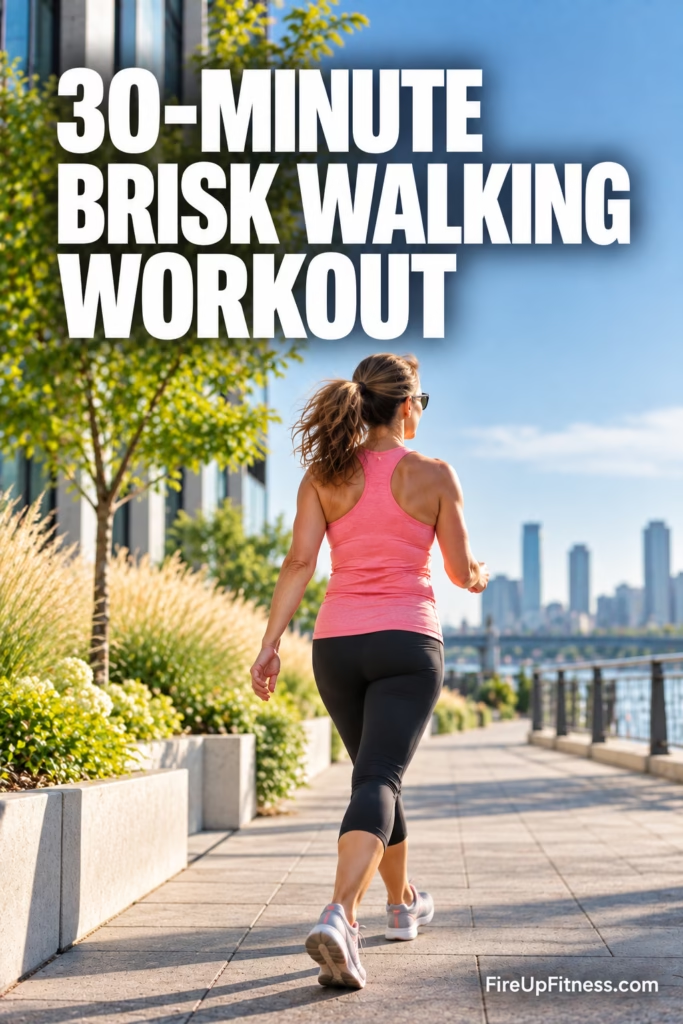
The 30-Minute Brisk Walking Goal
For many people, a simple target is to gradually work toward approximately 30 minutes of purposeful walking.
And it doesn’t necessarily have to happen all at once.
You could do:
10 minutes in the morning
10 minutes after lunch
10 minutes after dinner
Short walking sessions can be much easier to fit into a busy schedule.
They also remove one of the biggest barriers to exercise:
“I don’t have an hour.”
You don’t need an hour.
Start with the time you have.
Walking Faster Can Make Your Workout More Time-Efficient
One of the biggest advantages of brisk walking is efficiency.
Suppose you only have 20 minutes before dinner.
A relaxed walk is still worthwhile.
But increasing your pace for portions of that walk allows you to challenge your cardiovascular system more during the limited time available.
Try this simple routine:
20-Minute Brisk Walking Workout
Minutes 0–5: Comfortable warm-up pace
Minutes 5–8: Brisk walk
Minutes 8–10: Comfortable walk
Minutes 10–13: Brisk walk
Minutes 13–15: Comfortable walk
Minutes 15–18: Brisk walk
Minutes 18–20: Slow down and cool off
As your fitness improves, gradually make the brisk portions longer.
Eventually, you may be comfortable walking briskly for most of the 20 minutes.
Can Walking Help With Body Fat Loss?
Walking can absolutely be part of a successful body fat loss strategy.
Walking increases your daily energy expenditure without requiring the recovery demands of harder workouts.
That makes it especially useful because you can do it frequently.
A long walk burns energy.
A brisk walk increases intensity.
And accumulating additional movement throughout the day helps reduce the amount of time you spend completely sedentary.
But there’s an important distinction.
Walking doesn’t magically burn fat from your belly, thighs or arms.
Body fat decreases when your overall lifestyle supports an energy deficit over time. Walking can contribute to that process, particularly when combined with nutritious eating, adequate protein, strength training and sufficient sleep.
Instead of thinking:
“How many steps do I need to burn belly fat?”
think:
“How can I use walking to increase my overall activity consistently?”
That’s a much more sustainable approach.
Why Brisk Walking Can Be Especially Helpful After 40
As we get older, maintaining cardiovascular fitness, muscle strength, mobility and daily activity becomes increasingly important.
Unfortunately, daily movement can also decline.
Desk work, driving, family responsibilities and busy schedules can gradually replace activities that once kept us moving.
Walking is one of the easiest ways to push back against that decline.
For women over 40, a regular walking routine can be particularly attractive because it is:
- Low impact.
- Beginner-friendly.
- Easy to modify.
- Free.
- Available almost anywhere.
- Easy to combine with strength training.
- Simple to fit around family and work.
You don’t need to turn every walk into an intense workout.
Some days can be faster.
Others can simply be about getting outside and moving.
Try the Talk Test Instead of Obsessing Over Speed
Fitness trackers can tell you your pace, distance and heart rate, but you don’t necessarily need all that data.
Try the talk test.
Easy Walking
You can comfortably carry on a full conversation.
Brisk Walking
You’re breathing harder but can still speak in short sentences.
Very Hard Walking
Speaking becomes difficult and you need frequent breaths.
For most brisk walking sessions, the middle level is a practical target.
You’re working, but you’re still in control.
Want a Number? Track Your Walking Cadence
Some people love numbers.
In that case, you can estimate your walking cadence, which simply means how many steps you take per minute.
One easy method:
- Walk at your normal exercise pace.
- Count your steps for 15 seconds.
- Multiply that number by four.
For example:
25 steps in 15 seconds × 4 = 100 steps per minute.
Around 100 steps per minute is often used as a rough reference point for moderate walking intensity in adults.
But don’t turn that number into another rigid rule.
Your height, stride length, fitness level, age and mobility can all influence what feels moderately challenging.
Use cadence as feedback—not a pass-or-fail test.
What If Walking Faster Hurts Your Knees?
Don’t force speed.
Faster isn’t automatically better when increasing your pace causes pain, instability or poor walking mechanics.
Instead, increase your total movement at a comfortable pace.
You might add:
- Another 5-minute walk.
- An extra loop around your neighborhood.
- A short walk after dinner.
- More movement around the house.
- A few additional trips up and down the hallway.
- Walking while talking on the phone.
You can still build a valuable walking habit without power walking.
And if knee pain, balance problems or another condition limits your walking, consider getting individualized advice from an appropriate healthcare professional.
7 Easy Ways to Increase Your Daily Steps
You don’t always need a formal workout to become more active.
Small bursts of movement can accumulate surprisingly quickly.
1. Walk After Meals
Take a short 10- to 15-minute walk after breakfast, lunch or dinner.
2. Park Farther Away
Those extra few minutes walking into stores, appointments and work add up over an entire week.
3. Take the Stairs
When appropriate for your fitness and mobility, choose stairs instead of an elevator.
4. Walk During Phone Calls
A 20-minute phone conversation can become 20 minutes of movement.
5. Take a Walking Break
After sitting for a long period, get up and walk for five minutes.
6. Make One Walk Brisk
You don’t have to speed-walk all day. Choose one daily walk and make it your purposeful fitness walk.
7. Take an Evening Walk
Instead of spending the entire evening sitting, head outside for 10–20 minutes.
None of these strategies seems dramatic.
That’s exactly why they work.
They are realistic enough to repeat.
A Simple Walking Plan for Beginners
Starting from a mostly sedentary lifestyle?
Don’t jump straight into 10,000 steps plus 30 minutes of brisk walking.
Build gradually.
Week 1
Track your normal steps and add approximately 500–1,000 steps when comfortable.
Include 5–10 minutes of slightly faster walking on several days.
Week 2
Add another small amount of daily movement.
Try 10–15 minutes of brisk walking.
Week 3
Continue gradually increasing your steps.
Aim for 15–20 minutes of purposeful walking.
Week 4
Work toward 20–30 minutes of brisk walking on days when you feel comfortable.
After that, decide what works best for your lifestyle.
Maybe it’s 7,000 steps plus a brisk walk.
Maybe it’s 10,000 steps.
Maybe you love walking and regularly exceed that.
The best routine is one you can realistically maintain.
Don’t Forget Strength Training
Walking is wonderful exercise, but it doesn’t replace everything.
For a more complete fitness routine—especially after 40—combine walking with strength training.
Walking primarily develops cardiovascular endurance and keeps you active.
Strength exercises challenge your muscles more directly.
Try including exercises such as:
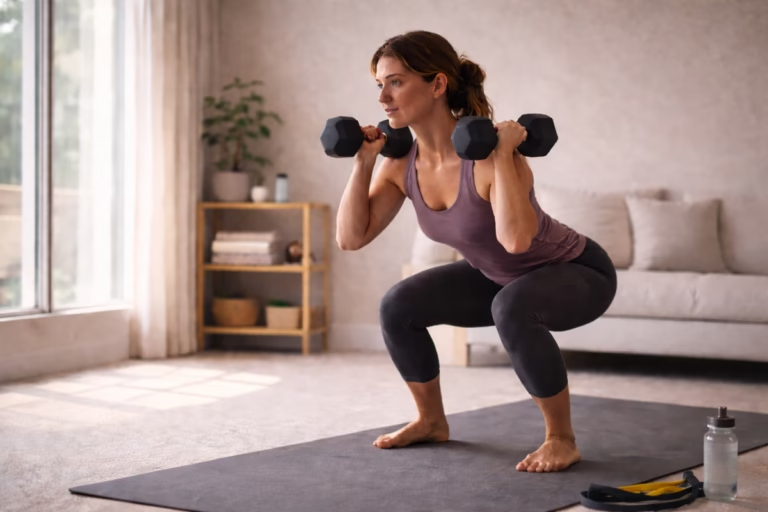
- Squats or chair squats.
- Glute bridges.
- Wall or incline push-ups.
- Rows.
- Step-ups.
- Resistance-band exercises.
Even two or three short strength sessions per week can complement your walking routine beautifully.
Think of walking and strength training as partners rather than competitors.
More Steps or Faster Walking: Which Is Better?
You don’t have to choose.
Walk more when you have time.
Walk faster when you’re comfortable increasing intensity.
And combine the two when it fits your lifestyle.
For someone who currently walks very little, simply adding more steps can be a major improvement.
For someone already walking regularly but short on time, adding brisk intervals can make those walks more challenging.
For someone with joint problems or mobility limitations, accumulating comfortable steps may be more appropriate than trying to increase speed.
Fitness doesn’t need one universal formula.
FAQs About Steps and Walking Pace
Do I really need 10,000 steps a day?
No. Think of 10,000 steps as an optional movement target rather than a requirement. Increasing your activity from your current baseline is what matters most.
Is 5,000 steps a day enough?
It can be a meaningful starting point, particularly for someone who was previously very sedentary. Rather than worrying about whether a number is “enough,” gradually increase your activity as your fitness and schedule allow.
Is walking faster better than walking longer?
Both approaches have advantages. Faster walking increases exercise intensity, while longer walks increase overall movement and energy expenditure. Combining them can give you the benefits of both.
How fast should I walk?
Aim for a pace that noticeably increases your breathing while still allowing you to speak in short sentences. Your ideal brisk pace is individual.
Can brisk walking help with body fat loss?
Yes. Brisk walking increases physical activity and energy expenditure, which can support body fat loss when combined with an appropriate eating pattern and healthy lifestyle.
Can I split my walking throughout the day?
Absolutely. Three 10-minute walks can be much easier to fit into your schedule than one 30-minute walk.
Should women over 40 walk every day?
Walking can be an excellent form of regular activity for women over 40. The appropriate amount and intensity depend on fitness level, mobility, health and recovery.
The Bottom Line: Stop Chasing a Perfect Step Count
There is nothing wrong with aiming for 10,000 steps a day.
It can be motivating, easy to track and a great way to encourage yourself to move more.
But don’t let that number convince you that anything less doesn’t count.
Your body doesn’t know whether your fitness tracker says 6,842 or 10,003.
It knows that you moved.
It knows when you challenged yourself.
And it responds to what you consistently do over weeks, months and years.
So start with your current daily steps.
Walk a little more when you can.
Pick up the pace for portions of your walks when it feels appropriate.
Add some strength training.
And keep showing up.
Because when it comes to walking for better health, the most powerful goal isn’t a perfect number—it’s building a routine you can actually keep.