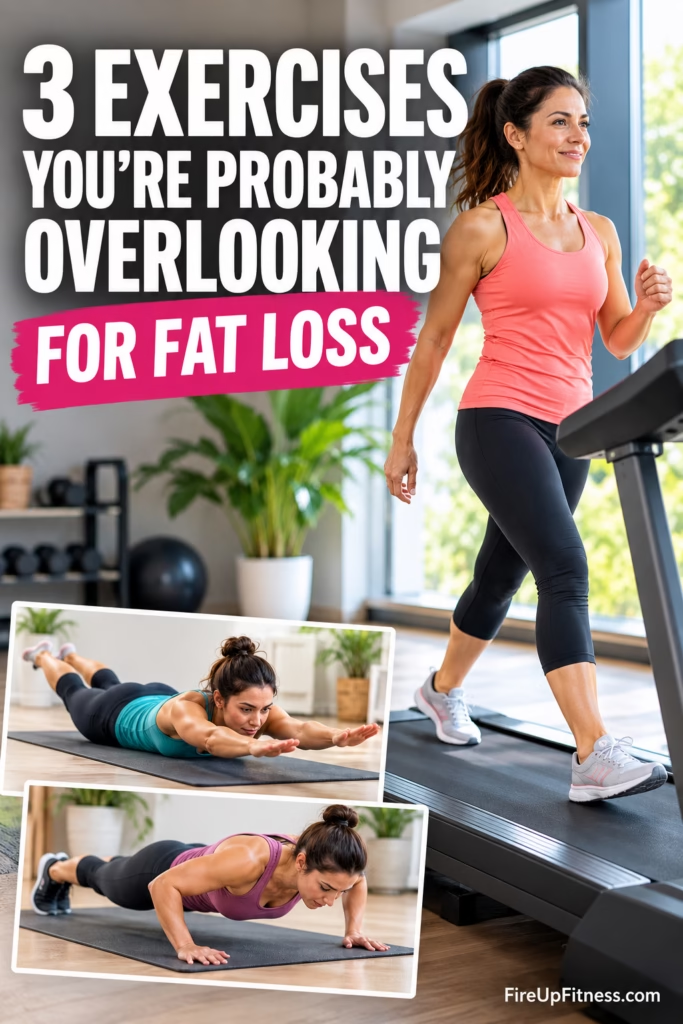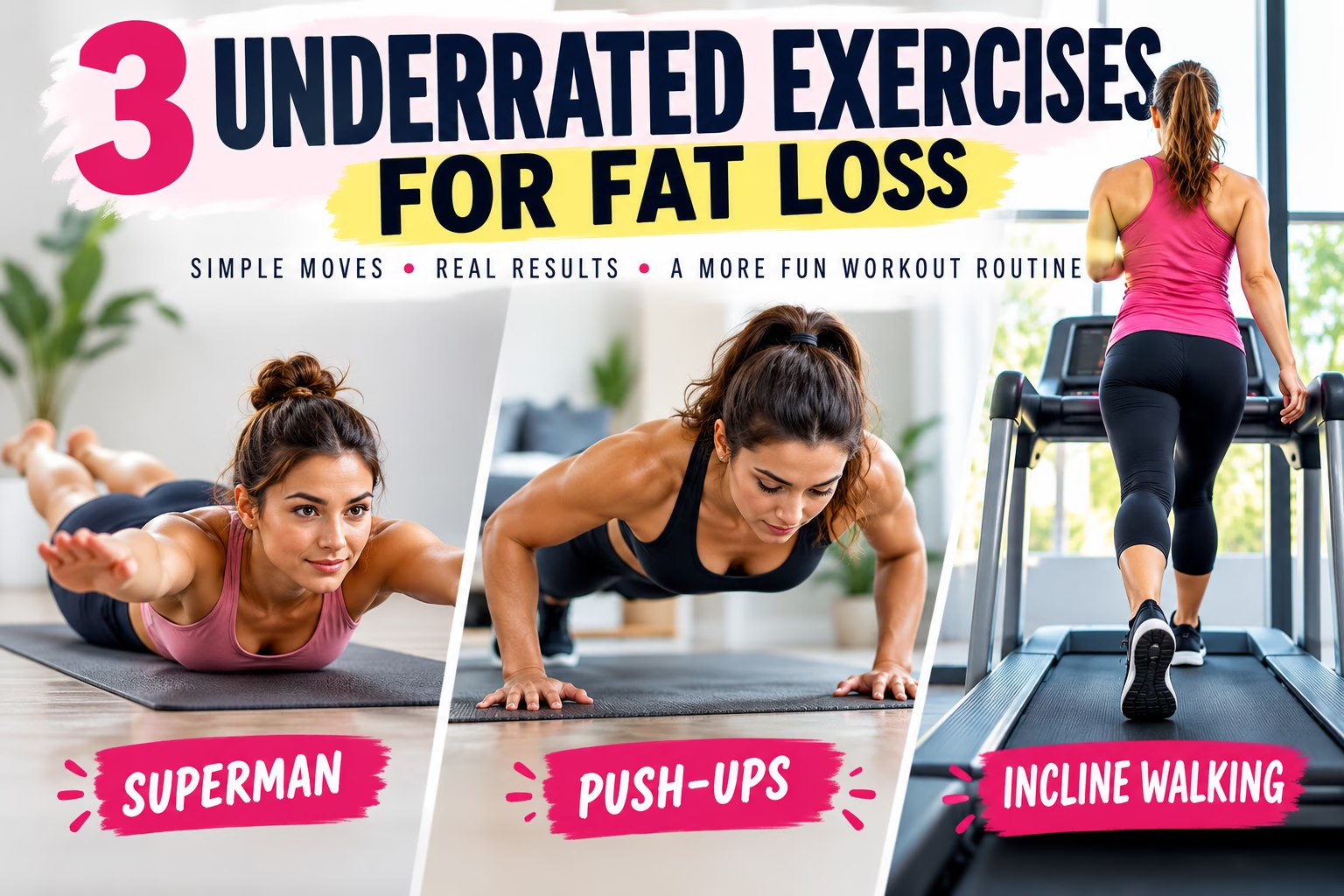
3 Underrated Exercises for Fat Loss and Strength
When you think about exercises for fat loss, what comes to mind first? Running, cycling, HIIT, or lifting weights?
Those are all useful ways to stay active, but they certainly aren’t your only options.
One of the biggest challenges with a fitness routine isn’t finding exercises that work. It’s finding activities you actually enjoy enough to keep doing consistently.
Repeating the same treadmill session or strength workout week after week can eventually feel monotonous. And when exercise starts feeling like another chore on your to-do list, motivation can disappear surprisingly quickly.
That’s why adding a few different movements to your routine can make such a difference.
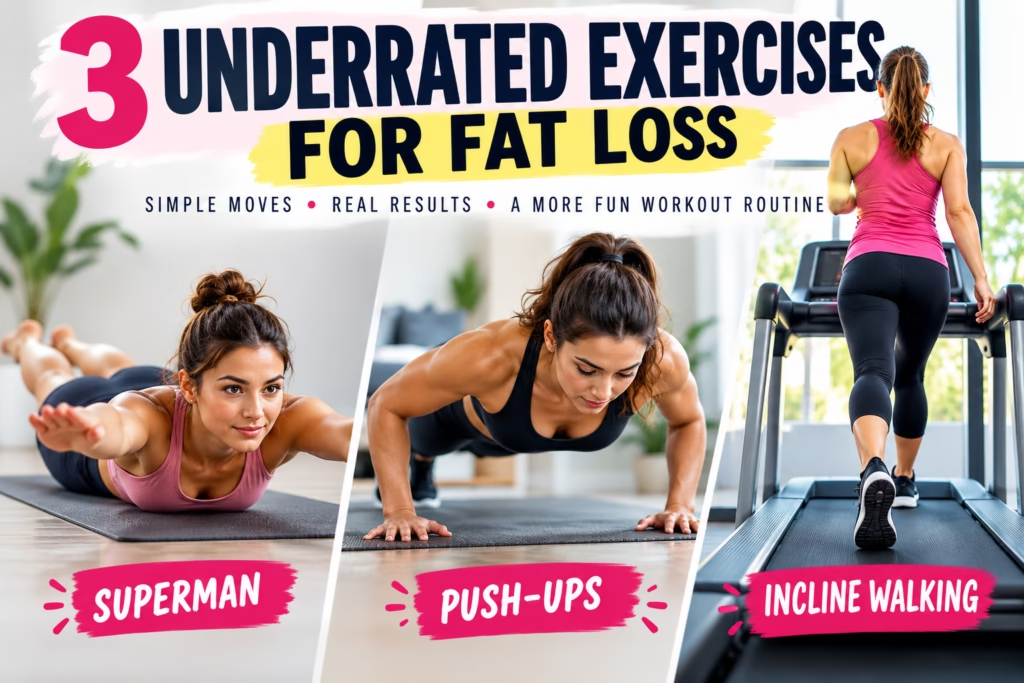
These 3 underrated exercises for fat loss and fitness combine strength, movement, and variety. They’re simple enough for beginners, easy to modify, and can be mixed into your regular workout routine when you want something different.
And the best part?
You don’t need to spend hours exercising.
Exercise and Fat Loss: What Actually Matters?
Before getting into the exercises, there’s one important point to understand.
No single exercise can magically burn away body fat.
Fat loss generally happens when your body consistently uses more energy than it takes in over time. Nutrition plays an important role, while physical activity can increase energy expenditure and help you maintain or build muscle.
That means you don’t have to search for one “perfect” fat-burning exercise.
Instead, build a routine that combines activities such as:
- Strength training
- Walking and other moderate cardio
- Higher-intensity exercise when appropriate
- Everyday physical activity
- Mobility and flexibility work
Most importantly, choose activities you can realistically continue.
Here are three exercises worth adding to the mix.
1. Superman Exercise
The Superman might look simple, but don’t underestimate it.
This floor exercise primarily works muscles along your back while also challenging your glutes, shoulders, and core stability.
It’s especially useful for balancing a workout routine that includes plenty of exercises performed on the front of the body.
How to Do the Superman
Lie face down on an exercise mat with your legs extended behind you.
Extend your arms in front of you so your body forms one long line.
Keep your neck neutral rather than lifting your head to look forward.
Gently brace your abdominal muscles.
Slowly lift your arms and legs a comfortable distance from the floor. Think about creating length through your body rather than trying to lift as high as possible.
Pause briefly at the top.
Lower your arms and legs back to the mat with control.
Try 8–12 controlled repetitions.
Beginner Modification
You don’t have to lift both your arms and legs simultaneously.
Try lifting your right arm and left leg, lowering them, and then switching sides.
This variation can make the movement easier while still challenging your back and core.
Why Add It to Your Routine?
The Superman isn’t a huge calorie-burning exercise by itself—and it doesn’t need to be.
Its value comes from strengthening muscles that support your trunk and adding another movement pattern to a balanced exercise routine.
Pair it with squats, push-ups, walking, lunges, or other full-body exercises.
Pinterest-worthy reminder: The exercises that look the simplest can sometimes challenge muscles you’ve been neglecting.
2. Push-Ups
Push-ups deserve a place in almost any home workout.
One reason they’re so useful is efficiency. Instead of isolating a single muscle, a properly performed push-up challenges several muscle groups simultaneously.
Your chest, shoulders, triceps, and core all have work to do.
You also don’t need weights, machines, or a gym membership.
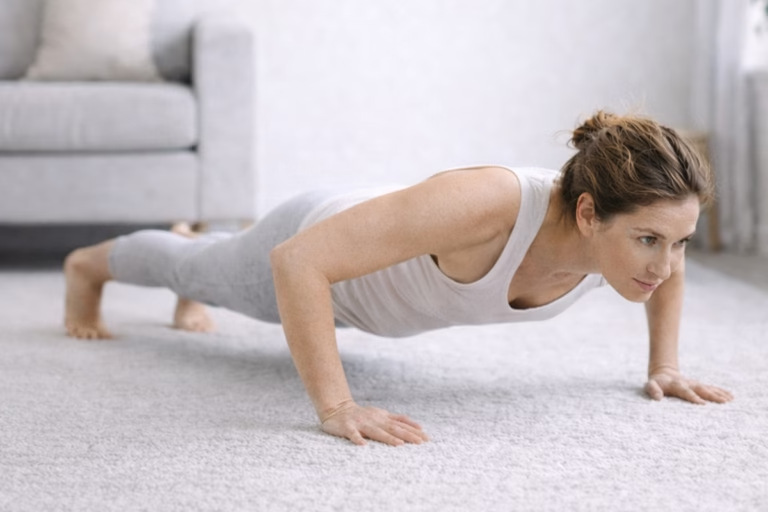
How to Do a Basic Push-Up
Begin in a high plank with your hands approximately shoulder-width apart.
Position your shoulders over your hands and extend your legs behind you.
Brace your core and keep your body relatively straight from your head through your heels.
Bend your elbows and slowly lower your chest toward the floor.
Keep your neck neutral rather than dropping your head.
Lower only as far as you can while maintaining good form.
Press through your hands to return to the starting position.
Start with 5–10 repetitions and build gradually.
Can’t Do a Full Push-Up Yet? Start Here
A full floor push-up can be challenging, especially when you’re new to strength training.
That doesn’t mean you should skip it.
Wall Push-Up
Stand facing a wall and place your hands against it around chest height. Bend your elbows to bring your chest toward the wall, then press yourself away.
Incline Push-Up
Place your hands on a stable elevated surface and perform the same push-up movement.
As you become stronger, gradually use a lower surface.
Progressing from wall push-ups to incline push-ups and eventually floor push-ups can be much more approachable than repeatedly struggling through a variation that’s currently too difficult.
3. Incline Walking
Walking may be one of the most underrated forms of exercise.
And adding an incline can make a familiar walking workout considerably more challenging without requiring you to run.
Incline treadmill walking increases the effort required compared with walking at the same speed on level ground. It can also challenge your glutes and leg muscles while raising your heart rate.
For people who don’t enjoy running, this can be a great alternative.
Beginner Incline Walking Workout
Start with about 5 minutes of easy level walking to warm up.
Then gradually increase the treadmill incline.
For example:
Minutes 0–5: Easy walk at 0–1% incline
Minutes 5–10: Moderate walk at 2–3% incline
Minutes 10–15: Increase to 4–5% if comfortable
Minutes 15–20: Alternate between easier and more challenging inclines
Final 3–5 minutes: Return to an easy, flatter walk
These numbers aren’t rules. Adjust the incline and speed to match your fitness level.
You should feel challenged while still remaining in control of your movement.
Don’t Make This Common Treadmill Mistake
Avoid setting the incline so high that you have to constantly hang onto the treadmill rails.
Using a lower incline with natural walking mechanics is generally a better choice than choosing an extreme incline you can’t comfortably maintain.
If balance is a concern, prioritize safety and use the treadmill according to the manufacturer’s instructions.
Turn These 3 Moves Into a Simple Workout
Want to use all three exercises together?
Try this beginner-friendly routine:
Incline walk: 10 minutes
Push-ups: 5–10 reps
Superman: 8–12 reps
Incline walk: 5 minutes
Push-ups: 5–10 reps
Superman: 8–12 reps
Easy walk: 3–5 minutes to cool down
Rest when you need it.
As your fitness improves, you can gradually add repetitions, walking time, or another round.
You don’t need to make every workout exhausting for it to count.
How to Make Your Fat-Loss Workouts Less Boring
Consistency becomes much easier when you stop expecting yourself to enjoy exactly the same workout every day.
Try rotating different types of movement throughout your week.
One day might be strength training. Another could be a longer walk. Another might include incline walking and a short bodyweight circuit.
You can also make exercise more enjoyable by listening to a favorite playlist or podcast, walking somewhere new, exercising with a friend, or setting small performance goals such as completing your first 10 push-ups.
Instead of asking:
“Which exercise burns the most calories?”
Try asking:
“Which exercises can I realistically keep doing for the next six months?”
That question can be far more useful.
A Simple Weekly Routine for Beginners
You don’t have to exercise intensely every day.
A realistic week could look something like this:
Monday: Full-body strength workout
Tuesday: Brisk or incline walking
Wednesday: Light activity or recovery
Thursday: Full-body strength workout
Friday: Walking or another cardio activity you enjoy
Saturday: Optional recreational activity, mobility, or light workout
Sunday: Rest or gentle movement
Your schedule doesn’t have to look exactly like this.
The goal is to create a routine that fits your life rather than trying to fit your life around an unrealistic exercise schedule.
What About Women Over 40?
Strength and cardiovascular exercise can both be valuable as you move through your 40s and beyond.
Rather than relying only on long cardio sessions, consider combining walking or other aerobic activities with regular resistance training.
Bodyweight exercises such as push-ups can be part of that approach, and they can be progressed as you become stronger.
Recovery matters too.
Give your body enough time between challenging sessions, gradually increase your training load, and pay attention to persistent pain or unusual discomfort.
Final Thoughts
You don’t need a complicated workout plan to become more active.
Sometimes the best way to refresh your routine is to return to simple movements you’ve overlooked.
Supermans can challenge your back and core. Push-ups provide an efficient upper-body and core strength exercise. Incline walking can turn an ordinary walk into a more demanding cardio session.
None of them is a magic shortcut for fat loss.
But combined with consistent exercise, balanced nutrition, adequate recovery, and everyday movement, they can become useful pieces of a sustainable fitness routine.
So when your usual workout starts feeling stale, don’t assume you need something harder.
You might simply need something different.
Save these three exercises for your next workout—and start with the variation that feels manageable today.