
4 Yoga Poses for Muscle Building and Strength
Yoga is often associated with flexibility, stress relief, and relaxation. While those benefits are important, yoga can also help you build strength, improve muscle endurance, and create a more toned body.
You do not always need dumbbells, machines, or a gym membership to challenge your muscles. Many yoga poses use your own body weight as resistance. When you move slowly, maintain proper alignment, and hold a pose for several breaths, your muscles must work continuously to support and stabilize your body.
That is what makes yoga for muscle building so effective.
Strength-focused yoga can activate the arms, shoulders, back, core, glutes, and legs while also improving balance and mobility. It may not build muscle in exactly the same way as heavy resistance training, but it can help develop lean strength, muscular control, and better overall body awareness.
This routine includes four beginner-friendly yoga poses that target multiple muscle groups without requiring any equipment. Practice them consistently to build a stronger core, steadier legs, better posture, and greater full-body endurance.
Can Yoga Really Build Muscle?
Yoga can help build and strengthen muscle when poses are performed with control and intention.
During a yoga pose, your muscles often work in two important ways. Some muscles contract to hold your body in position, while others stabilize your joints and prevent you from losing balance. Holding your body against gravity creates resistance, even though you are not lifting an external weight.
For example:
- Warrior II challenges the thighs, glutes, calves, shoulders, and core.
- Tree Pose requires the standing leg and deep core muscles to stabilize the body.
- Cobra Pose strengthens the back while engaging the arms and glutes.
- Triangle Pose works the legs, waist, shoulders, and postural muscles.
The longer you hold a pose with good form, the more muscular endurance you develop.
Yoga can be especially helpful for beginners, women returning to exercise, and anyone who prefers low-impact strength training. It can also complement traditional workouts by improving flexibility, balance, joint control, and recovery.
Benefits of Strength-Focused Yoga
A regular strength-based yoga routine may help you:
- Build lean muscle
- Strengthen the core
- Tone the arms and legs
- Improve muscular endurance
- Support better posture
- Increase balance and coordination
- Improve hip and shoulder mobility
- Develop greater body control
- Exercise without heavy equipment
To make yoga more effective for muscle building, move slowly and avoid rushing through the poses. Focus on actively engaging the muscles rather than simply resting in each position.
4 Best Yoga Poses for Muscle Building
Complete these poses as a short standalone workout or add them to your regular yoga routine. Beginners can hold each pose for 20 to 30 seconds. As your strength improves, gradually increase the hold to 45 or 60 seconds.
Always breathe steadily and stop if you feel sharp pain, dizziness, or unusual discomfort.
1. Tree Pose
Tree Pose, also known as Vrksasana, is a standing balance pose that strengthens the legs, glutes, ankles, and core.
Although the pose may appear simple, maintaining balance requires continuous muscular engagement. The standing leg supports your entire body, while the abdominal and hip muscles help keep your pelvis stable.
How to Do Tree Pose
- Stand tall with your feet about hip-width apart and your arms relaxed at your sides.
- Shift your body weight onto your left foot.
- Slowly lift your right foot from the floor.
- Place the sole of your right foot against your left inner thigh or calf.
- Avoid pressing the foot directly against the knee joint.
- Bring your palms together in front of your chest.
- Keep your standing leg active and gently engage your abdominal muscles.
- Focus your eyes on one unmoving point in front of you.
- Hold for 20 to 60 seconds.
- Lower your foot carefully and repeat on the opposite side.
Beginner Modification
Keep the toes of your lifted foot on the floor and place the heel lightly against the opposite ankle. You may also stand beside a wall or chair for extra support.
Muscles Worked
- Quadriceps
- Hamstrings
- Calves
- Glutes
- Hip stabilizers
- Deep core muscles
Benefits of Tree Pose
Tree Pose strengthens the lower body while improving balance, ankle stability, posture, and concentration. It is also a helpful exercise for developing control through the hips and core.
Form Tip
Press firmly through the standing foot and avoid locking the knee. Imagine growing taller through the top of your head while keeping your shoulders relaxed.
2. Warrior II Pose
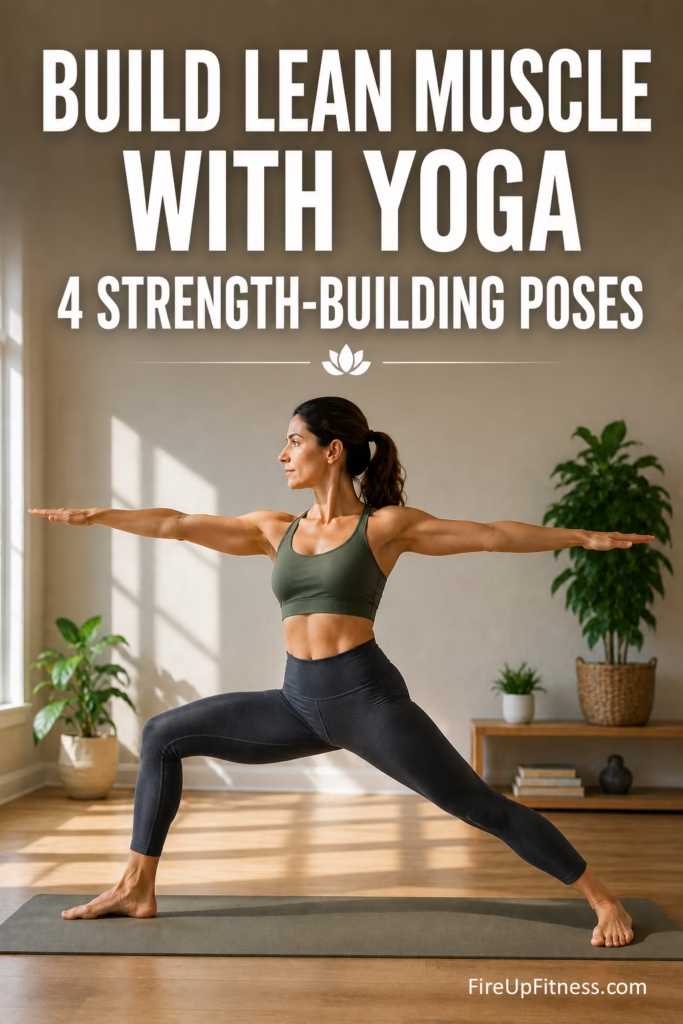
Warrior II, or Virabhadrasana II, is one of the best yoga poses for strengthening the legs and glutes. It also challenges the shoulders, arms, and core because the body must remain stable while holding a wide stance.
The bent front leg creates resistance through the thigh, while the straight back leg works to support the position. Holding the arms parallel to the floor also builds shoulder endurance.
How to Do Warrior II
- Stand tall and step your feet approximately three to four feet apart.
- Turn your right foot outward to about 90 degrees.
- Turn your left foot slightly inward.
- Bend your right knee until it is positioned above the ankle.
- Keep the back leg straight and press the outer edge of the back foot into the floor.
- Extend your arms out to the sides at shoulder height.
- Keep your palms facing downward.
- Look over the fingertips of your front hand.
- Engage your core and keep your chest lifted.
- Hold for 30 to 60 seconds.
- Straighten the front leg, turn your feet, and repeat on the opposite side.
Beginner Modification
Shorten your stance and bend the front knee less deeply. This reduces the intensity while still strengthening the legs.
Muscles Worked
- Quadriceps
- Hamstrings
- Glutes
- Calves
- Core
- Shoulders
- Upper back
Benefits of Warrior II
Warrior II improves lower-body strength, hip mobility, endurance, balance, and focus. It can also help prepare the body for lunges, squats, and other functional movements.
Form Tip
Keep the front knee tracking in the same direction as the toes. Do not allow it to collapse inward.
3. Cobra Pose
Cobra Pose, or Bhujangasana, strengthens the muscles along the back of the body. It is particularly useful for the upper and lower back, shoulders, glutes, and spinal-support muscles.
Many people spend long periods sitting or leaning forward, which can weaken the back and tighten the front of the body. Cobra Pose helps counter this position by gently opening the chest while strengthening the muscles that support better posture.
How to Do Cobra Pose
- Lie face down on a yoga mat.
- Extend your legs behind you with the tops of your feet pressing into the floor.
- Place your hands underneath or slightly ahead of your shoulders.
- Keep your elbows close to your ribs.
- Gently engage your abdominal muscles.
- Inhale and begin lifting your head and chest from the floor.
- Use your back muscles first rather than pushing strongly through your hands.
- Keep a slight bend in your elbows.
- Draw your shoulders down and away from your ears.
- Keep your hips and lower ribs close to the mat.
- Hold for 15 to 30 seconds while breathing steadily.
- Exhale and slowly lower your chest back to the floor.
Beginner Modification
Lift only a few inches from the floor. A smaller lift with good control is more effective than forcing the body into a deep backbend.
Muscles Worked
- Upper back
- Lower back
- Shoulders
- Triceps
- Glutes
- Deep core muscles
Benefits of Cobra Pose
Cobra Pose strengthens the back, supports better posture, opens the chest, and may help reduce stiffness caused by prolonged sitting.
Form Tip
Avoid straightening your arms aggressively or compressing the lower back. Keep the movement long and controlled rather than trying to lift as high as possible.
4. Triangle Pose
Triangle Pose, or Trikonasana, is a full-body yoga posture that strengthens the legs, core, arms, and postural muscles while stretching the hips and hamstrings.
Because the torso remains extended rather than collapsing downward, the abdominal and back muscles must work to support the spine. The legs also stay active throughout the entire pose.
How to Do Triangle Pose
- Stand with your feet approximately three and a half to four feet apart.
- Turn your right foot outward to about 90 degrees.
- Turn your left foot slightly inward.
- Extend your arms out to the sides at shoulder height.
- Keep both legs straight without locking the knees.
- Inhale and lengthen through your spine.
- Exhale as you reach your torso toward your right side.
- Lower your right hand to your shin, ankle, or a yoga block.
- Extend your left arm toward the ceiling.
- Keep both sides of your waist long.
- Look forward or upward, depending on what feels comfortable for your neck.
- Hold for 30 to 60 seconds.
- Engage your legs and core as you return to standing.
- Repeat on the opposite side.
Beginner Modification
Place your lower hand on a yoga block or higher on the shin. Avoid forcing the hand toward the floor.
Muscles Worked
- Quadriceps
- Hamstrings
- Glutes
- Obliques
- Back muscles
- Shoulders
- Arms
Benefits of Triangle Pose
Triangle Pose improves lower-body strength, balance, posture, hip mobility, spinal control, and muscular endurance.
Form Tip
Do not place heavy pressure through the lower hand. Use your core and legs to support the pose.
Simple Yoga Muscle-Building Routine
Use the four poses as a short full-body strength session.
Warm-Up
Spend three to five minutes preparing your body with:
- Shoulder rolls
- Gentle side bends
- Hip circles
- Cat-Cow stretches
- Slow bodyweight squats
- Ankle circles
Main Routine
Complete the following sequence:
- Tree Pose — 30 seconds per side
- Warrior II — 30 to 45 seconds per side
- Cobra Pose — 20 to 30 seconds
- Triangle Pose — 30 to 45 seconds per side
Rest for 20 to 30 seconds between poses when needed.
Repeat the entire sequence two or three times.
For best results, perform this routine two to four times per week.
How to Make Yoga More Effective for Building Strength
Simply moving into a pose is not enough. The way you perform each movement makes a significant difference.
Hold the Poses Longer
Muscles need time under tension to become stronger. Begin with shorter holds and gradually work toward 45 to 60 seconds.
Move Slowly
Slow transitions prevent momentum from taking over. They also require more control from the core, hips, shoulders, and legs.
Actively Engage Your Muscles
Press through your feet, tighten your thighs, engage your glutes, and gently brace your core. Do not allow your body to become passive while holding a pose.
Focus on Proper Alignment
Good form helps target the intended muscles and reduces unnecessary strain on the joints.
Increase the Challenge Gradually
As the poses become easier, increase the hold time, complete another round, or reduce the amount of support you use.
Stay Consistent
Strength develops through repetition. A short routine practiced regularly is more effective than a difficult workout performed only occasionally.
Can Yoga Replace Strength Training?
Yoga can be an excellent form of bodyweight strength training, especially for beginners. It improves muscular endurance, balance, mobility, stability, and body control.
However, traditional resistance training may be more effective for building significant muscle size because weights can be increased progressively. The best approach depends on your goals.
Women who want general strength, muscle tone, improved posture, and low-impact exercise may benefit greatly from yoga. Those who want maximum muscle growth can combine yoga with resistance bands, dumbbells, or strength-training exercises.
Yoga and traditional strength training do not have to compete. They can complement each other.
Common Mistakes to Avoid
Avoid these common errors when practicing yoga for muscle building:
- Holding your breath
- Locking your knees or elbows
- Rushing between poses
- Forcing a deeper range of motion
- Relaxing the core completely
- Sacrificing form to hold a pose longer
- Comparing your flexibility with someone else
- Ignoring pain or joint discomfort
The goal is not to create the most dramatic-looking pose. The goal is to maintain strong, controlled alignment.
Final Thoughts
Yoga is much more than stretching and relaxation. When practiced with control, proper alignment, and consistent muscular engagement, it can become an effective full-body strength workout.
Tree Pose builds balance and lower-body stability. Warrior II strengthens the legs, glutes, shoulders, and core. Cobra Pose supports a stronger back and better posture. Triangle Pose challenges the legs and waist while improving full-body control.
Together, these four poses create a simple but effective introduction to yoga for muscle building.
Start with shorter holds, use modifications when necessary, and focus on quality rather than intensity. As your strength improves, you can increase the duration of each pose or repeat the sequence additional times.
You do not need heavy equipment to begin building a stronger body. A yoga mat, consistent practice, and a willingness to challenge your muscles are enough to get started.