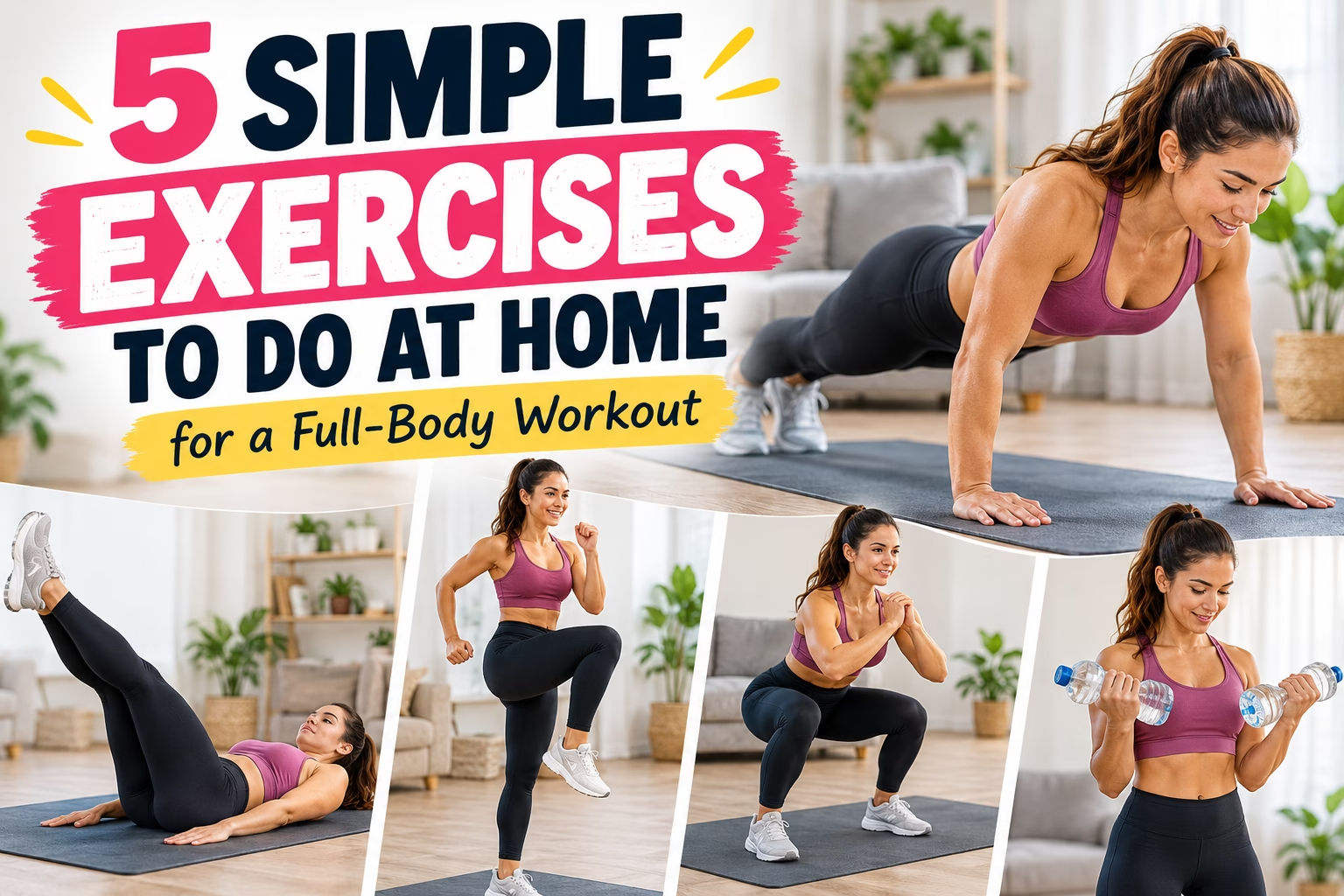
5 Simple Exercises to Do at Home for a Full-Body Workout
Getting a good workout doesn’t have to mean driving to the gym, buying expensive equipment, or finding an extra hour in an already busy day. Some of the most effective exercises can be done right at home using your own body weight and a little floor space.
A simple home workout can help you build strength, improve cardiovascular fitness, increase mobility, and simply feel more energized throughout the day. And because there’s no commute or complicated setup, exercising at home can make it much easier to stay consistent.
Whether you’re just getting started, returning to exercise after a break, or looking for an easy routine for busy days, these 5 exercises to do at home give you a practical place to begin.
The best part? You can adjust almost every exercise to match your current fitness level.

Why Home Workouts Can Be So Effective
It’s easy to assume that a workout needs machines, heavy weights, or a gym full of equipment to produce results. That simply isn’t the case.
Your body provides plenty of resistance for basic strength exercises such as squats and push-ups. Add movements that raise your heart rate, such as jogging in place, and you can create a surprisingly complete workout in your living room.
Home exercise also removes several common barriers to working out.
There’s no commute. No waiting for equipment. No worrying about what everyone else is doing. You can put on comfortable clothes, clear a little space, and start moving.
Even a short workout counts.
For beginners, consistency matters far more than trying to make every workout exhausting. Start with movements you can perform comfortably and gradually increase the number of repetitions, sets, resistance, or workout time as you become stronger.
Here are five simple exercises to get you moving.
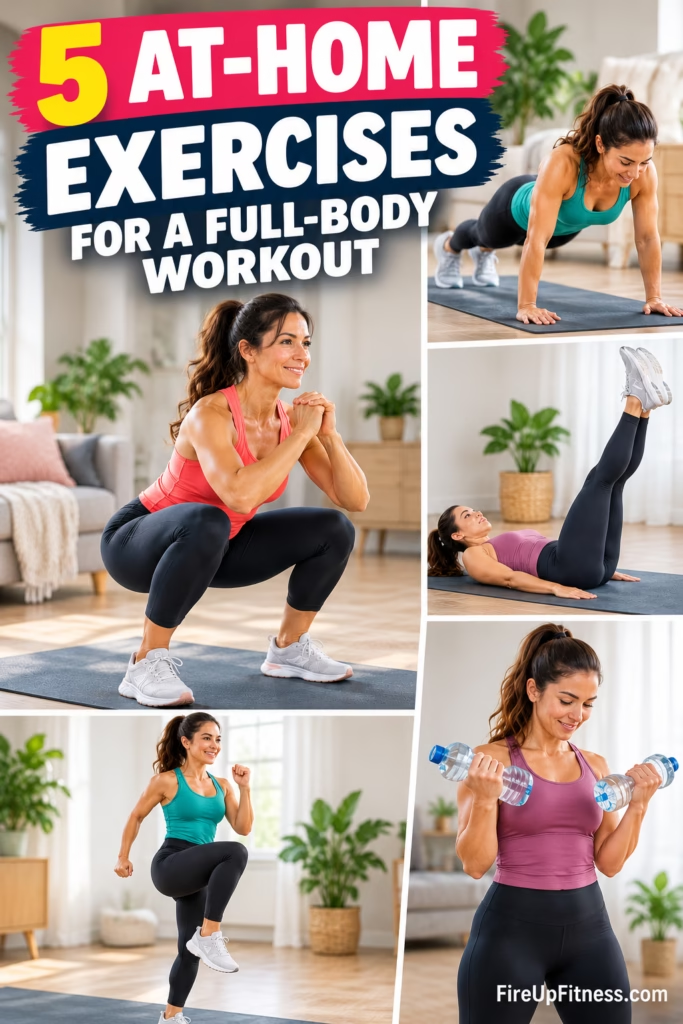
1. Push-Ups for Upper Body Strength
Push-ups are one of the most useful bodyweight exercises you can learn because they work several muscle groups at the same time.
They primarily target your:
- Chest
- Shoulders
- Triceps
- Core
You also don’t have to begin with a traditional floor push-up. There are several variations that allow you to build strength gradually.
Beginner Option: Wall Push-Ups
Wall push-ups are a great starting point when regular push-ups feel too difficult.
Stand facing a sturdy wall and place your palms against it around shoulder height. Walk your feet slightly away from the wall so your body forms a straight line.
Slowly bend your elbows and bring your chest toward the wall. Keep your core engaged and avoid allowing your hips to sag.
Press through your palms to return to the starting position.
Try 8–15 repetitions.
As this becomes easier, move your feet farther away from the wall or progress to an elevated push-up using a sturdy countertop or similar stable surface.
Modified Knee Push-Ups
Ready for something more challenging?
Start on your hands and knees with your hands slightly wider than shoulder-width apart. Create a straight line from your knees through your hips and shoulders.
Bend your elbows and slowly lower your chest toward the floor. Press through your hands to return to the starting position.
Keep your abdominal muscles engaged throughout the movement.
Traditional Push-Ups
Once you’ve developed enough upper-body strength, progress to a standard push-up from your toes.
Quality matters more than quantity. Five controlled push-ups with good form are more useful than 20 rushed repetitions with poor technique.
Want an Extra Challenge?
More experienced exercisers can experiment with decline push-ups by placing their feet on a secure elevated surface.
This increases the amount of body weight supported by the upper body and makes the movement considerably more challenging.
2. Leg Lifts for Your Core
Leg lifts are commonly associated with abdominal workouts, and for good reason. They challenge your core while also involving the hip flexors.
You don’t need any equipment—just enough room to lie comfortably on the floor.
How to Do Straight Leg Lifts
Lie on your back with your legs extended.
Keep your core gently braced and slowly raise your legs while maintaining control. Lower them again without allowing your lower back to excessively arch away from the floor.
Avoid swinging your legs or using momentum.
The movement should be slow and controlled.
Aim for 8–12 repetitions to start.
Beginner Modification: Bent-Knee Leg Lifts
Straight-leg variations can be difficult when you’re new to core training.
Instead, bend your knees and practice lifting and lowering your legs while maintaining a comfortable, controlled position through your torso.
You can also perform alternating leg movements rather than lifting both legs together.
The goal isn’t to see how low you can bring your feet. Stop the movement when you can no longer comfortably maintain control through your core and lower back.
3. Jogging in Place for a Quick Cardio Boost
No treadmill?
No problem.
Jogging in place is one of the simplest ways to add cardiovascular exercise to a home workout.
It requires virtually no equipment or preparation, and you can easily adjust the intensity according to your fitness level.
Start by jogging gently in place for 30–60 seconds.
Keep your shoulders relaxed and allow your arms to swing naturally. Land comfortably rather than pounding your feet into the floor.
Rest briefly and repeat.
Increase the Intensity With High Knees
Want to make the movement more challenging?
Gradually bring your knees higher while jogging.
High knees increase the intensity and require greater involvement from your core and hip flexors.
Try:
30 seconds of regular jogging
followed by
15–20 seconds of higher knees
Then return to an easier pace.
Try Cardio Intervals
Intervals are another easy way to make a short home workout more interesting.
For example:
Jog comfortably for 60 seconds.
Increase your pace for 20–30 seconds.
Return to an easy jog or march for 60 seconds.
Repeat the cycle several times.
You don’t need to sprint at maximum effort. The faster interval should simply feel more challenging than your recovery pace.
Need a No-Jumping Option?
Replace jogging with marching in place.
Swing your arms and deliberately lift one knee at a time. You can still increase your heart rate without repeatedly leaving the floor.
This can be a particularly useful option for beginners, apartment workouts, or anyone who simply prefers lower-impact exercise.
4. Squats for Stronger Legs and Glutes
Few exercises deserve a permanent place in a home workout quite like the squat.
Squats train several of the largest muscles in your lower body, including your:
- Quadriceps
- Hamstrings
- Glutes
- Core
They’re also easy to perform without equipment.
How to Do a Bodyweight Squat
Stand with your feet approximately shoulder-width apart.
Keep your chest comfortably lifted and brace your core.
Push your hips back as you bend your knees, almost as though you’re lowering yourself toward a chair behind you.
Lower yourself as far as you can while maintaining comfortable, controlled form.
Then press through your feet and squeeze your glutes as you return to standing.
Try 10–15 repetitions.
Beginner Modification: Chair Squats
Place a sturdy chair behind you.
Slowly lower your hips toward the seat. Lightly touch or sit briefly before standing back up.
The chair provides a clear target and can help beginners become more comfortable with the movement pattern.
As your strength and confidence improve, you can gradually perform the squat without sitting down.
Sumo Squats
Want some variety?
Move your feet wider than shoulder-width and turn your toes slightly outward.
Lower into the squat while keeping your knees tracking in the same general direction as your toes.
This wider stance changes the movement slightly and brings more emphasis to the inner thighs and glutes.
5. Light Weight Lifting With Household Items
You don’t necessarily need dumbbells to begin resistance training.
Common household objects can provide light resistance for a beginner workout.
Depending on what you have available, you might use:
- Water bottles
- Canned foods
- Small containers
- A securely closed bag containing lightweight items
Choose objects that are comfortable to grip and unlikely to leak, break, or slip from your hands.
Bicep Curls
Stand tall while holding one weight in each hand.
Keep your elbows close to your sides and slowly bend your elbows to bring the weights upward.
Lower them with control.
Try 10–15 repetitions.
Overhead Press
Hold your light weights around shoulder height.
Brace your core and press the weights overhead without excessively arching your lower back.
Slowly return them to shoulder level.
Lateral Raises
Hold your arms at your sides with a light weight in each hand.
Keeping a slight bend in your elbows, slowly raise your arms outward until they approach shoulder height.
Lower them under control.
Use very light resistance for this exercise.
Weighted Lower-Body Exercises
Household weights can also be added to movements such as squats, lunges, calf raises, and hip-hinge exercises once you’re comfortable performing the bodyweight versions.
Start light and focus on learning the movement before increasing resistance.
Turn These 5 Exercises Into a Simple Home Workout
Knowing individual exercises is helpful, but having an actual routine makes it much easier to get started.
Try this beginner-friendly circuit:
Warm-Up — 3–5 Minutes
March in place, gently roll your shoulders, perform easy arm circles, and practice a few slow bodyweight squats.
Then complete:
1. Wall or Knee Push-Ups — 8–12 reps
2. Bent-Knee or Straight Leg Lifts — 8–12 reps
3. Jog or March in Place — 45 seconds
4. Bodyweight Squats — 10–15 reps
5. Light Bicep Curls or Overhead Press — 10–15 reps
Rest for approximately 30–60 seconds between exercises when needed.
Complete 1–3 rounds, depending on your fitness level and available time.
Finish with a few minutes of gentle walking and comfortable stretches.
That gives you a simple full-body workout without needing to leave home.
How Often Should You Exercise at Home?
You don’t need to perform an intense workout every day to make exercise part of a healthy lifestyle.
For general health, adults should work toward a combination of aerobic activity and muscle-strengthening exercise throughout the week.
The key word is work toward.
Someone starting from very little activity doesn’t need to suddenly jump into long daily workouts. Beginning with 10 or 15 minutes and gradually doing more can be much easier to maintain.
For example, you might perform this home workout two or three days per week and add walking, stretching, cycling, swimming, or another activity you enjoy on other days.
Your routine should fit your life—not take it over.
How to Make Home Workouts More Effective
One of the biggest mistakes beginners make is assuming that every workout needs to leave them completely exhausted.
It doesn’t.
Progress comes from giving your body an appropriate challenge and gradually asking it to do a little more.
Once these exercises start feeling easy, you can progress by:
Adding repetitions: Move from 10 squats to 12, then 15.
Adding another round: Complete two circuits instead of one.
Increasing resistance: Progress from small water bottles to appropriately heavier resistance.
Slowing the movement: Taking three seconds to lower into a squat can make a bodyweight exercise considerably more challenging.
Reducing rest periods: As your cardiovascular fitness improves, slightly shorten your recovery periods.
Trying harder variations: Progress from wall push-ups to elevated push-ups, knee push-ups, and eventually traditional push-ups.
You don’t need to change everything at once. Choose one small way to progress.
Home Workout Tips for Beginners
Starting slowly can actually help you stay consistent.
Give yourself time to learn each exercise before worrying about speed or intensity. When your form begins to break down, take a rest rather than forcing additional repetitions.
It also helps to schedule exercise the same way you would any other important part of your day.
You might exercise shortly after waking up, during a lunch break, after work, or while dinner is in the oven. The “perfect” workout time is simply the time you can repeat consistently.
Keep your workout area simple, too.
A yoga mat can make floor exercises more comfortable, but you don’t need a room filled with fitness equipment. A small clear space and comfortable clothing are enough for many beginner workouts.
Can You Really Get Fit Without Going to the Gym?
Absolutely.
A gym can provide more equipment and resistance options, but it isn’t a requirement for becoming more active or building a solid fitness foundation.
Bodyweight exercises can improve strength and muscular endurance, while movements such as brisk walking, marching, jogging in place, and other cardio activities help develop cardiovascular fitness.
As you become stronger, you’ll eventually need to increase the challenge if your goal is continued strength or muscle development. That could mean harder exercise variations, resistance bands, dumbbells, or heavier weights.
But you don’t need all of that on day one.
Start with what you have.
Final Thoughts
Exercise doesn’t have to be complicated to be worthwhile.
Push-ups, leg lifts, jogging or marching in place, squats, and simple resistance exercises can give you a practical full-body workout at home without expensive equipment.
More importantly, these exercises can be modified as your fitness changes.
Start with wall push-ups instead of floor push-ups. March instead of jogging. Use a chair for squats. Choose very light resistance when you’re learning strength exercises.
Then gradually progress.
A 10-minute workout you actually do is far more useful than an elaborate 60-minute routine that continually gets postponed.
Clear a little space, choose the variation that fits your current fitness level, and start with one round. Your home already has almost everything you need to get moving.