
How to Build Stamina: 7 Easy Exercises for Beginners
Feeling tired after a short walk, getting winded climbing stairs, or struggling to keep up during a workout can be frustrating. But having low stamina doesn’t mean you need to push yourself through exhausting workouts to improve it.
In fact, that approach can make exercise feel harder than it needs to be.
Stamina can be built gradually. Your body adapts when you consistently challenge it just a little beyond what it is used to doing, then give it enough time to recover.
Whether you’re returning to exercise after a long break, spend much of your day sitting, or simply want to improve your endurance, you can start small.
The key is choosing exercises that match your current fitness level and gradually increasing how long or how hard you exercise.
Here are 7 beginner-friendly exercises to build stamina and improve your overall fitness without jumping straight into intense workouts.
What Is Stamina?
Stamina is your ability to sustain physical or mental effort for an extended period.
When we talk about exercise, stamina usually involves both cardiovascular endurance and muscular endurance.
Cardiovascular endurance determines how efficiently your heart and lungs can support activity such as walking, cycling, jogging, or swimming.
Muscular endurance refers to how long your muscles can repeatedly perform an activity before becoming tired.
Improving both can make everyday activities feel easier. Walking farther, climbing stairs, carrying groceries, doing housework, and completing workouts may gradually require less effort.
And you don’t need to be an athlete to start improving your stamina.
How to Build Stamina When Your Fitness Level Is Low
One of the biggest mistakes beginners make is trying to do too much too soon.
You might feel motivated on the first day and decide to exercise as hard as possible. Unfortunately, that can leave you extremely sore, exhausted, and less enthusiastic about exercising again.
Instead, think of stamina as something you build one layer at a time.
You might begin with a 10-minute walk. Once that becomes comfortable, try 12 or 15 minutes. Later, you might walk slightly faster or add a few short hills.
Those small increases add up.
Consistency is usually much more useful than occasionally pushing yourself to exhaustion.
1. Brisk Walking
Walking may be one of the simplest exercises available, but don’t underestimate it.
A brisk walk gets your heart pumping while remaining relatively easy to adjust according to your fitness level. It also requires no gym membership or complicated equipment.
How to start:
Begin with 10–20 minutes at a comfortable pace.
Walk fast enough that you feel like you’re exercising, but not so hard that you’re completely out of breath. You should still be able to speak in short sentences.
As your endurance improves, gradually increase your walking time or pace.
You can also make walking more challenging by adding gentle hills or alternating between comfortable and faster walking.
For example:
Walk comfortably for 2 minutes, then walk briskly for 1 minute.
Repeat this pattern throughout your walk.
This simple form of interval walking can help you progressively challenge your cardiovascular system without needing to run.
2. Cycling
Cycling is another excellent exercise for people who want to increase stamina gradually.
Because your body weight is supported by the bicycle, cycling can also be an appealing option for people who don’t enjoy higher-impact activities.
You can cycle outdoors or use a stationary bike at home or at the gym.
Beginner cycling workout:
Start with:
- 5 minutes of easy cycling
- 10–15 minutes at a comfortable, steady pace
- 5 minutes of slower cycling to cool down
As you become fitter, gradually extend the middle portion.
You can eventually introduce short periods of faster pedaling followed by easier recovery periods.
The goal isn’t to finish completely exhausted. You want to provide enough challenge that your body has a reason to adapt.
3. Walk-Jog Intervals
You don’t need to immediately run several miles to benefit from jogging.
In fact, beginners may find walking and jogging intervals much easier to manage.
Start with a comfortable walking warm-up.
Then try:
30 seconds of light jogging followed by 90 seconds of walking.
Repeat the combination several times.
If 30 seconds feels difficult, shorten the jogging interval. If it feels easy after several workouts, gradually increase it.
Over time, you may notice that you can jog longer before needing your walking recovery.
That’s your stamina improving.
Good footwear, a manageable pace, and gradual progression are especially important when you’re new to running.
4. Bodyweight Squats
Stamina isn’t only about your heart and lungs. Your muscles also need endurance.
Squats train several large muscle groups at the same time, particularly your glutes, thighs, and hips.
How to do a bodyweight squat:
- Stand with your feet approximately shoulder-width apart.
- Keep your chest lifted and core gently engaged.
- Push your hips backward as though you’re sitting into a chair.
- Bend your knees and lower yourself as comfortably as possible.
- Press through your feet to return to standing.
- Repeat slowly and with control.
Start with 8–10 repetitions.
Rest and repeat for another set if comfortable.
Beginners can also practice sitting down on a sturdy chair and standing back up.
As your legs become stronger, walking, climbing stairs, and other everyday activities can start feeling easier.
5. Combination Exercises
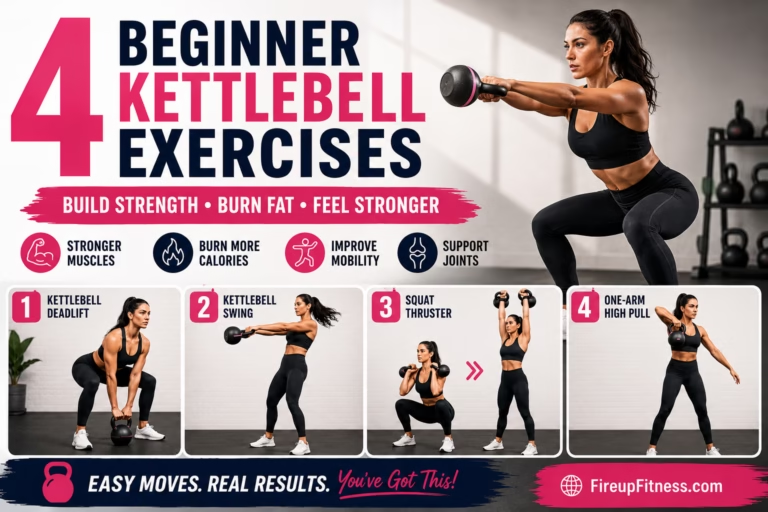
Once basic exercises feel comfortable, combining movements can be an efficient way to challenge several muscle groups.
For example, you could perform a squat followed by an overhead press using light dumbbells.
Another option is a reverse lunge followed by a controlled arm movement.
Combination exercises make your upper and lower body work together, which can increase the cardiovascular demand of a strength workout.
However, don’t rush through the movements just to make the workout harder.
Good form comes first.
Start slowly, learn each movement separately, and only combine exercises once you feel comfortable performing both.
6. Light Resistance Training
Strength training can complement cardiovascular exercise when your goal is improving overall stamina.
You don’t need to lift extremely heavy weights or move them as quickly as possible.
Instead, choose resistance that allows you to perform each repetition with good control.
A beginner routine might include:
- Squats
- Wall push-ups
- Dumbbell rows
- Glute bridges
- Light overhead presses
Try 8–12 controlled repetitions of each exercise, depending on your current ability.
As you become fitter, you can gradually add resistance, repetitions, sets, or exercises.
Circuit-style strength training—moving between several exercises with appropriate rest—can also challenge muscular and cardiovascular endurance.
7. Stair Walking or Step-Ups
Once ordinary walking becomes comfortable, stairs can provide a simple way to increase the challenge.
You don’t need to sprint up a staircase.
Start slowly.
Walk up a short flight of stairs and recover before repeating it. At home, you can also perform controlled step-ups using a secure, appropriately sized step.
Stairs make your legs work harder against gravity, so even a short session can feel surprisingly challenging.
Start with just a few minutes and gradually progress.
Always use a handrail when needed and choose a stable surface.
A Simple Beginner Stamina Workout
Not sure where to begin? Try this gentle routine two or three times per week.
Warm-up – 5 minutes
Walk slowly while gently moving your arms. Add shoulder rolls and easy side-to-side steps.
Workout
- Brisk walking – 3 minutes
- Bodyweight or chair squats – 8–10 reps
- Easy walking – 1 minute
- Wall push-ups – 8–10 reps
- Brisk walking – 3 minutes
- Step-ups – 30 seconds
- Easy walking – 1 minute
Repeat the circuit once if your fitness level allows.
Cool-down – 5 minutes
Slow your walking pace gradually and finish with gentle stretches.
Your first workout doesn’t need to look impressive. It simply needs to be manageable enough that you can come back and exercise again.
How Often Should You Exercise to Improve Stamina?
You don’t have to train hard every day.
A beginner may start with three days of structured exercise per week, while adding comfortable walking or other light activity on additional days.
Over time, gradually increase your total activity.
A useful approach is to change one thing at a time.
For example, increase your walking duration before dramatically increasing your speed. Or become comfortable completing your strength routine before adding heavier resistance.
This makes progress easier to measure and gives your body time to adapt.
Don’t Forget Recovery
More exercise isn’t always better.
Recovery is part of building stamina.
Your muscles need time to repair, and your body needs enough sleep, food, and fluids to support your activity.
Pay attention to how you feel.
Normal exercise fatigue is different from sharp pain, dizziness, chest discomfort, or feeling unusually short of breath. Stop exercising if something doesn’t feel right.
Anyone with a medical condition, significant mobility limitations, unexplained symptoms, or a long period of inactivity may want to speak with a qualified healthcare professional before beginning a new exercise program.
How to Increase Stamina Without Burning Yourself Out
You don’t have to prove anything during your workouts.
Instead of asking, “How hard can I exercise today?” ask yourself, “What can I do consistently?”
Start with a level that feels achievable and build from there.
Maybe today you can walk comfortably for 10 minutes.
In a few weeks, that could become 20 minutes.
Later, you might walk faster, add hills, begin cycling, introduce walk-jog intervals, or complete a longer strength workout.
Those improvements may seem small individually, but together they can create a noticeable difference in your fitness.
Final Thoughts
Building stamina doesn’t happen overnight, and it doesn’t require punishing workouts.
Walking, cycling, walk-jog intervals, squats, step-ups, combination movements, and resistance training can all help you gradually improve cardiovascular and muscular endurance.
The most important thing is to begin at your current level rather than comparing yourself with someone who has been exercising for years.
Start slowly. Stay consistent. Increase the challenge gradually.
Every extra minute you can comfortably walk, every additional repetition you can perform with good form, and every workout that feels slightly easier than it used to is progress.
Your stamina is built one workout at a time.