Day 8: Advanced Upper Body Pilates Workout at Home
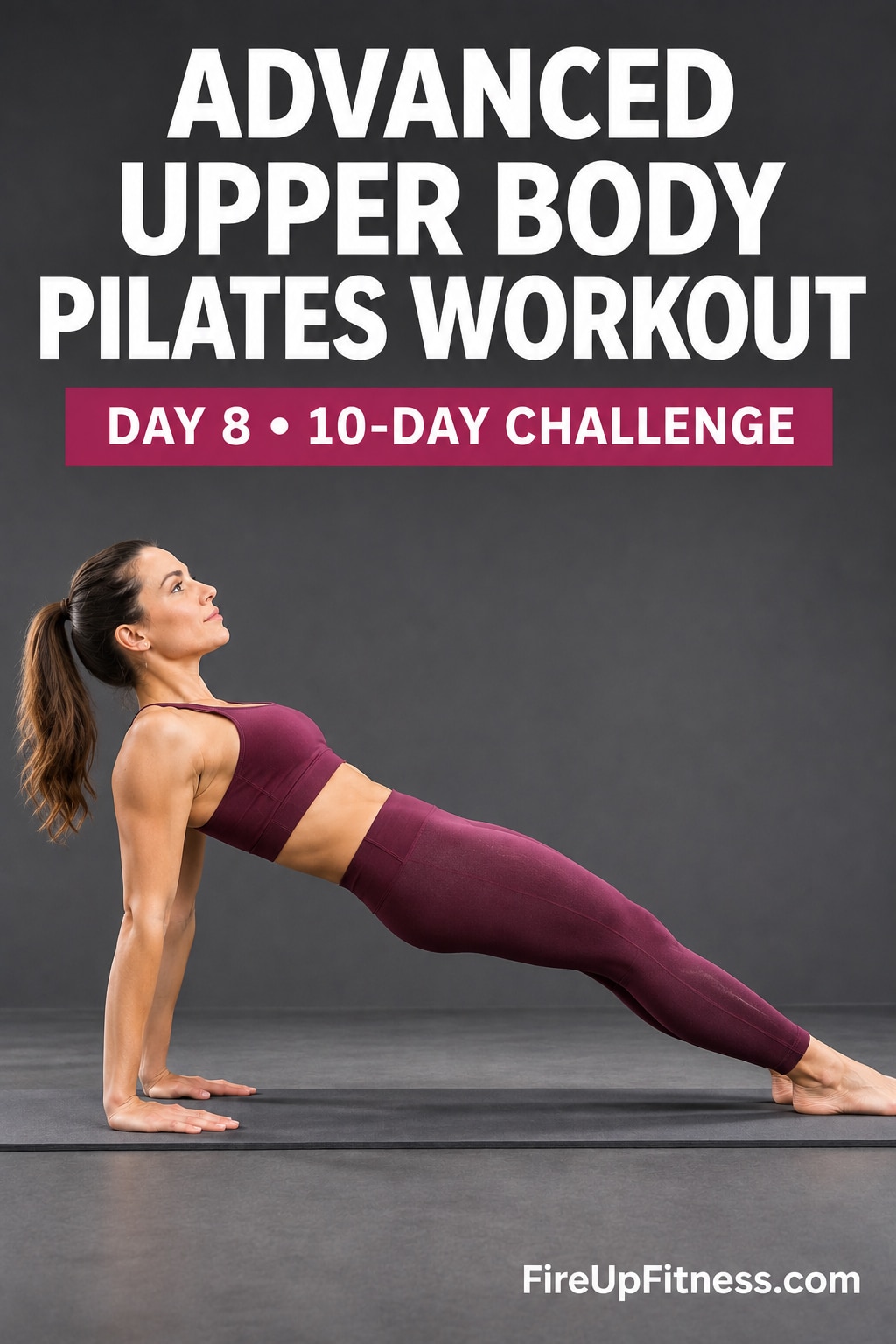
Eight days into a Pilates challenge, you start to notice something interesting. Movements that once demanded all your attention may feel more familiar. Your balance improves, your muscles respond with greater control, and you begin to understand just how much strength Pilates requires.
But Day 8 is here to remind you that there is always another level to explore.
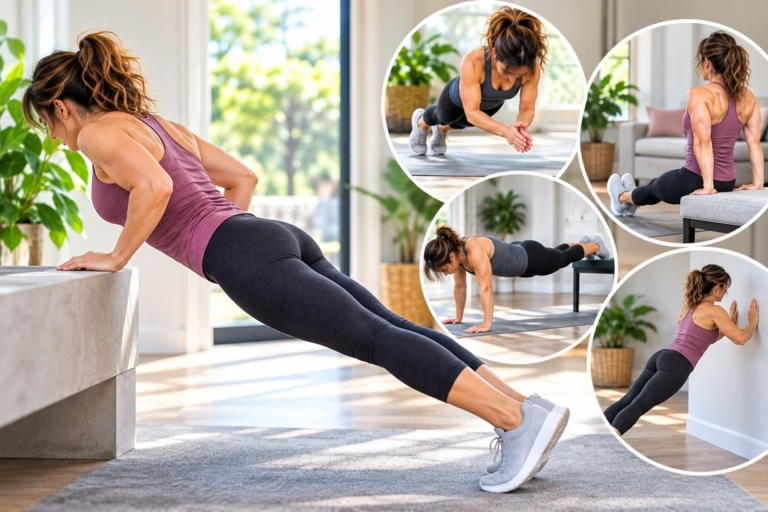
Today’s advanced upper body Pilates workout brings a new challenge to your arms, shoulders, back, and core. You’ll move through demanding plank variations, controlled tricep exercises, reverse planks, and back-strengthening movements that test both muscular endurance and stability.
The best part? You won’t need dumbbells, resistance bands, or any special equipment. Just your mat, a little space, and the willingness to challenge yourself.
You’ve already made it through seven days of this 10-day Pilates challenge. Now it’s time to put that growing strength to work.
What to Expect From Day 8
Today’s workout builds on the upper body movements introduced earlier in the challenge, but with more demanding variations and longer periods of muscular engagement.
Rather than rushing through repetitions, you’ll focus on slow, deliberate movements that challenge your ability to maintain proper alignment.
Workout overview:
- Focus: Arms, shoulders, upper back, triceps, and core
- Difficulty: Advanced
- Equipment: Exercise mat only
- Workout style: Controlled Pilates movements and isometric holds
- Exercise intervals: Mostly 60 seconds per movement
- Rest: Short recovery breaks between challenging sections
This workout places considerable demand on your wrists, shoulders, and abdominal muscles. Take additional breaks whenever necessary, especially when you begin to lose control of your movements.
Still working toward the advanced level? Revisit the intermediate upper body workout before attempting this routine.
Follow Along With the Day 8 Pilates Workout
The video below guides you through every exercise, including breathing cues, alignment reminders, and short recovery stretches.
Keep the video nearby as you move through the routine. The written instructions below will help you understand each exercise and the muscles you’re working.
Day 8 Advanced Upper Body Pilates Exercises
1. Plank With Alternating Arm Reaches
Duration: 60 seconds
We’re starting with one of the more challenging movements in today’s routine.
Begin in a high plank with your hands slightly closer than shoulder-width apart and your feet wider than your hips.
Engage your abdominal muscles and gently tuck your pelvis to maintain a strong, supported position.
How to perform:
- Extend your right arm straight ahead, bringing your bicep close to your ear.
- Keep your hips as steady as possible while balancing on the opposite hand.
- Lower your right hand to the mat.
- Repeat with your left arm.
- Continue alternating with slow, controlled movements.
Exhale as you reach forward and inhale as you lower your hand.
The challenge isn’t simply lifting your arm. It’s preventing your body from rotating excessively as your weight shifts.
Your shoulders, back muscles, and obliques must work together to maintain stability.
2. Plank Shoulder Taps
Duration: 60 seconds
Stay in your high plank position for another demanding stability exercise.
This time, you’ll alternate tapping your opposite shoulder while keeping your pelvis as still as possible.
How to perform:
- Begin with your hands slightly narrower than shoulder-width.
- Lift your right hand and tap your left shoulder.
- Return your hand to the mat.
- Lift your left hand and tap your right shoulder.
- Continue alternating without allowing your hips to swing excessively.
Keep your abdominal muscles engaged and avoid letting your lower back sag.
Your arms may already be feeling tired, but focus on maintaining good form rather than increasing your speed.
Recovery: Lower your knees, sit your hips toward your heels, and take a few comfortable breaths before continuing.
3. Plank Oblique Crunches
Duration: 60 seconds per side
Next, we’re adding movement through the sides of your waist while maintaining upper body stability.
Begin in a high plank with your wrists beneath your shoulders and your feet approximately hip-width apart.
Right side:
- Bring your right knee toward your right elbow.
- Gently shorten through the right side of your waist.
- Extend your leg back into a full plank.
- Repeat for 60 seconds.
Left side:
Switch legs and bring your left knee toward your left elbow for another 60 seconds.
As you extend each leg back, engage your thighs and lengthen through your spine.
This exercise works your obliques while your shoulders, arms, and back support your body.
Slow down when necessary. A controlled repetition is more valuable than several rushed ones.
4. Modified Pilates Push-Ups
Duration: 60 seconds
After those challenging plank variations, move into a kneeling push-up position.
Although this is a modified movement, it still requires considerable upper body strength.
How to perform:
- Place your knees on the mat with your hips extended and your body aligned from your knees to your head.
- Keep your hands beneath your shoulders.
- Bend your elbows backward at approximately a 45-degree angle.
- Lower your chest toward the mat with control.
- Press through your palms to return to the starting position.
Inhale as you lower and exhale as you press upward.
Avoid dropping your head or hips toward the floor. Think about moving your chest straight down while keeping your trunk supported.
Recovery: Sit back toward your heels and relax your shoulders before the next section.
Reverse Plank Pilates Exercises
The next three movements shift your body into a reverse plank position.
This section emphasizes the triceps, shoulders, upper back, and muscles along the back of your body.
5. Reverse Plank Hip Lifts
Duration: 60 seconds
Sit on your mat with your legs extended, heels resting on the floor, and toes pointing upward.
Place your hands behind you with your wrists positioned beneath your shoulders.
How to perform:
- Press firmly through your palms.
- Lift your hips toward the ceiling.
- Create a long line through your body.
- Gently draw your shoulder blades toward one another.
- Lower your hips with control and repeat.
Keep your chest open without forcing your shoulders backward.
This movement strengthens the posterior chain while encouraging controlled shoulder extension.
A small, comfortable bend in your elbows is fine if keeping them completely straight feels uncomfortable.
6. Reverse Plank Alternating Knee Pulls
Duration: 60 seconds
Remain in your lifted reverse plank position.
Now you’ll add alternating knee movements while keeping your hips elevated.
How to perform:
- Bend your right knee, bringing it above your hip.
- Keep your supporting leg extended.
- Straighten your right leg again.
- Repeat with your left knee.
- Continue alternating while keeping your hips as steady as possible.
Aim to bring the bent knee and hip to approximately 90 degrees.
Your triceps, shoulders, and back muscles will be working hard to support your weight.
Keep breathing and avoid allowing your hips to drop with each knee pull.
7. Reverse Plank Tricep Extensions
Duration: 60 seconds
This is the final reverse plank exercise of the challenge, and your triceps are about to get some extra attention.
Begin in a reverse plank with both legs extended.
How to perform:
- Keep your hips elevated.
- Bend both elbows straight backward through a small, controlled range.
- Press through your palms to straighten your arms.
- Gently contract your triceps at the top.
- Repeat without allowing your elbows to flare outward.
The movement may be small, but it becomes challenging as your muscles fatigue.
Keep your elbows approximately shoulder-width apart throughout.
Once finished, lower your hips and take a short break to release tension through your wrists.
Tricep and Back-Strengthening Pilates Exercises
8. Kneeling Isometric Tricep Hold
This exercise looks simple, but don’t underestimate it.
Instead of moving through repetitions, you’ll create muscular tension by holding your arms in a challenging position.
How to perform:
- Kneel upright on your mat.
- Extend both arms behind your body.
- Imagine holding a plastic water bottle between your hands.
- Gently press your hands toward each other as though squeezing the bottle.
- Lift your straight arms slightly higher behind you.
- Maintain the position while breathing steadily.
With each exhale, imagine squeezing the bottle a little more firmly and reaching your hands slightly higher.
Keep your shoulders relaxed and avoid arching your lower back.
This is an isometric exercise, meaning your muscles generate tension without repeatedly moving through a joint’s range of motion.
9. Prone Back Extensions
Move onto your stomach for the next section.
These movements target the muscles that support your spine and help maintain upper back strength.
How to perform:
- Lie face down with your arms extended forward and your elbows bent outward.
- Position your ankles approximately mat-width apart.
- Gently engage your abdominal muscles.
- Exhale as you lift your arms, chest, and legs slightly from the mat.
- Inhale as you lower with control.
Think about opening through your chest rather than lifting your head excessively.
Keep your neck aligned with your spine and avoid forcing a large arch into your lower back.
Small, controlled lifts are enough to challenge the muscles along your back.
10. Prone T-Raises
Next, you’ll focus on the muscles around your shoulder blades.
How to perform:
- Remain lying on your stomach.
- Extend both arms outward into a T position.
- Keep your head aligned with your spine, hovering slightly above the mat.
- Lift your hands toward the ceiling while drawing your shoulder blades together.
- Lower your arms slowly and repeat.
Try to keep your lower body relaxed and stable.
The movement should come primarily from your upper back and shoulders rather than your lower spine.
This exercise engages the rhomboids, middle trapezius, and rear shoulder muscles.
11. Prone Back Extension With Forward Arm Reach
This movement combines back extension with a controlled arm reach.
How to perform:
- Lie on your stomach with your elbows bent at 90 degrees and aligned with your shoulders.
- Lift your chest, arms, and legs slightly from the floor.
- Maintain the lifted position as you extend both arms forward.
- Bend your elbows back to the starting position.
- Lower your chest, arms, and legs to the mat.
Keep your legs elevated during the forward reach, provided you can maintain a comfortable position through your lower back.
Move slowly and avoid lifting higher than you can control.
Recovery: Press back into a comfortable shell stretch and take a few breaths before the final workout block.
Final Core and Upper Body Challenge
You’ve made it through the most demanding upper body movements. The final section brings your shoulders and abdominal muscles together for one last challenge.
12. Forearm-Supported Single-Leg Hip Lifts
Duration: 60 seconds per side
Begin on your forearms with your elbows beneath your shoulders.
Keep your left knee bent beneath your hip and extend your right leg straight behind you.
How to perform:
- Press through your forearms and the ball of your right foot.
- Engage your abdominal muscles.
- Lift your hips upward, allowing your left knee to rise from the mat.
- Lower with control.
- Repeat for 60 seconds.
Switch sides, extending your left leg behind you while keeping your right knee bent.
Focus on initiating the lift through your hips and abdominal muscles rather than pushing excessively through your shoulders.
Imagine your tailbone being gently lifted toward the ceiling.
13. Forearm Plank Hold
Duration: 60 seconds
One final exercise stands between you and completing Day 8.
Start in a forearm plank with your elbows directly beneath your shoulders and both legs extended behind you.
How to perform:
- Press your forearms into the mat.
- Engage your abdominal muscles and thighs.
- Maintain a long, supported position through your spine.
- Keep your hips from dropping toward the floor.
- Hold for up to 60 seconds while breathing steadily.
This is a full-body stability challenge, especially after all the upper body work you’ve completed.
You can lower your knees briefly if maintaining your alignment becomes difficult.
Finish with control rather than forcing yourself to hold a position that no longer feels stable.
Cool Down After Your Advanced Pilates Workout
Your shoulders, arms, and back have done plenty of work today, so give yourself a few minutes to recover.
The video finishes with several gentle stretches.
Quadriceps and hip flexor stretch: Bring one heel toward your glutes and gently tuck your pelvis to stretch the front of your thigh. Repeat on the other side.
Shell stretch: Sit your hips back toward your heels and extend your arms forward, allowing your back to relax.
Seated side stretch: Sit comfortably and reach one arm overhead, leaning gently to the opposite side. Switch sides.
Cross-body shoulder stretch: Bring one arm across your chest and support it with the opposite arm.
Overhead tricep stretch: Bend one elbow behind your head and gently support it with your opposite hand.
Hold each stretch comfortably without bouncing or forcing the movement.
Why Advanced Upper Body Pilates Is Worth Practicing
Upper body Pilates isn’t only about making your arms work harder. The combination of strength, balance, and controlled movement can improve how effectively your muscles work together.
Here are some benefits of incorporating advanced Pilates exercises into your routine.
Builds Upper Body Strength
Plank variations, modified push-ups, and reverse plank movements challenge the muscles in your arms, shoulders, chest, and back.
Over time, consistent practice can help improve muscular strength and endurance.
Strengthens the Muscles That Support Posture
Prone back extensions, T-raises, and reverse plank exercises strengthen muscles involved in supporting the upper back and shoulder blades.
Building strength in these areas can contribute to better postural control during everyday activities.
Improves Core Stability
Many of today’s movements require your abdominal muscles to stabilize your spine while your arms or legs move.
This combination challenges coordination and helps develop better control through your trunk.
Develops Muscular Endurance
Longer exercise intervals and sustained holds encourage your muscles to work continuously.
As your endurance improves, maintaining proper form through challenging movements may become easier.
Catch Up on Previous Days of the 10-Day Pilates Challenge
Every workout in this series builds on the foundation established in earlier sessions.
Missed a day or want to repeat a favorite routine? Here are the previous seven workouts:
- Day 1: 10-Day Pilates Challenge – Start Here
- Day 2: 10-Day Pilates Challenge Workout
- Day 3: 10-Day Pilates Challenge Workout
- Day 4: 10-Day Pilates Challenge Workout
- Day 5: 10-Day Pilates Challenge Workout
- Day 6: 10-Day Pilates Challenge Workout
- Day 7: 10-Day Pilates Challenge Workout
You can complete the workouts in order or revisit individual sessions whenever you want to practice a particular movement.
Tips for Getting Through This Advanced Pilates Workout
Day 8 is challenging, even for someone who already practices Pilates regularly.
A few adjustments can make the experience more manageable.
- Prioritize control over repetitions. Slower movements allow you to concentrate on alignment and muscular engagement.
- Rest your wrists when needed. Several exercises place weight through your hands, so take breaks if you experience discomfort.
- Keep breathing. Exhale during the demanding portion of each movement and avoid holding your breath.
- Modify challenging planks. Lowering your knees or shortening an interval can help you maintain better form.
- Respect your current strength level. Repeat the intermediate upper body workout if the advanced variations feel too demanding.
Muscle fatigue is expected during a challenging session, but sharp pain, joint pain, or dizziness are reasons to stop.
What’s Coming on Day 9?
You’re now just two workouts away from completing the entire 10-day Pilates challenge.
Tomorrow, we’ll move into Day 9: Advanced Core Pilates Workout, where the focus shifts toward deeper abdominal engagement, controlled movement, and core stability.
The strength and coordination you’ve practiced throughout the series will help prepare you for this next challenge.
Final Thoughts: Eight Days Down, Two to Go
Day 8 was never going to be easy.
From the opening plank reaches to the final 60-second forearm plank, today’s workout asked your arms, shoulders, back, and core to work together through some demanding movements.
But progress isn’t measured by how many repetitions you complete or whether you make it through every interval without stopping.
It’s also found in the moments when you recognize that your form needs adjusting, choose to slow down, or notice that an exercise feels more controlled than it did a week ago.
You’ve reached Day 8 of the 10-day Pilates challenge, and that’s a meaningful milestone.
Take some time to recover, appreciate the effort you’ve put in, and get ready for tomorrow’s advanced core workout.
Two more days. Keep showing up for yourself.