Fitness Routine for Women: Simple Plan to Get Strong & Fit
Starting a fitness routine can feel surprisingly complicated. One person tells you to lift heavy weights. Another says cardio is the answer. Social media is filled with intense workouts, complicated exercise plans, and routines that seem designed for people who already live at the gym.
But getting fit doesn’t have to be complicated.
A good fitness routine for women should help you become stronger, improve your energy, support your heart and bones, and make everyday movement feel easier. Most importantly, it needs to fit into your actual life.
You don’t need to exercise for hours every day. You don’t need expensive equipment. And you definitely don’t need to punish yourself with workouts you hate.
What you need is a simple combination of strength training, cardio, mobility, recovery, and consistency.
Whether you’re completely new to exercise, returning after a long break, or simply trying to build a healthier routine, this guide will help you create a realistic fitness plan you can stick with.
Why Every Woman Needs a Fitness Routine
Fitness is often marketed around changing how your body looks. While wanting to become leaner or more toned is completely understandable, regular exercise can give you benefits that go far beyond appearance.
A balanced fitness routine can help you:
- Build stronger muscles
- Maintain healthy bones
- Improve cardiovascular fitness
- Increase stamina
- Improve balance and mobility
- Support better sleep
- Manage everyday stress
- Make daily activities easier
- Maintain strength as you get older
Think about all the things your body does during an ordinary day.
You carry groceries. Climb stairs. Bend down. Get up from chairs. Lift laundry baskets. Reach overhead. Walk through parking lots. Carry children or grandchildren.
Strength and mobility make all of these movements easier.
Instead of viewing exercise only as a way to burn calories, think of it as training your body for the life you want to keep living.
Start With Your Reason for Exercising
Before deciding which exercises to do, ask yourself a simple question:
What do I actually want from my fitness routine?
Maybe you want to build strength.
Maybe you want more energy.
Perhaps you want to lose body fat, improve your endurance, become more flexible, or simply stop feeling so stiff after sitting all day.
Your answer matters because your goal should influence the way you train.
Someone trying to run her first 5K will train differently from someone primarily interested in getting stronger.
You can also have several goals at once.
For example:
“I want to become stronger, improve my stamina, and feel more energetic.”
That is more useful than simply telling yourself, “I need to get fit.”
Give yourself something meaningful to work toward.
The Best Fitness Routine for Women Is Usually Simple
You don’t need a different workout every day.
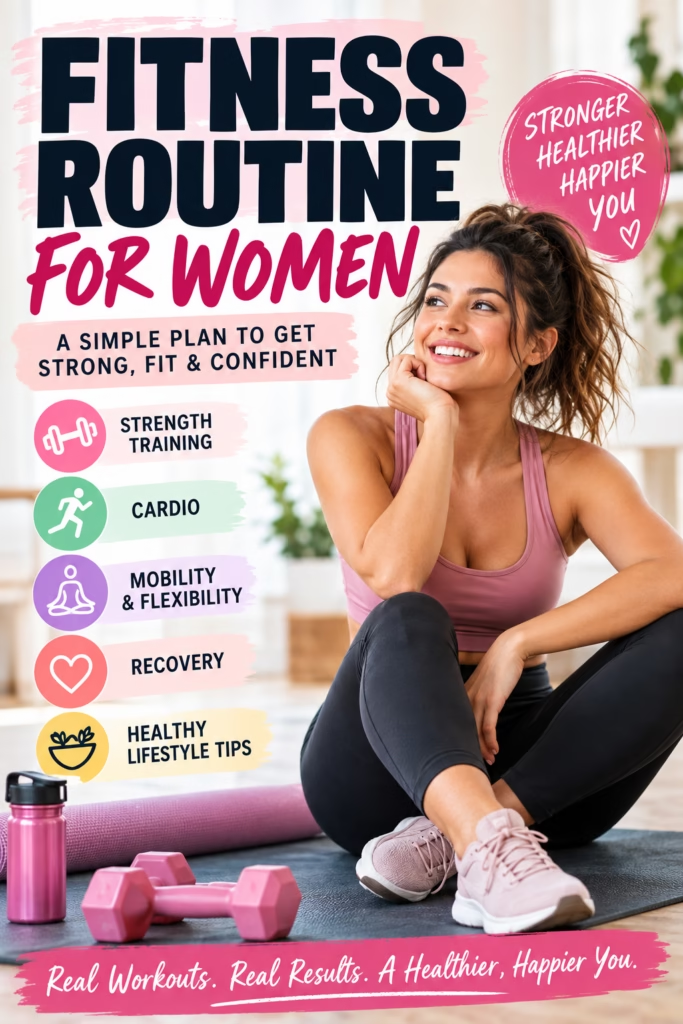
For most women, a well-rounded weekly routine should contain four basic elements:
Strength training + cardio + mobility + recovery.
Strength training helps maintain and build muscle.
Cardio trains your heart and lungs.
Mobility work helps your joints move comfortably.
Recovery gives your body time to adapt to the exercise you’re doing.
The magic isn’t hidden in some secret exercise.
It comes from repeating the basics consistently enough for your body to adapt.
Beginner Fitness Routine You Can Do at Home
New to exercise? Start with a short full-body routine rather than trying to do too much too soon.
Here is a simple workout that requires little or no equipment.
1. Bodyweight Squats — 10 to 15 Reps
Stand with your feet approximately shoulder-width apart.
Push your hips slightly backward and bend your knees as though you’re sitting into a chair. Keep your chest comfortably lifted and press through your feet to return to standing.
Works: Glutes, thighs and core.
Beginner modification: Place a sturdy chair behind you and practice sitting down and standing back up.
2. Wall Push-Ups — 8 to 15 Reps
Stand facing a wall and place your palms against it slightly wider than shoulder-width.
Walk your feet backward until your body forms a straight line.
Bend your elbows and slowly bring your chest toward the wall. Push through your palms to return to the starting position.
Works: Chest, shoulders, arms and core.
As you become stronger, progress to countertop push-ups and eventually floor push-ups.
3. Glute Bridges — 12 to 15 Reps
Lie on your back with your knees bent and feet flat on the floor.
Brace your core gently and squeeze your glutes as you lift your hips.
Pause briefly at the top, then lower your hips with control.
Works: Glutes, hamstrings and core.
Avoid pushing your hips so high that you excessively arch your lower back.
4. Reverse Lunges — 8 to 10 Reps Per Side
Stand tall and step one foot backward.
Bend both knees comfortably as you lower your body, then push through your front foot to return to standing.
Alternate sides.
Works: Glutes, thighs and legs.
Beginner modification: Hold onto a sturdy chair or counter for balance.
5. Bird Dogs — 8 to 10 Reps Per Side
Begin on your hands and knees.
Slowly extend your right arm forward while extending your left leg behind you.
Keep your hips relatively level and avoid excessively arching your back.
Return to the starting position and switch sides.
Works: Core, back, glutes and shoulders.
How to Put the Workout Together
Start with a 5-minute warm-up consisting of movements such as easy walking, marching in place, shoulder circles and gentle bodyweight squats.
Then complete:
Squats → Wall Push-Ups → Glute Bridges → Reverse Lunges → Bird Dogs
Rest for approximately 30–60 seconds when needed.
Beginners can start with 1–2 rounds.
As your fitness improves, gradually work toward 2–3 rounds.
Finish with a few minutes of gentle walking and stretching.
The entire workout can take approximately 20–30 minutes, making it much easier to fit into a busy day.
Why Strength Training Should Be Part of Your Routine
One of the most valuable things women can do for long-term fitness is resistance training.
Your muscles need resistance to stay strong.
Strength training can come from:
- Your body weight
- Dumbbells
- Resistance bands
- Kettlebells
- Weight machines
- Household objects
You don’t necessarily need heavy weights when you’re beginning.
Start with resistance that allows you to perform each exercise with good control while still making the final few repetitions feel challenging.
As you become stronger, gradually increase the difficulty.
This concept is called progressive overload.
You might progress by adding a little weight, performing another repetition, adding another set, slowing the movement down, or moving to a more challenging version of the exercise.
Your body adapts when you give it an appropriate reason to adapt.
Women Over 40: Strength Training Becomes Even More Important
Exercise matters at every age, but maintaining muscle and strength becomes increasingly important through midlife and beyond.
This doesn’t mean you suddenly need extreme workouts after 40.
Quite the opposite.
A consistent routine built around fundamental movements can be incredibly effective.
Focus on exercises that train movements you use in everyday life:
- Squatting
- Pushing
- Pulling
- Hinging at the hips
- Carrying
- Core stabilization
- Walking
Don’t worry about keeping up with the workouts you see online.
Your goal is to build a body that feels capable and resilient.
Don’t Forget Cardio
Strength training deserves a place in your routine, but cardiovascular activity is important too.
And cardio doesn’t automatically mean running.
You have plenty of choices:
- Brisk walking
- Cycling
- Swimming
- Dancing
- Hiking
- Stair climbing
- Low-impact cardio workouts
- Elliptical training
Walking is an especially practical starting point because it requires almost no equipment and can easily be adjusted to your fitness level.
A 10-minute walk counts.
So does walking after dinner.
So does taking a longer route through the grocery store parking lot.
Movement doesn’t stop being beneficial because it wasn’t done inside a gym.
Try Interval Walking for an Extra Challenge
Once ordinary walking starts feeling comfortable, try adding short intervals.
For example:
Walk at an easy pace for 2 minutes.
Then walk briskly for 1 minute.
Return to your comfortable pace for 2 minutes.
Repeat.
Intervals allow you to increase the intensity without having to run.
Beginners can start with 15–20 minutes and gradually increase the duration.
A Simple Weekly Fitness Schedule for Women
One of the easiest ways to stay consistent is to decide in advance what type of movement you’ll do each day.
Here is an example:
Monday: Full-body strength workout
Tuesday: 20–30 minute brisk walk
Wednesday: Mobility, stretching or gentle yoga
Thursday: Full-body strength workout
Friday: Walking or another enjoyable cardio activity
Saturday: Optional strength workout, longer walk or recreational activity
Sunday: Rest or gentle movement
You don’t have to follow this exact schedule.
Move the days around to fit your life.
The goal is to create a rhythm that gives you enough activity to make progress while still allowing adequate recovery.
What If You Only Have 10 Minutes?
Then exercise for 10 minutes.
One of the biggest fitness mistakes is believing that a workout isn’t worthwhile unless it’s long.
Short workouts can be incredibly useful because they’re easier to repeat consistently.
Try this quick routine:
- 10 squats
- 10 wall push-ups
- 10 glute bridges
- 8 reverse lunges per side
- 20–30 seconds of marching in place
Repeat for as many comfortable rounds as your available time allows.
Ten minutes today is better than waiting for a perfect 60-minute opening that never appears.
How Hard Should Your Workouts Feel?
A good workout should challenge you, but harder isn’t automatically better.
During strength training, the last few repetitions of a set should generally feel more difficult while your technique remains controlled.
During moderate cardio, you should feel your breathing and heart rate increase, but you shouldn’t necessarily feel completely exhausted.
You don’t need to finish every workout lying on the floor.
The goal is to give your body enough challenge to improve and then recover so you can train again.
Rest Days Are Part of Your Fitness Routine
Rest isn’t a failure to exercise.
It’s part of training.
Exercise creates a physical challenge. Recovery gives your body an opportunity to respond to that challenge.
Recovery can include:
- Adequate sleep
- Gentle stretching
- Easy walking
- Mobility exercises
- Hydration
- Balanced meals
Pay attention to how your body feels.
Persistent soreness, unusual fatigue, worsening performance, poor sleep or aches that don’t improve may be signs that you need more recovery or need to reduce your training intensity.
Sharp or persistent pain shouldn’t be ignored.
How to Make Fitness a Habit
Starting a fitness program isn’t usually the hardest part.
Continuing it is.
Motivation naturally rises and falls, which is why relying entirely on motivation can make consistency difficult.
Instead, make exercise easier to repeat.
Schedule Your Workouts
Treat exercise like an appointment.
Choose the days and approximate times you plan to train rather than waiting until you “feel motivated.”
Make Starting Easy
Put your workout clothes somewhere visible.
Keep your walking shoes near the door.
Leave your exercise mat somewhere convenient.
Reducing tiny barriers can make it easier to begin.
Have a Minimum Workout
Create a backup routine for busy days.
Maybe your normal workout lasts 30 minutes, but your minimum workout lasts 10.
When life gets chaotic, do the shorter version.
Maintaining the habit can matter more than completing the perfect workout.
Choose Exercise You Actually Enjoy
There is no prize for choosing the workout you dislike the most.
If running makes you miserable, walk.
If treadmills bore you, exercise outside.
If traditional cardio isn’t your thing, dance.
The easier it is to enjoy your routine, the easier it becomes to return to it.
Track Progress Beyond the Scale
The scale tells you one thing: body weight.
It doesn’t tell you everything that’s changing.
Look for other signs of progress:
Can you perform more squats than last month?
Are your dumbbells getting heavier?
Can you walk farther without getting tired?
Are stairs becoming easier?
Is your balance improving?
Do you feel stronger carrying groceries?
Are your workouts becoming easier?
These are meaningful improvements.
Fitness progress often shows up in your abilities before it becomes obvious in the mirror.
Nutrition Supports Your Fitness Training
Exercise and nutrition work together.
You don’t need a complicated “fitness diet,” but your body does need adequate fuel.
Build most meals around simple foods such as:
- Protein-rich foods
- Vegetables and fruits
- Whole grains
- Beans and legumes
- Healthy fats
- Water
Protein is especially useful for supporting muscle maintenance and recovery.
Rather than thinking about food as something you have to “burn off,” think about it as fuel your body uses to move, recover and function.
Hydration Matters Too
Even mild dehydration can make a workout feel harder than it needs to.
Keep water available throughout the day and drink according to your needs, activity level, environment and thirst.
You’ll generally need more fluids when exercising intensely or spending time in hot weather.
Plain water works perfectly well for most everyday workouts.
Common Fitness Mistakes to Avoid
Doing Too Much Too Soon
Excitement can make beginners want to exercise every day.
But suddenly jumping from very little activity to intense daily workouts can leave you exhausted and extremely sore.
Start at a manageable level and gradually build from there.
Only Doing Cardio
Cardio is valuable, but don’t neglect resistance training.
Strong muscles support movement, stability and everyday function.
Changing Your Workout Constantly
You don’t need a brand-new routine every week.
Repeating exercises gives you an opportunity to improve them and see whether you’re becoming stronger.
Chasing Soreness
Soreness isn’t a reliable measurement of workout quality.
A successful workout doesn’t have to make walking downstairs painful the next morning.
Comparing Yourself With Other Women
Someone else’s starting point may be completely different from yours.
Compare your current abilities with where you were several weeks or months ago.
That’s the progress that matters.
What to Do When You Miss a Workout
You will miss workouts.
Everyone does.
Work gets busy. Family responsibilities change. You get tired. Vacations happen.
Missing one workout doesn’t ruin your progress.
The bigger problem is allowing one missed workout to turn into several weeks of inactivity because you feel like you’ve “failed.”
Simply return to your routine at the next reasonable opportunity.
No punishment workout required.
No starting over.
Just continue.
How to Progress Your Fitness Routine
After following the same routine for several weeks, you may notice that exercises that once felt challenging have become easier.
That’s good.
It means you’re getting fitter.
Now you can gradually increase the challenge.
You could:
- Add 1–2 repetitions
- Add another set
- Increase your dumbbell weight slightly
- Walk a little farther
- Increase your walking pace
- Reduce rest periods slightly
- Try a more challenging exercise variation
Change one or two things at a time instead of dramatically increasing everything at once.
Small improvements add up.
Fitness After 40 Doesn’t Need to Be Extreme
Women sometimes assume getting fit after 40 requires increasingly intense exercise.
It doesn’t.
You need training that challenges your muscles and cardiovascular system while respecting your current fitness level, recovery and any physical limitations.
A routine built around strength training, walking, mobility and recovery can be remarkably powerful.
Your workouts don’t have to look impressive on social media.
They need to work for your body and your life.
Your Fitness Routine Should Grow With You
The workout you begin with isn’t the workout you have to follow forever.
Your fitness routine should change as your body, goals and lifestyle change.
Maybe you begin with wall push-ups and eventually progress to floor push-ups.
Maybe your first walk lasts 10 minutes and six months later you’re comfortably walking for 45.
Maybe the dumbbells that once felt heavy eventually become your warm-up weights.
That’s what progress looks like.
Not perfection.
Progress.
Final Thoughts: Build Strength One Workout at a Time
A successful fitness routine for women doesn’t require complicated equipment, punishing workouts or hours at the gym.
Start with the basics.
Strength train a few times each week. Walk regularly. Move your joints. Give your body time to recover. Eat nourishing foods. Sleep well. Then gradually challenge yourself as you become stronger.
Some weeks will be better than others.
That’s normal.
Fitness isn’t built by having a perfect week. It’s built by returning to healthy habits again and again.
Start where you are.
Do what you can today.
Then give yourself the opportunity to become a little stronger tomorrow.